This Akagera Boat Safari Complete Guide explains everything travelers need to know before booking a Lake Ihema boat trip. It covers scheduled departure times, estimated prices, private cruises, wildlife, birdwatching, photography, safety, packing advice and suggested itineraries.
An Akagera boat safari offers one of the most peaceful and rewarding wildlife experiences in Rwanda. While most visitors explore Akagera National Park from a four-wheel-drive safari vehicle, a boat trip on Lake Ihema reveals an entirely different side of the protected area.
From the water, travelers can watch hippos resting in the shallows, see Nile crocodiles sunbathing along the shoreline and photograph African fish eagles flying above the lake. Elephants, buffaloes, antelopes and other mammals may also appear near the water, especially during warmer and drier periods.
The experience is not simply a relaxing break between game drives. Lake Ihema forms part of Akagera’s extensive network of lakes, channels, papyrus swamps and seasonal wetlands. These habitats make the park one of the most important wetland conservation areas in the region.
Whether you are planning a one-day Akagera safari from Kigali or a longer Rwanda wildlife tour, adding a boat excursion can make your visit considerably more diverse and memorable.
What Is an Akagera Boat Safari?
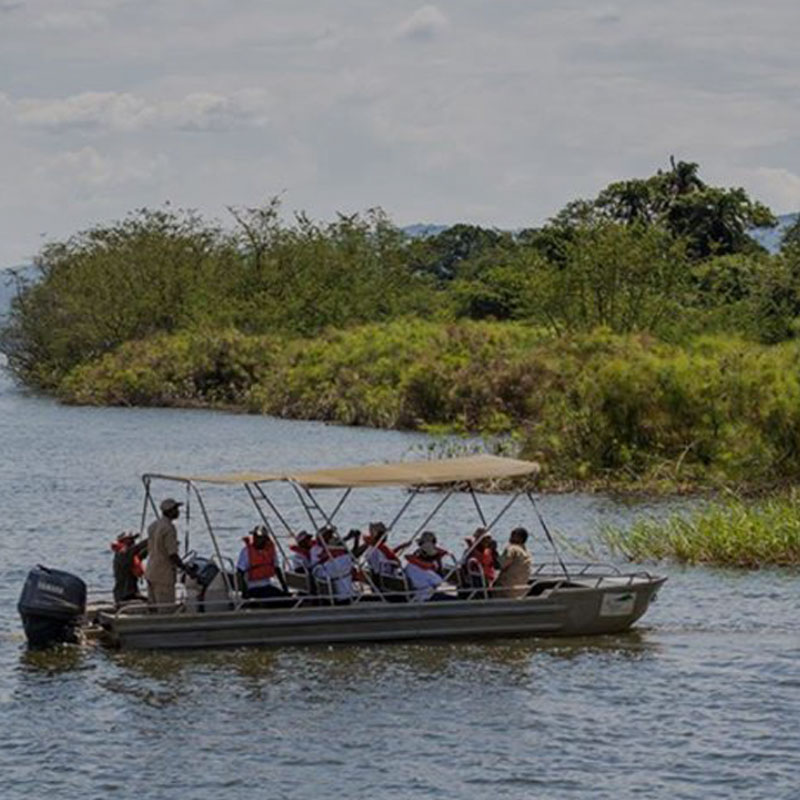
An Akagera boat safari is a guided wildlife-viewing excursion conducted on Lake Ihema inside Akagera National Park.
Unlike an ordinary recreational boat ride, the experience focuses on animals, birds, wetlands and natural history. A knowledgeable boat guide helps passengers identify species, understand animal behavior and navigate the lake safely.
Scheduled trips normally follow sections of Lake Ihema’s shoreline where wildlife and birds are commonly observed. The route may vary according to water conditions, animal movements and the professional judgment of the guide.
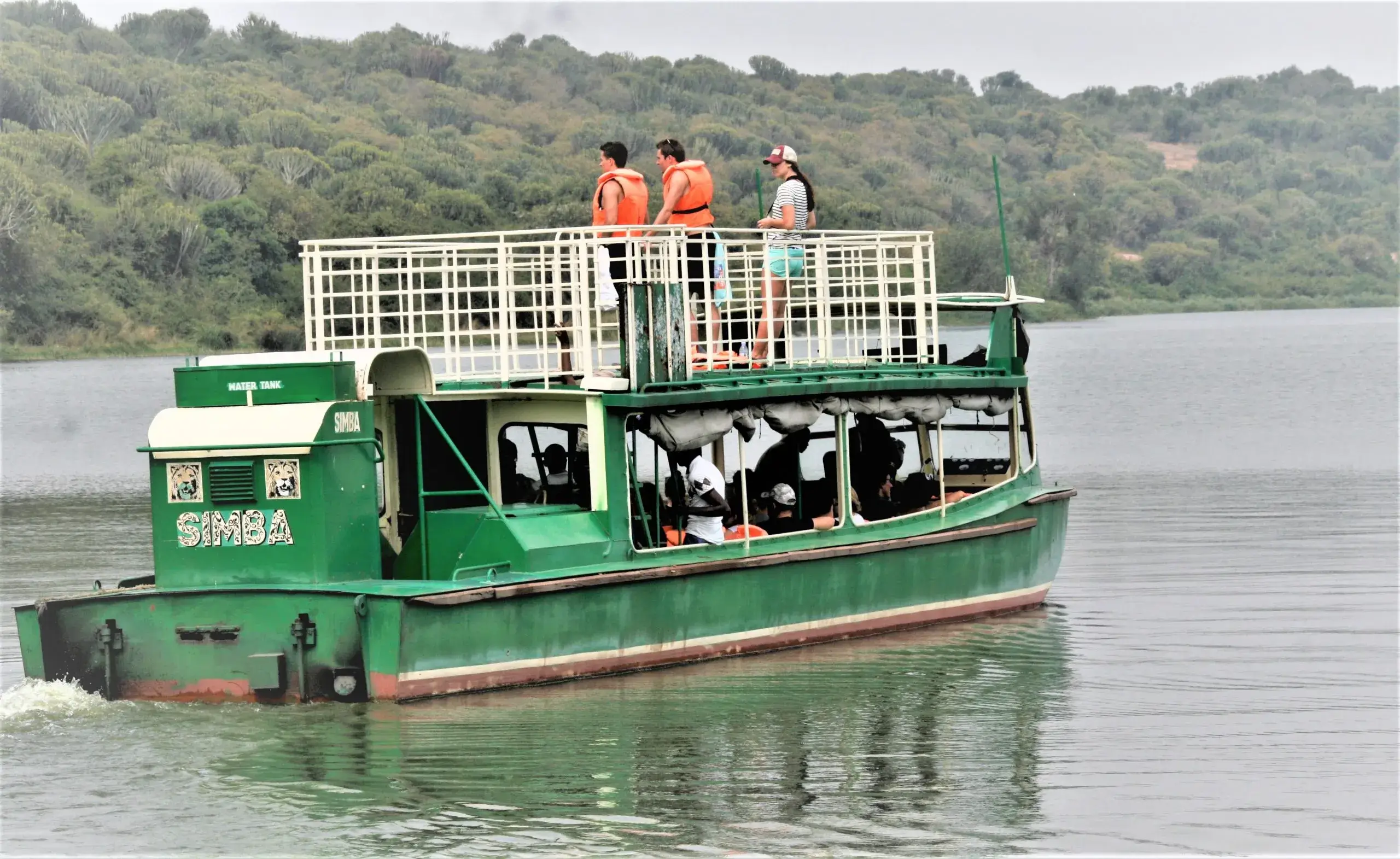
The boats are designed to provide passengers with clear views while maintaining a safe distance from hippos, crocodiles and other animals. Travelers receive a safety briefing before departure and must follow the crew’s instructions throughout the excursion.
Most scheduled daytime trips last approximately one hour. The sunset departure usually lasts longer because it is timed to include the changing evening light.
A boat safari does not replace a game drive. Instead, the two activities complement each other. A game drive offers better opportunities to search for lions, rhinoceroses, giraffes, zebras and terrestrial wildlife, while a boat trip specializes in aquatic animals, waterbirds and lakeside scenery.
Where Does the Akagera Boat Safari Take Place?
Scheduled Akagera boat safaris take place on Lake Ihema in the southern part of Akagera National Park.
Lake Ihema is the largest lake located entirely within Rwanda. It forms part of the wider Kagera River wetland system along the border between Rwanda and Tanzania.
The lake is surrounded by papyrus wetlands, woodland and open areas used by many of the park’s animals. Its combination of open water, shallow edges, islands and dense vegetation creates habitats for hippos, crocodiles, fish and numerous bird species.
Boat excursions generally begin from an authorized jetty near the southern tourism area. The exact meeting point is confirmed when the activity is booked.
Travelers staying at Ruzizi Tented Lodge, Akagera Game Lodge, a designated campsite or another nearby property can usually reach the departure area without completing a long cross-park drive.
Visitors arriving from Kigali should allow adequate time for the road journey, entrance formalities and the transfer to the jetty. Arriving only a few minutes before departure creates an unnecessary risk of missing the boat.
Why Take a Boat Safari in Akagera National Park?
A boat safari provides a perspective that cannot be experienced from a vehicle.
Game-drive roads follow the land around Akagera’s hills, woodlands and plains. From a boat, travelers can explore the edge between water and land, where many animals come to drink, cool themselves or search for food.
The lower viewing position is particularly effective for photographing hippos, crocodiles and birds. Passengers may observe wildlife close to water level while remaining within a professionally operated boat.
The activity is also peaceful. After several hours on uneven game-drive tracks, moving gently across Lake Ihema provides a welcome change of pace.
Birdwatchers benefit from closer access to wetland species. Kingfishers, jacanas, herons, egrets, cormorants and fish eagles can often be observed more effectively from the lake than from inland roads.
For families, the boat trip introduces a different activity that can break up a long safari day. Couples may prefer the atmosphere of the sunset cruise, while photographers can use the reflections and open views to create images that differ from conventional game-drive photographs.
Above all, the boat safari demonstrates the ecological diversity of Akagera. The park is not simply a savannah reserve. It is a connected landscape of grassland, woodland, lakes, swamps and river systems.
Akagera Boat Safari Complete Guide to Departure Times
Akagera normally offers four scheduled boat departures each day:
| Boat safari | Scheduled time | Typical duration |
|---|---|---|
| Early-morning cruise | 7:30 a.m. | Approximately one hour |
| Morning cruise | 9:00 a.m. | Approximately one hour |
| Afternoon cruise | 3:00 p.m. | Approximately one hour |
| Sunset cruise | 4:30 p.m. | Approximately 90 minutes |
Private boat trips may be arranged at other times, depending on availability and park operations. The official park website currently lists scheduled departures at 7:30 a.m., 9:00 a.m., 3:00 p.m. and 4:30 p.m. Visit Akagera
Schedules can change because of weather, water conditions, maintenance or management decisions. Always confirm the time when making your reservation.
Passengers should arrive at the designated meeting point at least 20 to 30 minutes before departure. This provides enough time to confirm the booking, use restroom facilities, organize equipment and attend the safety briefing.
Late arrivals may miss the trip, particularly when the boat is operating at full capacity.
Which Akagera Boat Safari Time Is Best?
The best departure depends on your wildlife interests, photography priorities and wider itinerary.
The 7:30 a.m. Boat Safari
The earliest scheduled departure is excellent for birdwatching and calm conditions.
Morning temperatures are generally comfortable, and bird activity is often high. African fish eagles may call from waterside trees, while herons, kingfishers and cormorants search for food.
The light can be soft and attractive for photography. Reflections may also be clearer when the surface is calm.
An early boat trip works particularly well for guests staying inside or very close to the park. It is less practical for travelers leaving Kigali on the same morning because the road transfer, entrance procedures and jetty transfer require additional time.
Travelers can take the early cruise and then continue with a game drive. However, the itinerary must be planned carefully so that the selected road route can be completed before gate-closing time.
The 9:00 a.m. Boat Safari
The 9:00 a.m. departure offers a convenient balance between an early start and comfortable scheduling.
It remains productive for birds, hippos and crocodiles while giving overnight guests time for breakfast. It may also be combined with a short sunrise game drive near the southern sector.
As the temperature rises, crocodiles may become more visible along suitable shorelines. Hippos generally remain in the water during daylight hours.
The light is stronger than during the earliest departure, but photography conditions can still be excellent.
This time is suitable for families and travelers who prefer not to begin before sunrise.
The 3:00 p.m. Boat Safari
The afternoon departure fits naturally into the first day of a two- or three-day Akagera itinerary.
Travelers can leave Kigali in the morning, enter the park, have lunch and join the 3:00 p.m. excursion. After the boat trip, they can continue to their accommodation or take a short late-afternoon drive.
The afternoon sun may create stronger contrast, but it can also illuminate crocodiles, hippos and birds clearly.
Wildlife may begin returning to water as temperatures decline. The experience is usually quieter and cooler toward the end of the trip.
The 3:00 p.m. cruise is a practical choice for travelers who want good wildlife viewing without making sunset the primary focus.
The 4:30 p.m. Sunset Boat Safari
The sunset cruise is the most atmospheric option. It is timed to capture the transition from afternoon to evening over Lake Ihema.
Warm light can transform the lake, papyrus swamps and surrounding hills. Silhouettes of birds or hippos may create striking photographs.
Animals sometimes become more active as the day cools. Hippos may begin preparing to leave the water after dark, while mammals approach the shoreline to drink.
The sunset trip usually costs more than an ordinary daytime departure and may last approximately 90 minutes rather than one hour.
Demand is high, particularly during holidays and peak safari seasons. Advance booking is strongly recommended.
After the cruise, overnight guests can return to their lodge for dinner or connect with a pre-arranged night game drive.
Day visitors must ensure that their itinerary complies with park gate times. Returning to Kigali after a sunset cruise creates a late arrival and requires a reliable driver.
Morning Boat Safari Versus Sunset Boat Safari
Both experiences are worthwhile, but they serve slightly different interests.
Choose a morning boat safari when birdwatching, cooler temperatures and calm water are priorities. The morning is also easier to combine with a full day of game viewing.
Choose the sunset boat safari when atmosphere, warm photography light and a relaxed conclusion to the day matter most.
A serious birdwatcher may prefer 7:30 a.m. A honeymoon couple may find the sunset cruise more memorable. A family with young children might choose 9:00 a.m. or 3:00 p.m. to avoid the earliest start and latest finish.
Travelers staying two or three nights can take more than one excursion. Morning and sunset cruises often produce different light, animal behavior and bird activity.
Akagera Boat Safari Prices
Boat-safari charges vary according to the departure, passenger age and whether the cruise is scheduled or private.
The published 2026–2027 pricing indicates approximately the following rates:
| Boat excursion | Adult rate | Child rate |
|---|---|---|
| Scheduled morning or daytime trip | USD 35 | USD 20 |
| Scheduled sunset trip | USD 45 | USD 30 |
| Private boat, up to 11 passengers | USD 200 per boat | Flat boat rate |
| Larger private boat, up to 18 passengers | USD 360 per boat | Flat boat rate |
The child category generally covers passengers from six to twelve years old. Children aged five and younger may travel without an activity charge, subject to the park’s current rules and safety policies.
Scheduled daytime trips normally last one hour. The sunset cruise is usually approximately 90 minutes.
Private boat trips are charged for the entire boat rather than individually. Consequently, a private cruise may be economical for a family or group, even when privacy is not the only objective.
These figures cover the boat activity rather than the entire Akagera visit. Park entrance, vehicle entry, transportation, accommodation, meals and guide services may be charged separately.
Fees and policies can change. Travelers should confirm the final amount against the park’s latest official tariff before making payment. Official Akagera pricing
Is the Park Entrance Fee Included?
The boat-safari price does not normally replace the Akagera National Park entrance fee.
Visitors must pay the appropriate park entrance charge according to nationality, residency, age and number of days. Vehicle fees may also apply.
International visitors, African residents, East African Community residents, Rwandan citizens and children can fall into different pricing categories.
Travelers claiming a resident or citizen rate should carry valid identification or residency documentation. Without appropriate evidence, the standard international visitor rate may apply.
A tour package may combine park entrance, transportation and boat reservations into one total price. Ask the operator for a clear inclusion list rather than assuming that every advertised safari includes the same services.
Scheduled Versus Private Boat Safaris
A scheduled boat safari is shared with other park visitors. Passengers pay individually and join one of the published departures.
This is the most economical option for solo travelers and couples. It also provides a social experience because travelers from different countries may share the boat.
A private boat safari reserves the vessel for one family, couple or group. The fee is charged per boat.
Private trips offer several advantages. Passengers receive more freedom when choosing seats, communicating with the guide and concentrating on particular interests.
Photographers can respond more easily to changing light and wildlife positions. Families can manage children without worrying about disturbing unrelated passengers. Honeymooners receive a more personal experience.
Private boats may operate during non-scheduled periods, commonly between ordinary public departures. The exact time must be approved by park management and can depend on staffing and vessel availability.
Private status does not permit passengers to ignore safety requirements, direct the boat into prohibited areas or approach animals too closely.
How to Book an Akagera Boat Safari
Advance booking is recommended, especially for the sunset departure.
The park requires basic information such as the activity date, preferred departure time, number of adults, number and ages of children, contact details and payment currency.
Travelers may reserve through Akagera National Park, their accommodation or a licensed Rwanda tour operator.
Booking through a tour operator is convenient when the boat safari forms part of a wider package. The operator can coordinate the cruise with Kigali transfers, park entry, game drives, meals and accommodation.
A reservation should not be considered final until availability is confirmed and any required payment has been made.
Ask for written confirmation containing the date, departure time, number of passengers and meeting instructions.
Visitors should also confirm the cancellation and amendment conditions. Boat capacity is limited, and late cancellations may be non-refundable.
How Far in Advance Should You Book?
For ordinary travel periods, booking several weeks in advance is sensible.
For July, August, Christmas, New Year, Easter and other busy dates, reserve as early as possible. Sunset departures and private boats can sell out before regular daytime trips.
Groups need more planning because the boat must accommodate everyone safely. Large groups may require a larger vessel or more than one departure.
Last-minute availability sometimes exists, but relying on it can result in an inconvenient time or no available seat.
Travelers combining the boat cruise with limited gorilla permits should finalize the complete itinerary early. Coordinating Akagera, Volcanoes National Park and Nyungwe National Park becomes more difficult when major activities are booked separately.
Wildlife Seen During an Akagera Boat Safari
Wildlife sightings vary by season, weather, water level and animal behavior. No responsible operator should guarantee a particular encounter.
Nevertheless, Lake Ihema is one of Akagera’s most reliable places for hippos, Nile crocodiles and waterbirds.
Hippos
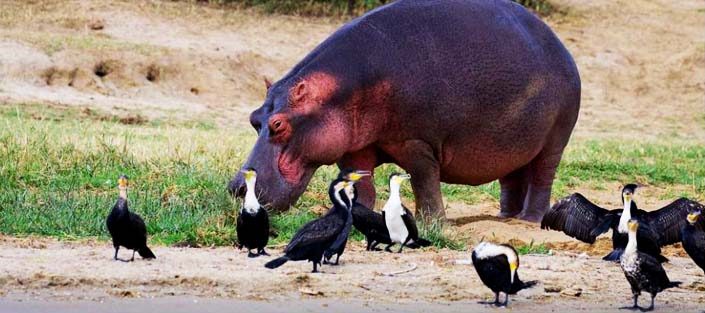
Hippos are the signature animals of an Akagera boat safari.
During daylight, they spend much of their time in water to remain cool and protect their skin from the sun. Visitors may see only eyes, ears and nostrils above the surface before a hippo rises or opens its mouth.
Groups of hippos may rest together in favorable areas. Their grunts and splashes carry across the water and create one of the most recognizable sounds of the lake.
Hippos may appear slow, but they are powerful, territorial animals. Boat operators maintain a safe distance and avoid positioning the vessel between a hippo and deep water.
Passengers must never request an unsafe approach for photographs. A natural encounter observed from an appropriate distance is both safer and more ethical.
Nile Crocodiles
Nile crocodiles are regularly associated with Akagera’s lakes and wetlands.
They may rest on exposed banks with their mouths open, a behavior that helps regulate body temperature. Others remain almost completely submerged, with only their eyes and nostrils visible.
The size of adult crocodiles can be difficult to appreciate until one moves from land into the water.
Crocodiles are ambush predators. Their stillness should never be mistaken for harmlessness.
A zoom lens or binoculars allows passengers to examine details without encouraging the operator to approach too closely.
Elephants
Elephants occasionally visit Lake Ihema’s shores to drink, feed or cool themselves.
A lakeside elephant sighting can become one of the highlights of the cruise. From the water, passengers may observe the animal against woodland or open shoreline rather than from a road.
Sightings are not guaranteed. Elephant movements depend on water, food and disturbances elsewhere in their range.
When elephants are present, the boat guide will maintain an appropriate distance and avoid blocking their access to or from the water.
Buffaloes
African buffaloes may gather near wetland edges or approach the lake to drink.
Large herds are more commonly encountered during game drives, but seeing buffaloes from a boat provides a different viewing angle.
Buffaloes often remain watchful near water. They should be treated with the same respect as predators because they are strong, unpredictable wild animals.
Antelopes
Waterbucks are particularly well suited to lakeside habitats and may be seen near vegetation surrounding the water.
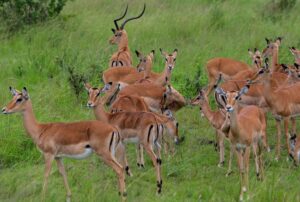
Bushbucks, impalas and other antelopes may also appear along the shore.
These animals can be more difficult to notice than an elephant or buffalo. Binoculars help passengers scan gaps in the vegetation.
Monkeys and Baboons
Vervet monkeys and olive baboons occur in the wooded sections of Akagera.
They may occasionally be observed from the boat when moving or feeding near the shoreline. Such sightings are less predictable than encounters with hippos and waterbirds.
Rare Predator Sightings
Lions, leopards and spotted hyenas can use areas near water, but they are not typical boat-safari sightings.
A predator appearing along the shoreline would be an exceptional encounter rather than a normal expectation.
Travelers primarily interested in predators should combine the cruise with early-morning, late-afternoon or night game drives.
Birds Seen on Lake Ihema

Birdwatching is one of the strongest reasons to book an Akagera boat safari.
Akagera National Park has recorded almost 500 bird species across its wetlands, woodlands, savannah and grassland. Lake Ihema provides access to species that depend on water and papyrus habitats. African Parks
African Fish Eagle
The African fish eagle is one of the most recognizable birds around Lake Ihema.
Adults have a white head and chest, dark wings and a chestnut-colored body. Their powerful calls frequently carry across the lake.
Fish eagles may be seen perched in trees, scanning the water or flying with a fish in their talons.
Pied Kingfisher
Pied kingfishers are active and entertaining birds. They frequently hover above the water before diving in pursuit of fish.
Their black-and-white plumage makes them easy to recognize, even for beginning birdwatchers.
Passengers may see several individuals during a single cruise.
Malachite Kingfisher
The malachite kingfisher is smaller and more colorful. Its brilliant blue and orange plumage makes it a favorite photographic subject.
It usually stays close to reeds or shoreline vegetation, where it hunts small aquatic prey.
Because of its size, binoculars and an observant guide are valuable.
African Jacana
African jacanas walk across floating vegetation using exceptionally long toes that distribute their weight.
They are sometimes called lily-trotters because of this distinctive movement.
A boat provides an ideal position for watching and photographing jacanas among aquatic plants.
Herons and Egrets
Lake Ihema supports several heron and egret species.
Possible sightings include grey herons, purple herons, squacco herons, goliath herons, little egrets, great egrets and cattle egrets.
These birds often stand motionless at the water’s edge before striking rapidly at fish or amphibians.
Cormorants and Darters
Cormorants may be seen swimming low in the water, diving for fish or resting with their wings spread.
African darters swim with much of the body submerged, creating the appearance of a snake moving across the surface.
Both birds use branches and exposed areas to dry their feathers.
African Openbill
The African openbill is a specialized stork with a gap between the upper and lower sections of its bill.
This structure helps it handle aquatic snails and other prey.
Openbills may gather in wetlands or fly between feeding areas.
Grey-Crowned Crane
Rwanda’s elegant grey-crowned crane may be observed in suitable wetland and grassland habitats.
The species is culturally significant and visually distinctive, with a golden crown of feathers.
A sighting from the boat is possible but cannot be guaranteed.
Papyrus Specialists
Akagera’s papyrus habitats support specialized birds such as the papyrus gonolek.
These species can be secretive and difficult to see. Their calls may reveal their presence before the bird becomes visible.
Dedicated birdwatchers should tell the boat guide about their interests before departure.
Shoebill
The shoebill is one of the most desired birds in African wetland tourism.
Its enormous shoe-shaped bill and prehistoric appearance make it unmistakable. However, the species is rare and elusive.
Some promotional articles create the impression that every Lake Ihema cruise will find a shoebill. This is unrealistic. A sighting should be treated as an exceptional bonus rather than an expected result.
Travelers specifically seeking shoebills should allow more time, hire an experienced birding guide and maintain realistic expectations.
Best Season for an Akagera Boat Safari
Boat trips operate throughout the year, subject to weather, water conditions and management decisions.
Each season offers different advantages.
June to September
The long dry season generally extends from June through September.
As smaller water sources become less reliable, animals may visit permanent lakes more frequently. This can improve the chances of seeing mammals near the shoreline.
Road conditions are usually easier, simplifying transfers to and from the boat area.
The landscape can become dusty and golden. This produces classic safari colors but may reduce the green backgrounds preferred by some photographers.
December to February
The shorter dry period can also provide excellent boat and game-viewing conditions.
Vegetation may remain greener than during the later months of the long dry season. Birdlife remains diverse, and comfortable mornings are common.
Holiday dates can be busy, so reservations are important.
March to May
The long rains normally bring greener vegetation, dramatic clouds and strong birdwatching.
Wetland landscapes look particularly vibrant, and migratory birds may be present during parts of the broader wet season.
Rain can interrupt or delay activities when conditions become unsafe. Travelers should retain some flexibility.
A waterproof camera cover and lightweight rain jacket are valuable.
October and November
The shorter rains can create an attractive balance of green scenery, bird activity and fewer visitors.
Weather may change rapidly. A sunny departure can be followed by wind or a shower, although rain does not necessarily last throughout the day.
Travelers should prepare for both sun and precipitation.
What Happens If It Rains?
Light rain does not automatically cancel a boat safari.
The operator evaluates visibility, wind, lightning, water conditions and passenger safety. Heavy storms or dangerous conditions may cause a delay, route adjustment or cancellation.
Decisions are made by the park and boat crew rather than by passengers or tour operators.
Carry a waterproof jacket even when the sky appears clear. Weather can change quickly over a large body of water.
Protect cameras, phones and binoculars with waterproof covers or sealable bags.
If an activity is canceled, refund or rescheduling arrangements depend on the park’s current policy and the conditions attached to the booking.
Is the Akagera Boat Safari Safe?
Yes, when operated under park rules and when passengers follow the crew’s instructions.
The activity takes place in a wild environment containing hippos, crocodiles and changing weather. Consequently, safety procedures are essential.
Passengers receive instructions before departure. Life jackets or other safety equipment should be used as directed.
Remain seated unless the guide explicitly says movement is permitted. Sudden weight shifts can affect the balance of smaller vessels.
Keep hands and equipment inside the boat. Do not touch the water or attempt to reach vegetation.
Never feed wildlife, throw objects or make loud noises to attract an animal’s attention.
Parents must supervise children throughout the trip. Age or participation restrictions may apply depending on the boat and current operating policy.
Passengers who are uncomfortable around water should tell the guide before boarding.
Can Children Take an Akagera Boat Safari?
Children can generally participate, making the cruise an attractive family activity.
However, parents should confirm age requirements, child rates and life-jacket availability during booking.
Young children must remain seated and supervised. They should understand that Lake Ihema contains wild hippos and crocodiles and is not a swimming or recreational play area.
A one-hour daytime trip may be more suitable for younger children than the longer sunset cruise.
Bring sun protection, drinking water and a quiet activity in case a child loses interest between sightings.
Families may prefer a private boat because it provides more flexibility and reduces concern about disturbing other passengers.
Can Senior Travelers Join?
Most senior travelers can enjoy an Akagera boat safari.
The activity requires considerably less physical effort than trekking. The main challenge is boarding and leaving the vessel.
Travelers with limited mobility, joint problems or balance concerns should communicate their needs before booking. The operator can explain the boat design, steps and available assistance.
A private trip may allow more time for boarding without pressure.
Passengers with serious back conditions should ask about seating and water conditions. Even calm lakes can produce some movement.
Accessibility and Mobility Considerations
Accessibility varies according to the jetty, boat and water level.
Wheelchair users and travelers requiring substantial assistance should request detailed information before paying.
Provide exact requirements rather than simply asking whether the activity is “accessible.” Explain whether the traveler can transfer from a wheelchair, climb steps or remain seated without support.
A tour operator can coordinate vehicle positioning, additional assistance and an appropriate vessel when possible.
Operational and safety limits may prevent some arrangements, but early communication creates the best chance of finding a suitable solution.
What to Wear on an Akagera Boat Safari
Wear comfortable, lightweight clothing suitable for warm conditions.
Neutral colors such as beige, green, brown and grey work well for wildlife activities. Bright colors are generally less practical but are not the primary safety concern on a boat.
A wide-brimmed hat protects the face and neck. Choose one with a secure strap because wind can remove loose hats.
Wear sunglasses with a retaining cord. Polarized lenses can reduce glare and help passengers see details near the surface.
Closed shoes or secure sandals are better than loose flip-flops when boarding.
Bring a light jacket for early morning and sunset departures. Temperatures feel cooler when the boat is moving.
During the rainy season, carry a lightweight waterproof layer.
What to Pack
The essentials are binoculars, a camera, sunscreen, insect repellent, drinking water and weather protection.
Bring a dry bag or waterproof pouch for phones, passports and other sensitive items.
A lens cloth is useful because spray, humidity and fingerprints can affect photographs.
Pack spare camera batteries and memory cards. The excitement of frequent bird sightings can lead to more photographs than expected.
Avoid bringing unnecessary luggage onto the boat. Space is limited, and loose items can create inconvenience or safety problems.
Large suitcases should remain in the safari vehicle or accommodation.
Photography Tips for Lake Ihema
A boat safari offers excellent photographic opportunities, but it also creates technical challenges.
A zoom lens between approximately 100mm and 400mm is useful for birds, hippos, crocodiles and shoreline wildlife.
Bring a wider lens for landscapes, sunsets and environmental photographs.
Use a faster shutter speed than you might use on land. Even when the boat appears stable, small movements can cause blurred images.
Image stabilization can help, but it does not completely replace a sufficiently fast shutter speed.
Continuous autofocus is useful for flying birds. Burst mode can improve the chance of capturing a kingfisher diving or a fish eagle taking off.
Avoid changing lenses repeatedly on the water. Spray and dust can reach the camera sensor.
A polarizing filter may reduce glare and improve water color, but it also reduces the light reaching the sensor. Monitor shutter speed carefully.
Do not use flash directly in the faces of animals or birds.
Protect equipment with a dry bag, rain cover or simple waterproof wrap.
Photographing Hippos
Hippos often expose only a small part of the head, which can make composition challenging.
Focus on the eyes when possible. Wait for yawning, splashing or interactions rather than taking only static images.
Leave space in the frame around the animal to show its wetland environment.
A low viewing angle from the boat can produce powerful photographs, but passengers must remain seated and follow instructions.
Do not ask the operator to move too close. A longer lens creates a safer and more natural result.
Photographing Birds
Bird photography requires patience and a quick response.
Watch a perched bird’s body language. A fish eagle leaning forward or a kingfisher changing posture may be preparing to fly.
Use continuous autofocus and a fast shutter speed for flight.
For stationary herons and crocodiles, lower shutter speeds may be possible, but remember that the boat continues to move.
Expose carefully for white birds. Strong sunlight can remove feather detail if highlights become overexposed.
A private boat is helpful for serious bird photographers because it allows the group to spend more time with suitable subjects.
Sunset Photography
The 4:30 p.m. cruise provides the best chance of warm evening colors.
Expose for the brightest part of the sky if you want silhouettes of birds, trees or hippos.
For balanced detail, take several exposures as light changes.
Reflections can become an important part of the composition when the water is calm.
Do not spend the entire experience looking through a screen. Set aside time to watch the sunset and wildlife directly.
Combining a Boat Safari with a Game Drive
The most complete Akagera itinerary includes both activities.
A boat safari concentrates on Lake Ihema, hippos, crocodiles and birds. A game drive explores habitats used by lions, rhinoceroses, elephants, giraffes, zebras and antelopes.
For a two-day itinerary, travel from Kigali on the first morning and take the 3:00 p.m. or 4:30 p.m. cruise. Begin a full game drive early on the second day.
For a one-day itinerary, a morning game drive followed by the 3:00 p.m. cruise may work if the route remains within the southern and central areas.
Attempting a complete south-to-north drive and a late boat safari on the same day may create logistical problems because the cruise returns visitors to the southern area.
Your route must account for entrance and exit gates, road conditions and park-closing times.
Combining the Cruise with a Night Drive
Overnight visitors can combine a sunset boat safari with a night game drive.
After returning from Lake Ihema, guests normally have a short interval before the night activity. Dinner arrangements may need to be adjusted.
Night drives create opportunities to search for leopards, hyenas, genets, mongooses, bush babies and nocturnal birds.
The combined experience can be tiring after a long road transfer. It is most suitable for travelers staying at least two nights or arriving in Akagera before midday.
Both activities have limited capacity and should be reserved in advance.
One-Day Akagera Boat Safari from Kigali
A one-day trip requires an early departure from Kigali.
The drive to Akagera normally takes around two and a half hours, depending on traffic and road conditions. After entrance formalities, visitors begin a game drive in the southern or central area.
A practical schedule can include a morning game drive, lunch and the 3:00 p.m. boat excursion. After the cruise, the group leaves the park and returns to Kigali.
The sunset boat is possible, but the return to Kigali will be late. Travelers should use an experienced driver and avoid scheduling an early flight the following morning.
A one-day itinerary provides a good introduction, but it offers less flexibility if wildlife is quiet or weather affects the boat trip.
Two-Day Akagera Boat Safari Itinerary
A two-day safari offers a better balance.
On day one, your guide collects you from Kigali after breakfast. You travel through Rwanda’s Eastern Province and enter Akagera around midday.
After lunch, join the 3:00 p.m. or sunset boat cruise on Lake Ihema. Watch hippos, crocodiles and waterbirds while learning about the wetland ecosystem.
Continue to your lodge for dinner. If arranged, take an authorized night drive.
On day two, leave early for a full game drive. Explore woodland, lakeside areas and open northern plains while searching for the Big Five, giraffes, zebras and antelopes.
After leaving the park, return to Kigali in the evening.
Three-Day Akagera Boat Safari Itinerary
A three-day itinerary is ideal for photographers, birdwatchers and travelers who prefer a slower pace.
On day one, leave Kigali and travel to Akagera. After lunch, take the 3:00 p.m. cruise and enjoy a short evening drive.
On day two, begin a full-day game drive at sunrise. Spend time in the most productive habitats without rushing. Return for dinner and join a night safari.
On day three, take the 7:30 a.m. boat excursion for morning birds and different lighting. Alternatively, arrange a community experience or behind-the-scenes conservation visit before returning to Kigali.
Taking both an afternoon and morning boat trip may seem repetitive, but wildlife behavior and photographic conditions can differ considerably.
Where to Stay Near the Boat Safari
Accommodation location influences how easily travelers can reach Lake Ihema.
Ruzizi Tented Lodge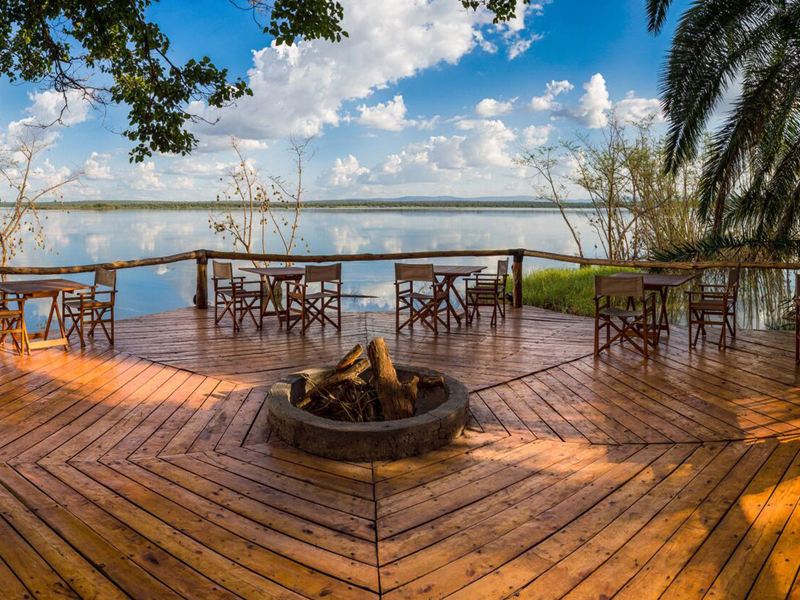
Ruzizi Tented Lodge overlooks Lake Ihema and provides convenient access to boat activities.
The tented accommodation combines comfort with a natural setting. Guests can hear wildlife and birds from the surrounding woodland and wetland.
Ruzizi is an excellent choice for travelers who consider the boat safari a central part of the Akagera experience.
Akagera Game Lodge
Akagera Game Lodge offers hotel-style accommodation in the southern region.
It works well for families, groups and travelers who prefer conventional facilities. Its location is convenient for the main entrance and Lake Ihema.
Campsites
Designated campsites provide a more adventurous and affordable experience.
Campers can book boat trips, game drives and other activities subject to availability. They must follow wildlife-safety rules and prepare appropriate equipment.
Karenge Bush Camp
Karenge Bush Camp is situated in the northern part of Akagera.
It offers excellent access to the northern plains but is less convenient for an early Lake Ihema cruise. A stay can be combined with accommodation in the south.
Magashi Camp
Magashi is a luxury camp in northern Akagera near Lake Rwanyakazinga.
Its location provides a premium wetland and wildlife experience, but the lodge’s boating activities and setting should not be confused with the scheduled public boat safari on Lake Ihema.
Travelers specifically wanting the official Lake Ihema excursion should ensure it is included in the itinerary.
Birdwatching Safari Planning
Birdwatchers should inform the guide about target species before departure.
A general boat guide may naturally focus on hippos and crocodiles unless passengers communicate a strong birding interest.
Bring binoculars with good brightness and a field guide or identification application that works offline.
Morning departures generally provide stronger bird activity. However, afternoon cruises can still produce excellent sightings.
A private boat allows birders to spend more time near productive papyrus edges and observe behavior without needing to balance unrelated passenger interests.
Do not use loud playback to attract birds unless specifically authorized and conducted responsibly. Excessive playback can disrupt territorial and breeding behavior.
Akagera Boat Safari for Honeymooners
The sunset cruise is particularly suitable for honeymooners.
Warm light, open water and distant animal sounds create a peaceful atmosphere after a day of game viewing.
A private boat offers greater privacy and flexibility. Couples can combine it with a luxury lodge, private game drives and a special dinner.
Mention the honeymoon during booking. Accommodation teams may be able to provide thoughtful arrangements, although complimentary services should never be assumed.
The experience combines well with gorilla trekking and a Lake Kivu stay for a varied Rwanda honeymoon.
Akagera Boat Safari for Solo Travelers
Solo travelers can join a scheduled cruise and pay the standard individual rate.
This makes the boat safari more affordable than arranging a private activity alone.
Joining a shared excursion can also be social. However, solo photographers who require specific positioning may prefer a private boat if their budget permits.
Transportation from Kigali often represents the largest expense for a solo visitor. Ask about a scheduled group safari or an available departure that can be shared with compatible travelers.
Akagera Boat Safari for Groups
Groups should reserve early because boat capacity is limited.
Provide the exact number of adults and children. Avoid estimating attendance, as the park must assign a suitable vessel.
A private boat may be economical when its flat rate is divided across several passengers.
Large groups may require more than one boat. If so, agree on how travelers will be divided, particularly when families or photographers want to remain together.
The group leader should communicate safety requirements before arrival to reduce delays at the jetty.
Food, Drinks and Restroom Planning
Scheduled boat trips are relatively short, and meals are not normally served during the excursion.
Eat beforehand if the cruise overlaps with your usual lunch or dinner time.
Carry drinking water when permitted, but avoid bringing unnecessary food onto the vessel.
Alcohol is inappropriate before or during the activity because passengers must understand and follow safety instructions.
Use restroom facilities before boarding. There are no ordinary restroom stops once the vessel is on the lake.
Your lodge or tour operator can arrange lunch before or after the cruise. Packed meals must be consumed only in designated areas.
Responsible Tourism on Lake Ihema
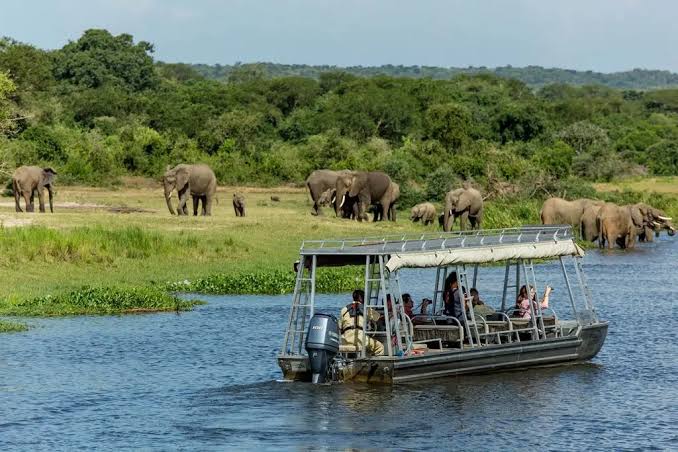
Responsible boating protects wildlife and preserves the experience for future visitors.
The boat should maintain appropriate distances from hippos, crocodiles, nesting birds and shoreline animals.
Passengers must not throw food, plastic or other waste into the lake.
Keep voices low near wildlife. Loud noise can disturb animals and reduce the quality of everyone’s viewing experience.
Avoid pressuring the guide to pursue animals or remain too long beside sensitive species.
Do not remove plants, feathers, eggs, shells or other natural materials.
When sharing photographs, avoid captions that encourage unsafe behavior or suggest that close approaches are necessary for a successful safari.
Tourism revenue contributes to park management and surrounding communities. In 2025, Akagera became a financially self-sustaining conservation landscape, while a proportion of park revenue supports Rwanda’s community-development program. African Parks
Common Booking Mistakes
The first mistake is assuming that a boat trip is automatically included in the park entrance fee. It is normally a separate activity.
The second is arriving from Kigali without allowing enough time. Traffic, entrance formalities and the internal transfer to the jetty can cause delays.
Another mistake is relying on an outdated departure schedule. Independent websites may display different times, so the final booking should follow the park’s confirmation.
Some travelers wait until arrival to reserve the sunset cruise. Limited capacity means the preferred departure may already be full.
Others book a northern lodge without considering the distance to Lake Ihema in the south.
Finally, travelers sometimes expect to see lions, leopards or rhinoceroses from the boat. These sightings are possible but unusual. A game drive remains essential for a comprehensive wildlife experience.
Frequently Asked Questions
How long is an Akagera boat safari?
Scheduled morning and daytime cruises normally last approximately one hour. The sunset cruise generally lasts around 90 minutes.
Where does the boat safari take place?
The scheduled Akagera boat safari operates on Lake Ihema in the southern part of the national park.
What time do boat trips depart?
The official scheduled times are generally 7:30 a.m., 9:00 a.m., 3:00 p.m. and 4:30 p.m. Private trips may be arranged at other approved times.
How much does the Akagera boat safari cost?
Published rates are approximately USD 35 per adult for a scheduled daytime cruise and USD 45 for the sunset trip. Private boats are charged at a flat rate. Confirm prices before booking.
Is the entrance fee included?
No. Park entrance and vehicle fees are generally separate unless included in a complete tour package.
What animals will I see?
Hippos, Nile crocodiles and waterbirds are common possibilities. Elephants, buffaloes and antelopes may appear near the shoreline, but sightings are not guaranteed.
Can I see lions from the boat?
It is possible but uncommon. A land-based game drive provides a much better chance of finding lions.
Is the shoebill guaranteed?
No. Shoebills are rare and unpredictable. They should be considered an exceptional sighting.
Which boat trip is best?
The 7:30 a.m. departure is excellent for birding and softer light. The 4:30 p.m. cruise is best for sunset atmosphere.
Is a private cruise worthwhile?
A private trip is worthwhile for families, groups, photographers and couples seeking privacy. The flat boat rate can also be economical when shared among several passengers.
Can children participate?
Children can generally join, subject to current age and safety policies. Parents must supervise them at all times.
Do I need to wear a life jacket?
Passengers must use safety equipment according to the boat crew’s instructions.
Can I stand for photographs?
Remain seated unless the guide specifically permits movement. Sudden movement can affect the vessel’s balance.
What should I bring?
Bring binoculars, a camera, sunscreen, a hat, insect repellent, drinking water, a light jacket and waterproof protection.
Can I take the cruise during the rainy season?
Yes, subject to safe conditions. Heavy rain, wind or lightning may cause delays or cancellations.
How far is Lake Ihema from Kigali?
Akagera National Park is approximately 110 kilometers from Kigali. The journey normally takes around two and a half hours before allowing for park formalities.
Can I combine the cruise with a one-day safari?
Yes. A morning game drive followed by the 3:00 p.m. cruise is often the most practical arrangement.
Should I stay overnight?
An overnight stay is strongly recommended when you want a relaxed itinerary, an early cruise, a sunset boat trip or a night drive.
Can I bring a drone?
Do not assume drones are permitted. Operating one requires specific authorization and may be prohibited because of wildlife and security concerns.
Do boats operate every day?
They normally operate daily, but departures depend on bookings, weather, water conditions and park operations.
How do I reserve?
Book through Akagera National Park, your lodge or a licensed Rwanda safari operator. Obtain written confirmation of the date and time.
Is an Akagera Boat Safari Worth It?
Yes. The Lake Ihema boat safari is one of the best complementary activities in Akagera National Park.
It offers reliable opportunities to observe hippos, crocodiles and wetland birds while providing a welcome contrast to vehicle-based game viewing.
The experience is particularly worthwhile for birdwatchers, photographers, families and travelers staying at least one night.
Visitors with only a few hours in the park should prioritize according to their interests. Someone determined to find lions and rhinos may choose a longer game drive. A traveler wanting ecological variety should include the boat trip.
For most two-day itineraries, the strongest combination is a sunset boat safari on the arrival day followed by a full game drive the next morning.
Final Advice from This Akagera Boat Safari Complete Guide
Reserve the cruise before arriving, especially when you want the 4:30 p.m. sunset departure.
Confirm the current schedule, rates, child policy, meeting point and required arrival time. Do not rely entirely on an older article or social-media post.
Choose your departure according to your main interest. Take the earliest cruise for birds and softer conditions, or select sunset for atmosphere and warm light.
Combine the boat excursion with a game drive. Lake Ihema reveals the wetland ecosystem, but Akagera’s plains and woodland provide the best opportunities for the Big Five and other terrestrial wildlife.
Bring binoculars even if you are not a dedicated birdwatcher. Many of the lake’s most interesting details are small or distant.
Listen to the guide, remain seated when instructed and allow wildlife to control every encounter. A respectful distance protects passengers and animals while producing more natural observations.
Above all, slow down. The beauty of an Akagera boat safari comes from watching the lake carefully: the eyes of a hippo appearing above the surface, a jacana stepping across floating vegetation or a fish eagle calling from a lakeside tree.
Book an Akagera Boat Safari with Universal Ventures Rwanda
Universal Ventures Rwanda organizes private and customized Akagera National Park safaris for solo travelers, couples, families and groups.
Our team can arrange transportation from Kigali, private four-wheel-drive safari vehicles, professional driver-guides, park entrance, accommodation, meals, scheduled Lake Ihema boat trips, private cruises, game drives and night safaris.
We also design complete Rwanda itineraries combining Akagera National Park with gorilla trekking in Volcanoes National Park, chimpanzee trekking in Nyungwe National Park, Kigali city tours and relaxing experiences on Lake Kivu.
Contact us with your travel date, number of visitors and preferred safari duration. We will help you select the most suitable boat departure and organize the rest of your Akagera experience.
Universal Ventures Rwanda
Address: KN 15 Road, opposite IPRC Entrance, 1st Floor, SANGWA Plaza, Kigali, Rwanda
Telephone and WhatsApp: +250 781 441 853
Email: info@universalventuresrwanda.com
Website: www.universalventuresrwanda.com