This Akagera Wildlife Checklist will help you recognize the animals you may see during a Rwanda safari. It groups species by category, explains where visitors commonly look for them and describes the behavior that makes each animal interesting.
Akagera National Park offers Rwanda’s most complete traditional wildlife safari. Its rolling hills, open plains, woodland, lakes and papyrus wetlands support an exceptional variety of animals. Visitors can search for lions at sunrise, watch elephants beside a lake, photograph giraffes on open grassland and observe hippos during a boat safari.
The park also protects all members of Africa’s famous Big Five: lion, leopard, elephant, buffalo and rhinoceros. Beyond those celebrated species, travelers may encounter zebras, giraffes, topis, impalas, elands, waterbucks, warthogs, baboons, monkeys, crocodiles and hundreds of bird species.
However, a wildlife checklist should never turn a safari into a rushed competition. No park can guarantee a particular sighting because wild animals move freely. Weather, water, vegetation, time of day and simple luck all influence each game drive.
Use the checklist as a guide, but also appreciate Akagera’s landscapes, plants and smaller creatures. A quiet moment beside a wetland or an unexpected bird sighting may become one of the most memorable parts of your journey.
Why Akagera National Park Has Such Diverse Wildlife
Akagera lies in eastern Rwanda along the border with Tanzania. Its location and varied landscapes create habitats for savannah animals, wetland species, woodland wildlife and an impressive range of birds.
Open plains provide grazing grounds for zebra, topi, impala and buffalo. Wooded areas give leopards, bushbucks and smaller mammals cover. Lakes and swamps support hippos, crocodiles, waterbirds and papyrus specialists.
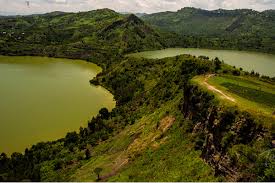
Water shapes much of the park. Lakes, channels and wetlands occupy roughly one-third of Akagera’s landscape, making it one of Central Africa’s most important protected wetland systems. This mixture of water and savannah distinguishes Akagera from many other East African parks. African Parks
The park now supports thriving populations of large mammals following years of conservation work. Lions returned in 2015, while eastern black rhinos returned in 2017. Southern white rhinos arrived in 2021, and conservation partners introduced additional white rhinos in June 2025. African Parks
These successful reintroductions restored Akagera’s status as Rwanda’s only Big Five national park.
How to Use This Akagera Wildlife Checklist
Review the animals before your safari and save the page on your phone for offline reference. You can also print the checklist and mark each sighting during your game drive.
Next to every species, record the date, approximate location and interesting behavior. For example, do not write only “elephant.” Note whether you saw a family group drinking, a bull feeding alone or calves walking between protective adults.
Photographers can add frame numbers or file names. Birdwatchers may also record habitat, flock size and calls.
Remember that your guide provides the best immediate identification. Similar antelope species can confuse first-time visitors, especially at a distance. Young animals may also have different colors or markings from adults.
Most importantly, observe every animal calmly. Avoid pressuring the guide to drive too quickly between sightings. Slow wildlife watching often reveals behavior that hurried visitors miss.
Akagera Wildlife Checklist: The Big Five
Akagera protects lion, leopard, elephant, buffalo and both black and white rhinoceros. Seeing all five during one visit would create an exceptional safari, but travelers should never expect a guaranteed result.
Some members of the Big Five remain easier to find than others. Buffalo and elephants often appear during daytime game drives, while leopards can remain hidden even when they live nearby.
Lion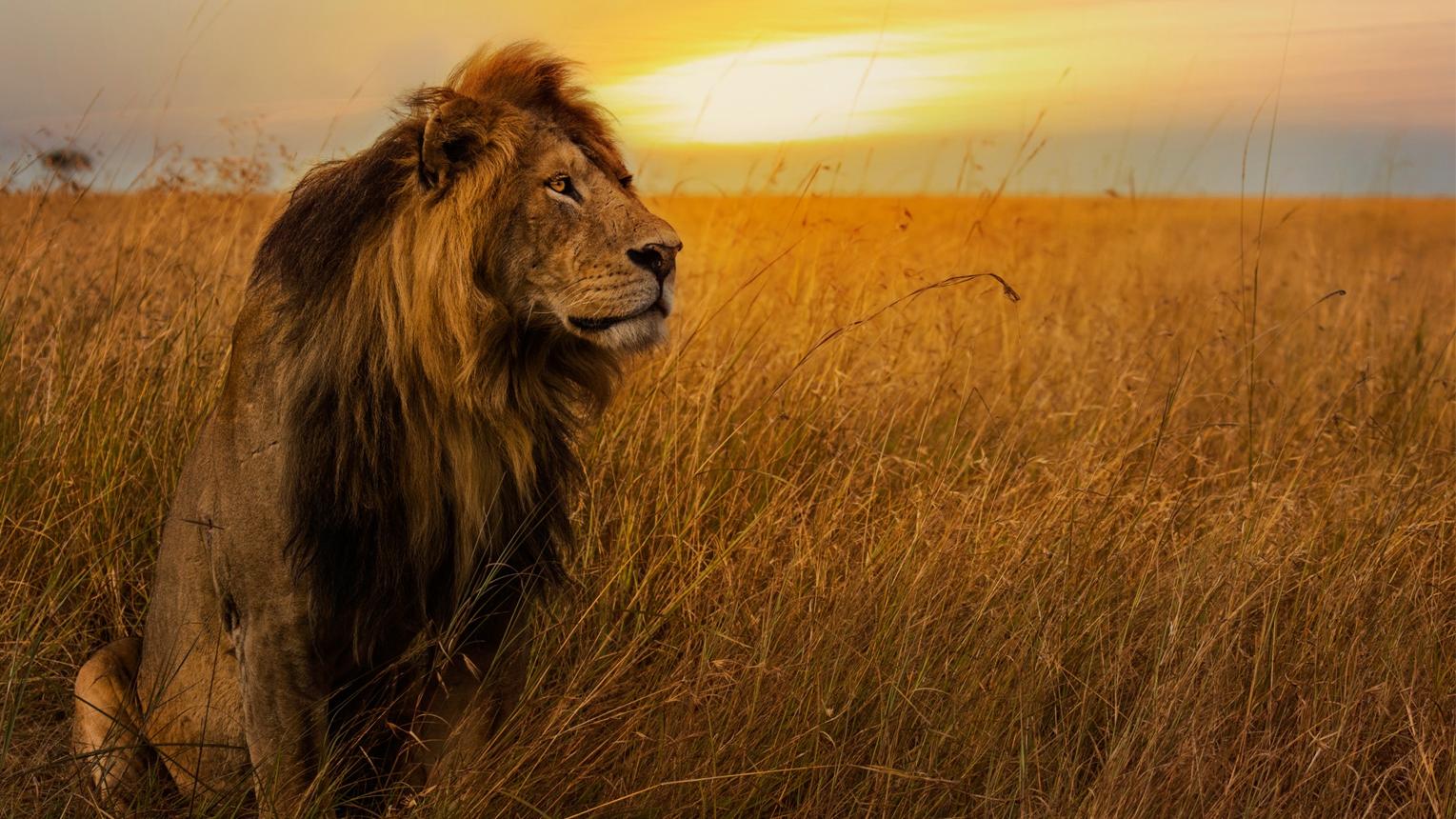
Lions returned to Akagera National Park in 2015 after an absence of almost two decades. Conservation teams initially introduced seven lions, followed by additional animals to strengthen genetic diversity. The population has grown through successful breeding. African Parks
Early morning offers one of the best opportunities to see lions. Cooler conditions encourage activity, and the cats may still remain near a nighttime kill.
Look across open plains, along woodland edges and near concentrations of herbivores. Lions often rest in grass or shade during the heat of the day.
A male lion’s mane makes him easy to recognize. Lionesses lack the mane and perform much of the pride’s coordinated hunting. Cubs may play, climb over adults and practice stalking.
When you find lions, allow enough space and keep noise low. Never pressure resting cats for movement. Patient observation often produces better photographs and more natural behavior.
Leopard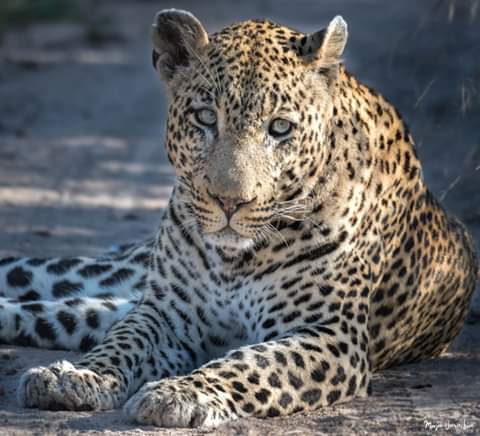
The leopard ranks among Akagera’s most difficult large animals to find. Its spotted coat provides excellent camouflage in woodland, grass and rocky terrain.
Leopards usually live alone and often move during low-light hours. They may rest in dense vegetation or climb trees, although not every leopard spends long periods on visible branches.
Search woodland edges, rocky slopes and quiet tracks early in the morning. Guides also look for fresh tracks, alarm calls and the nervous behavior of antelopes or monkeys.
A night game drive can improve your chances because spotlights may reveal a leopard’s reflective eyes. However, even experienced guides cannot guarantee a sighting.
Do not feel disappointed if a leopard remains hidden. Its elusive nature makes every encounter special.
African Elephant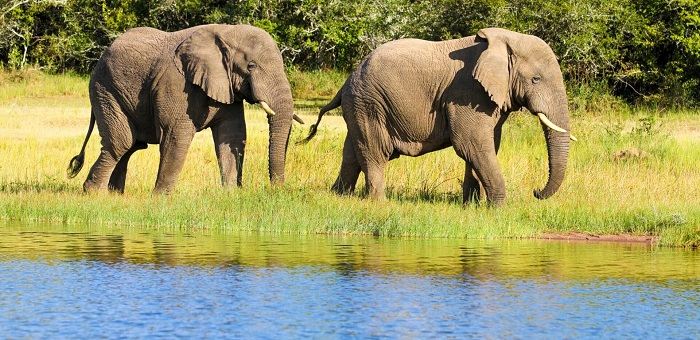
Elephants rank among Akagera’s most impressive animals. Their size, intelligence and complex social relationships make them fascinating to observe.
Family groups normally consist of related females and calves led by an experienced matriarch. Adult bulls may travel alone or join temporary male groups.
Elephants use their trunks to smell, drink, feed, communicate and investigate objects. Watch how young calves learn by copying older animals.
Wetlands, lakeshores, woodland and open plains can all produce elephant sightings. During dry conditions, water sources become particularly important.
Give elephants generous space. A raised head, headshake, stiff posture or direct approach may indicate discomfort. Your guide should reverse calmly rather than blocking the herd.
African Buffalo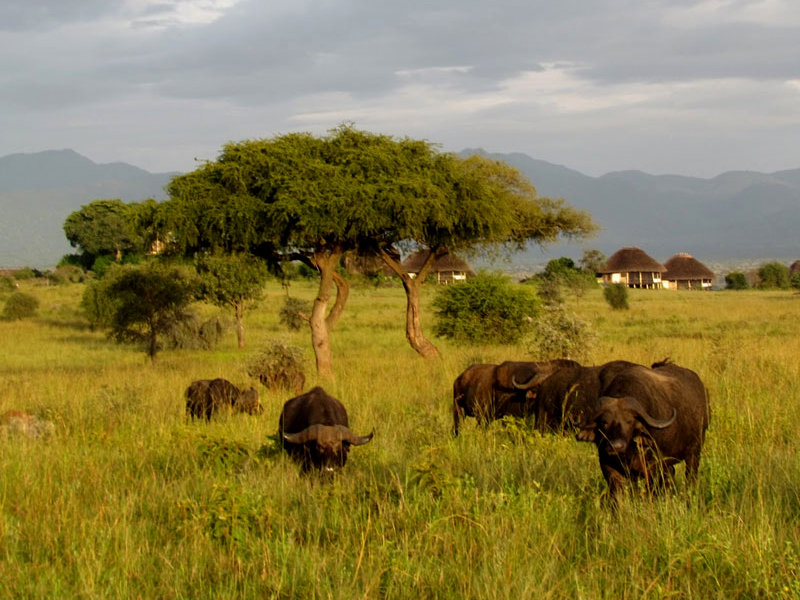
Buffalo occur throughout Akagera’s grasslands, woodlands and wet areas. Visitors may encounter small groups, large herds or solitary old bulls.
Their heavy bodies, broad ears and curved horns create a powerful appearance. Adult males often develop thick horn bases across the forehead.
Large herds may graze in open areas during cooler hours before moving toward shade or water. Oxpeckers frequently sit on their backs and feed on ticks.
Never underestimate buffalo. They can react quickly when threatened, particularly if a person approaches on foot. Remain inside the vehicle unless park staff designate an area as safe.
Eastern Black Rhinoceros
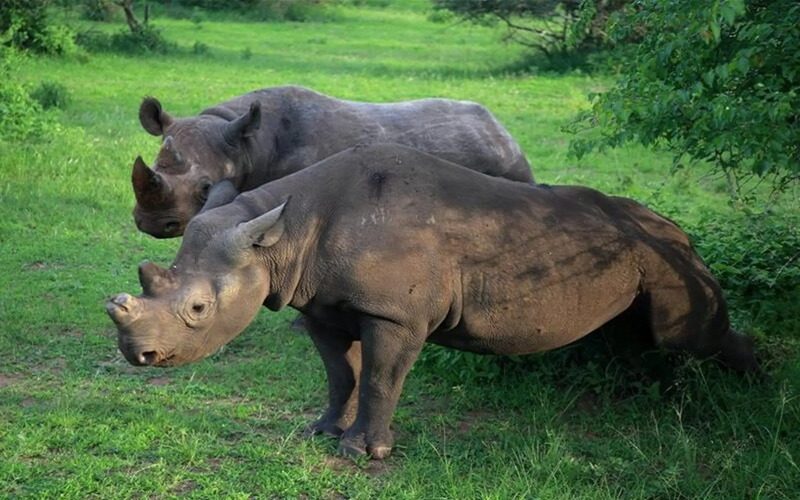
Akagera welcomed eastern black rhinos back in 2017 after approximately ten years without them. The original reintroduction included 18 animals, while later additions strengthened genetic diversity.
Black rhinos have a pointed, prehensile upper lip that helps them browse leaves and branches. They often feed in bushy areas rather than on open grassland.
Despite their name, black rhinos do not necessarily look black. Mud, soil and lighting influence their visible color.
These rhinos can remain difficult to locate because they use thick vegetation and move across large areas. Rangers monitor them closely for conservation and security.
Maintain a respectful distance and never share precise rhino locations publicly in real time.
Southern White Rhinoceros
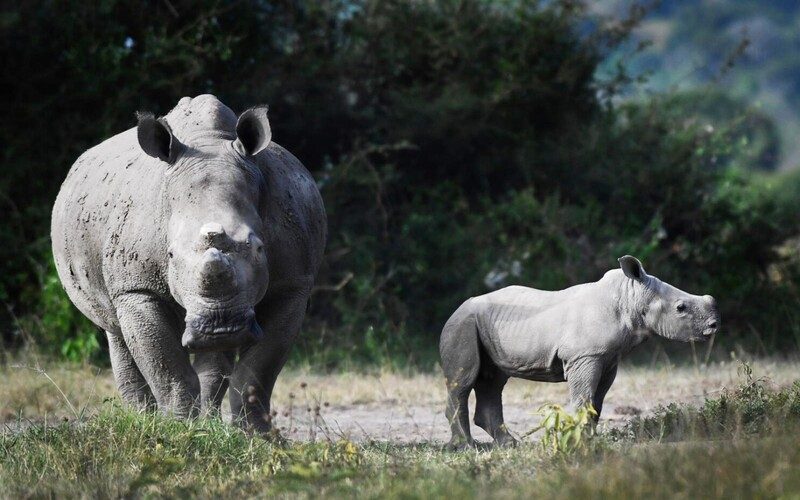
Thirty southern white rhinos arrived in Akagera in 2021. Another 70 joined the park in June 2025, strengthening Rwanda’s contribution to rhino conservation.
White rhinos have a broad, square upper lip designed for grazing. They often spend more time in open grassland than black rhinos.
Their name does not refer to body color. Both black and white rhinos can appear grey, brown or almost black depending on mud and light.
Visitors may see white rhinos grazing alone, in pairs or in small groups. Mothers remain protective of their calves and require plenty of space.
Large Herbivores on the Akagera Wildlife Checklist
Akagera’s herbivores shape the landscape and support its predators. Some species appear frequently, while others require careful searching.
Masai Giraffe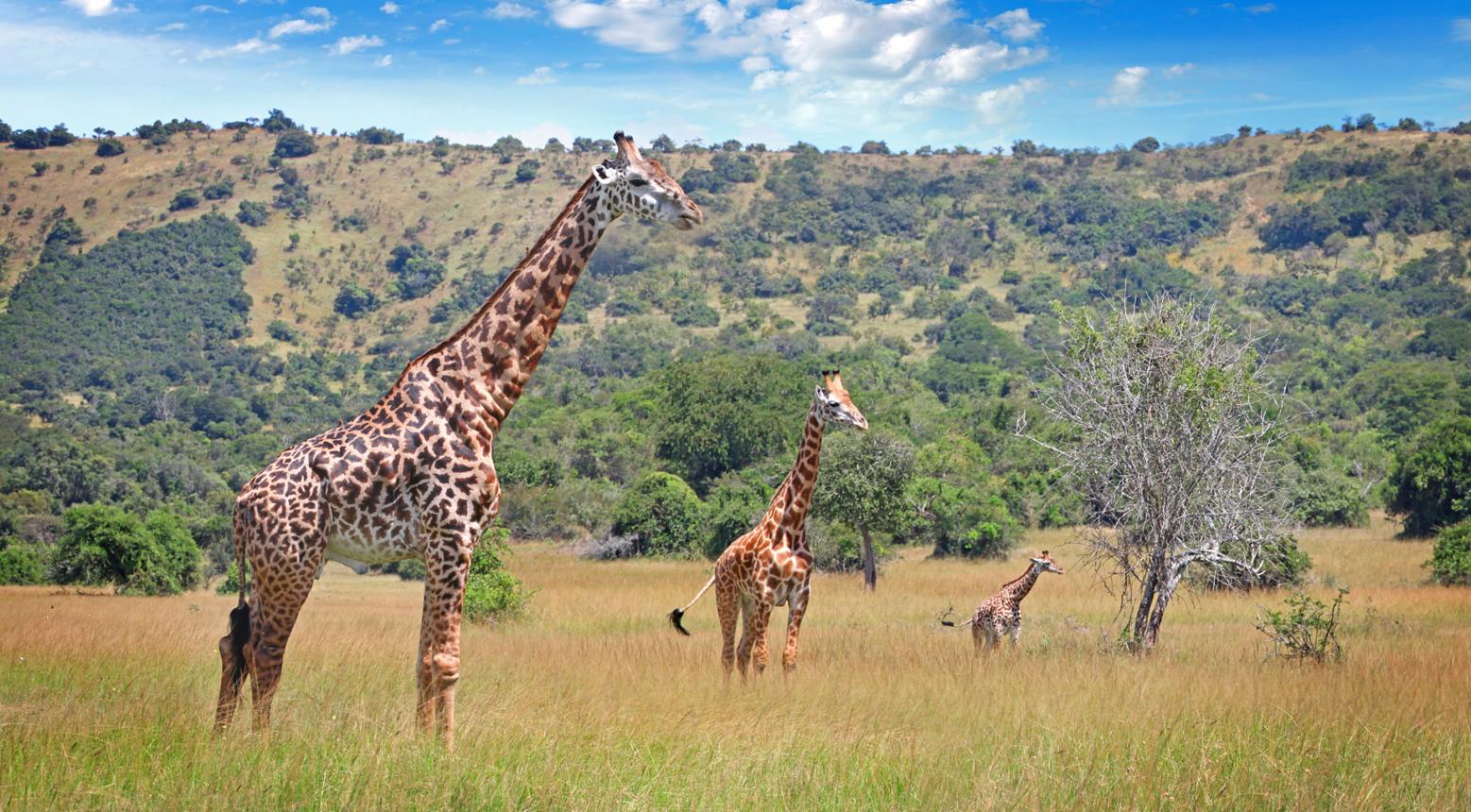
Giraffes create some of Akagera’s most beautiful photographs. Their height allows them to feed above most other herbivores.
Masai giraffes have irregular, leaf-shaped patches with jagged edges. Each individual carries a unique coat pattern.
Search open woodland, acacia areas and savannah plains. Giraffes often move slowly between trees and stop to browse.
Their long necks give them a wide view of the landscape. Other animals sometimes respond when giraffes stare intently toward a possible predator.
Watch giraffes walk to appreciate their unusual movement. Both legs on one side move before the pair on the other side, creating a distinctive pacing gait.
Plains Zebra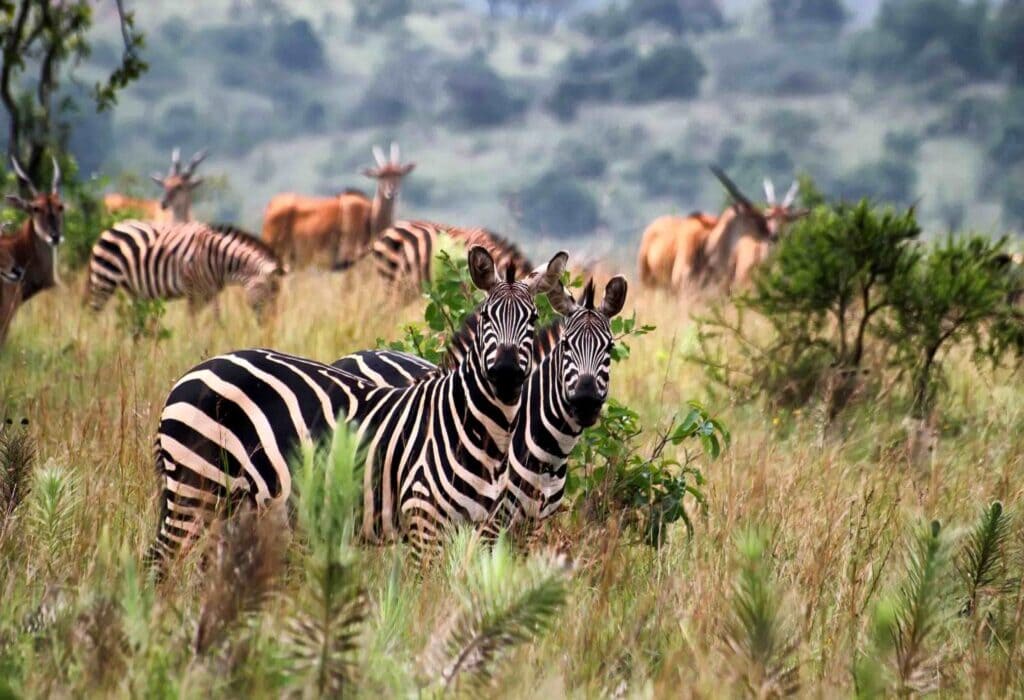
Zebras commonly appear on open grassland in northern Akagera. Their black-and-white stripes make them easy to identify.
Every zebra has a unique pattern. Stripes may help with social recognition, temperature regulation and confusing biting insects or predators.
Family groups usually contain one stallion, several mares and their young. Larger herds form when multiple groups come together.
Zebras often graze alongside topis, impalas and buffalo. Different species can alert one another to danger.
Early morning light produces excellent zebra photographs, particularly when dust or mist creates atmosphere.
Hippopotamus
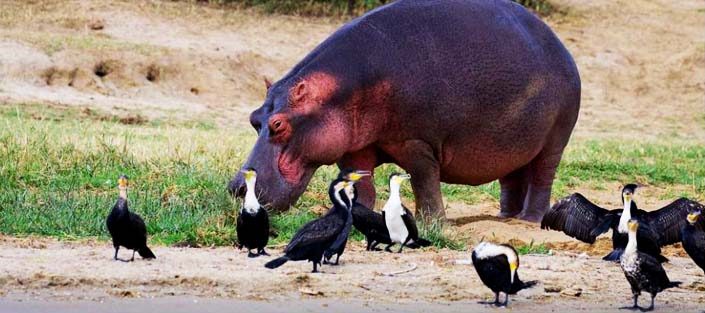
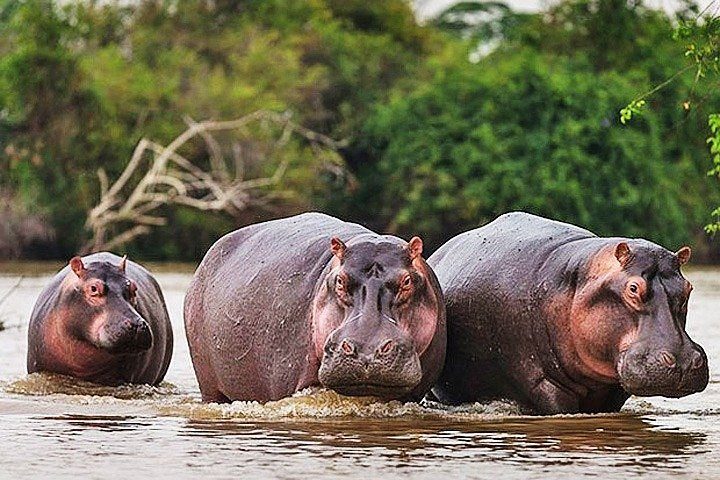
Hippos spend much of the day in water, where they protect their skin from heat and sunlight. Lake Ihema and Akagera’s other wetlands provide excellent habitat.
A boat safari creates one of the best ways to observe them. Visitors may see ears, eyes and nostrils above the surface before a hippo raises its head or yawns.
Despite their heavy appearance, hippos move quickly on land. They leave the water after dark to graze and may travel considerable distances.
Never stand between a hippo and the water. Boat operators also maintain a safe distance because territorial males can react aggressively.
Common Eland

The common eland ranks as the world’s largest antelope. A mature male can look almost cattle-like because of his size and heavy neck.
Both sexes carry spiral horns, although males usually develop thicker bases. Adults often show a hanging flap of skin beneath the throat.
Elands may appear shy and move away from vehicles. Search open woodland and grassland, particularly during cooler hours.
Their ability to jump remains surprising. Despite their weight, elands can clear impressive obstacles.
Waterbuck

Waterbucks have shaggy brown-grey coats and usually remain close to water. A pale ring around the rump helps identify the common waterbuck.
Males carry long, curved horns, while females have no horns. Their sturdy bodies distinguish them from smaller antelopes.
Look near lakes, marshes and moist grassland. They may graze in open areas before retreating into cover.
Waterbucks release an oily skin secretion that helps protect their coats. This adaptation suits their frequent use of wet habitats.
Topi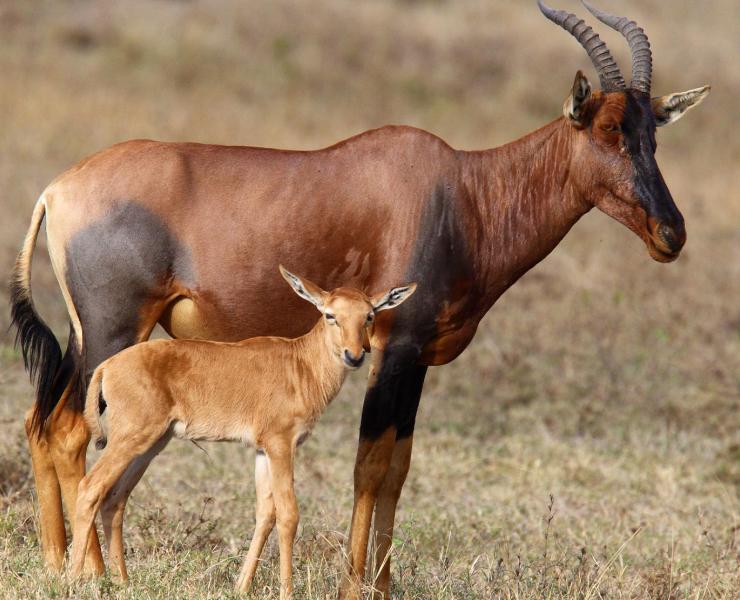
Topis rank among Akagera’s most characteristic plains animals. Their reddish-brown bodies, darker legs and elongated faces make them easy to distinguish.
These antelopes often stand on termite mounds to scan for predators. Their elevated position also creates excellent photography opportunities.
Topis can run extremely fast when threatened. Groups may include females, calves and territorial males.
Northern plains offer productive topi habitat. Look for them alongside zebras and other grazing animals.
Impala
Impalas occur commonly throughout suitable woodland and savannah. Their reddish coats, pale underparts and black rump markings create an elegant appearance.
Only males carry long, lyre-shaped horns. Females and young animals often gather in larger breeding herds.
Bachelor males form separate groups outside the breeding season. Territorial behavior becomes more obvious when males compete for access to females.
Impalas can leap high and far when escaping danger. Watch their group carefully because sudden staring or alarm calls may reveal a predator.
Defassa Waterbuck
The Defassa waterbuck differs from the common waterbuck through its rump pattern. Instead of a complete white ring, it has a broad white patch around the tail.
Akagera lies within a region where visitors may encounter waterbuck forms that require careful identification. Ask your guide to explain the visible differences.
Roan Antelope
Roan antelopes have powerful bodies, long backward-curving horns and distinctive black-and-white facial markings.
They generally prefer open woodland and grassland. Sightings may require patience because their distribution remains less predictable than that of impalas or topis.
Their name comes from the reddish or greyish-roan color of the coat.
A roan sighting deserves time. Observe the animal’s strong shoulders, upright mane and confident posture.
Smaller Antelopes and Grazing Animals
Smaller species add variety to the Akagera Wildlife Checklist. Careful observation around woodland edges and thick vegetation can reveal animals that visitors often overlook.
Bushbuck
Bushbucks prefer woodland, thickets and areas close to water. Their secretive behavior allows them to disappear quickly into vegetation.
Males usually have darker coats and spiral horns. Females show a lighter reddish-brown color.
Look along forest edges during the early morning or late afternoon. A stationary vehicle gives the animal time to emerge.
Oribi
The oribi is a small, slender antelope with a tan coat and white underparts. Males carry short, straight horns.
Oribis favor open grassland. They may crouch low before suddenly running when danger approaches.
Their small size makes them easy to miss among taller grass. Binoculars help distinguish them from young impalas.
Bohor Reedbuck
Bohor reedbucks live around grassland, wetlands and reed-covered areas.
Their greyish or reddish-brown coats blend effectively with dry vegetation. Males have short, forward-curving horns.
A reedbuck may remain motionless before leaping away. Search marsh edges and tall grass during cooler hours.
Common Duiker
The common duiker is a small antelope that often uses woodland and dense cover.
Its name relates to its habit of diving into vegetation when threatened. Duikers feed on leaves, fruit and other plant material.
Solitary individuals or pairs may cross quiet roads early in the morning.
Klipspringer
Klipspringers specialize in rocky habitats. Their compact bodies and unusual hooves allow them to balance on narrow rock surfaces.
Both their posture and habitat distinguish them from grassland antelopes. Search rocky slopes and outcrops.
A pair often remains close together and may watch the vehicle from an elevated position.
Primates on the Akagera Wildlife Checklist
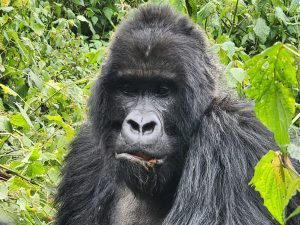
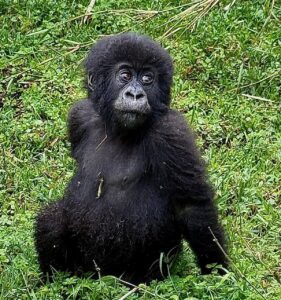
Akagera does not offer the gorilla or chimpanzee experiences associated with Rwanda’s forest parks. However, several primates inhabit its woodlands and lake areas.
Olive Baboon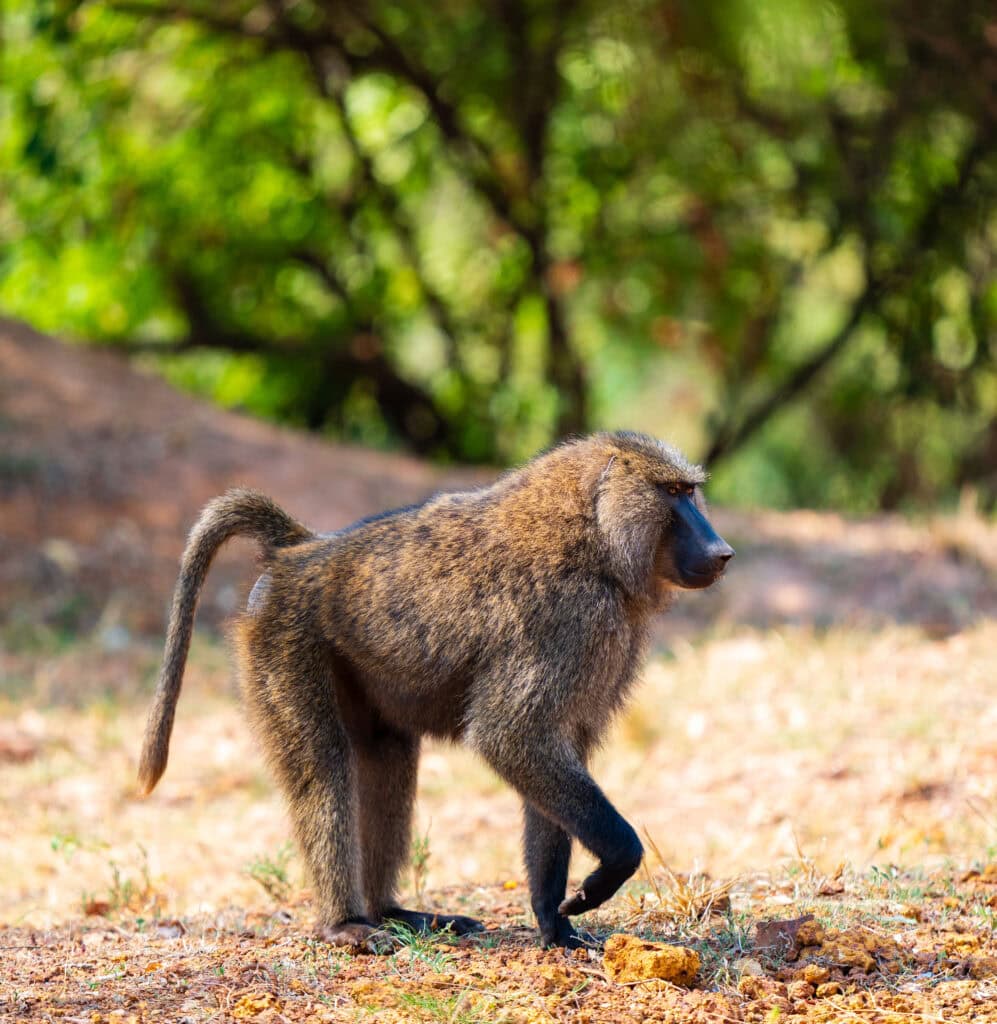
Olive baboons frequently appear beside roads, in woodland and around open areas.
Their troops have complex social relationships. Grooming strengthens bonds, while young baboons spend considerable time playing and exploring.
Never feed baboons. Animals that associate vehicles with food can become aggressive and may damage property.
Keep windows closed when baboons approach campsites or visitor facilities.
Vervet Monkey
Vervet monkeys have grey-green fur, dark faces and pale fringes around the face.
They live in social troops and use different alarm calls for various predators. Individuals may scan from branches while others feed on the ground.
Look for vervets near woodland, campsites and lake margins.
Secure food carefully because they quickly recognize unguarded opportunities.
Blue Monkey
Blue monkeys favor wooded habitats and may prove less obvious than vervets.
Their dark coats can show a bluish-grey appearance under certain light. A pale throat or upper chest helps with identification.
Listen for movement and calls in the canopy before looking upward.
Predators and Carnivores Beyond the Big Five
Lions and leopards attract the most attention, but Akagera supports other fascinating predators.
Spotted Hyena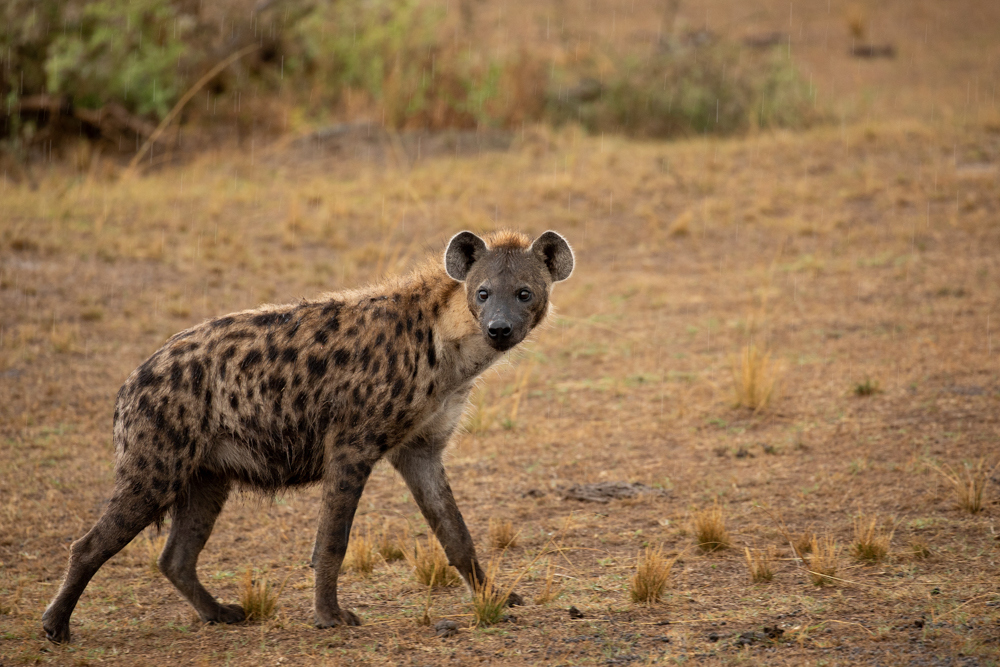
Spotted hyenas live in social groups called clans. Their strong jaws allow them to consume bones as well as meat.
Early morning and night drives provide good opportunities for sightings. A hyena may travel along a road because the open track offers easy movement.
Although popular culture often presents them only as scavengers, spotted hyenas also hunt effectively.
Listen after dark for their whoops and other vocalizations.
Side-Striped Jackal
Side-striped jackals have grey-brown coats, pale side stripes and dark tails with light tips.
They often prefer woodland, scrub and wetland edges. Individuals or pairs may move along roads during the early morning or evening.
Their diet includes insects, fruit, small animals and carrion.
Serval
The serval has long legs, large ears and a spotted golden coat.
Wet grassland and marsh edges provide productive hunting habitat. Servals listen for rodents and then leap high before striking.
Their camouflage and solitary behavior make sightings uncommon. Early morning and night drives offer the best chance.
African Civet
African civets have bold black-and-white markings and a somewhat cat-like appearance.
They remain mainly nocturnal and spend much of the day hidden in vegetation. Night game drives create the best opportunity to see them.
Civets eat fruit, insects and small animals, giving them a varied diet.
Genet
Genets have slender bodies, spotted coats and long ringed tails.
They climb well and usually become active after dark. A spotlight may reveal one crossing a road or moving through low branches.
Mongoose
Akagera supports several small carnivores, including mongooses.
These active hunters feed on insects, eggs, reptiles and small vertebrates. Some species live in groups, while others remain solitary.
Watch for quick movement along road edges, termite mounds and open woodland.
Warthogs and Other Notable Mammals
Several easily overlooked mammals complete the park’s wildlife community.
Common Warthog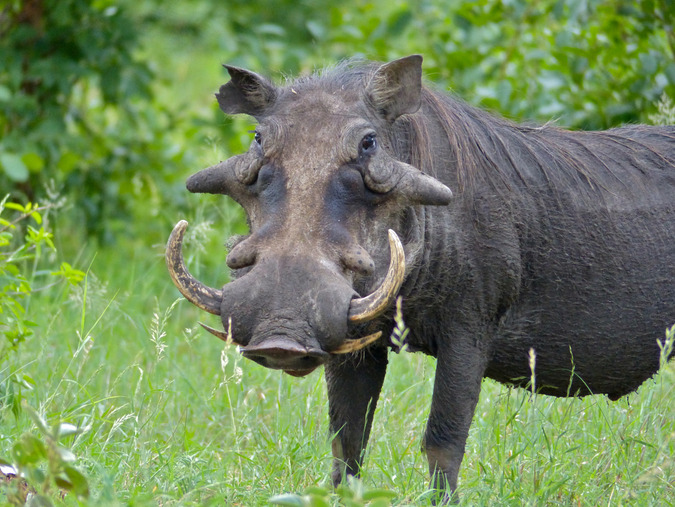
Warthogs frequently graze on short grass. Adults kneel on their front joints to feed close to the ground.
Their facial growths, tusks and upright tails make them unmistakable. Young piglets often run behind their mother in a straight line.
When threatened, warthogs may enter burrows backward so that their tusks face the entrance.
Porcupine
Porcupines become active mainly after dark. Their black-and-white quills provide protection against predators.
A night drive may reveal one crossing the road. Visitors sometimes find shed quills even when the animal remains hidden.
Never attempt to pick up or approach a live porcupine closely.
African Hare
Hares may appear along tracks during early morning or nighttime drives.
Their long ears and fast movement help them detect and escape predators. Spotlights often reveal their reflective eyes before the vehicle approaches.
Bushpig
Bushpigs use thick vegetation and often move after dark.
Their secretive habits make daytime sightings unusual. Night drives and quiet woodland edges offer better possibilities.
African Clawless Otter
Akagera’s lakes and waterways may support otters, although sightings remain uncommon.
Search quiet shorelines for movement, ripples or animals swimming close to vegetation. Their elusive nature makes every encounter memorable.
Reptiles on the Akagera Wildlife Checklist
Warm weather, extensive wetlands and varied habitats support numerous reptiles.
Nile Crocodile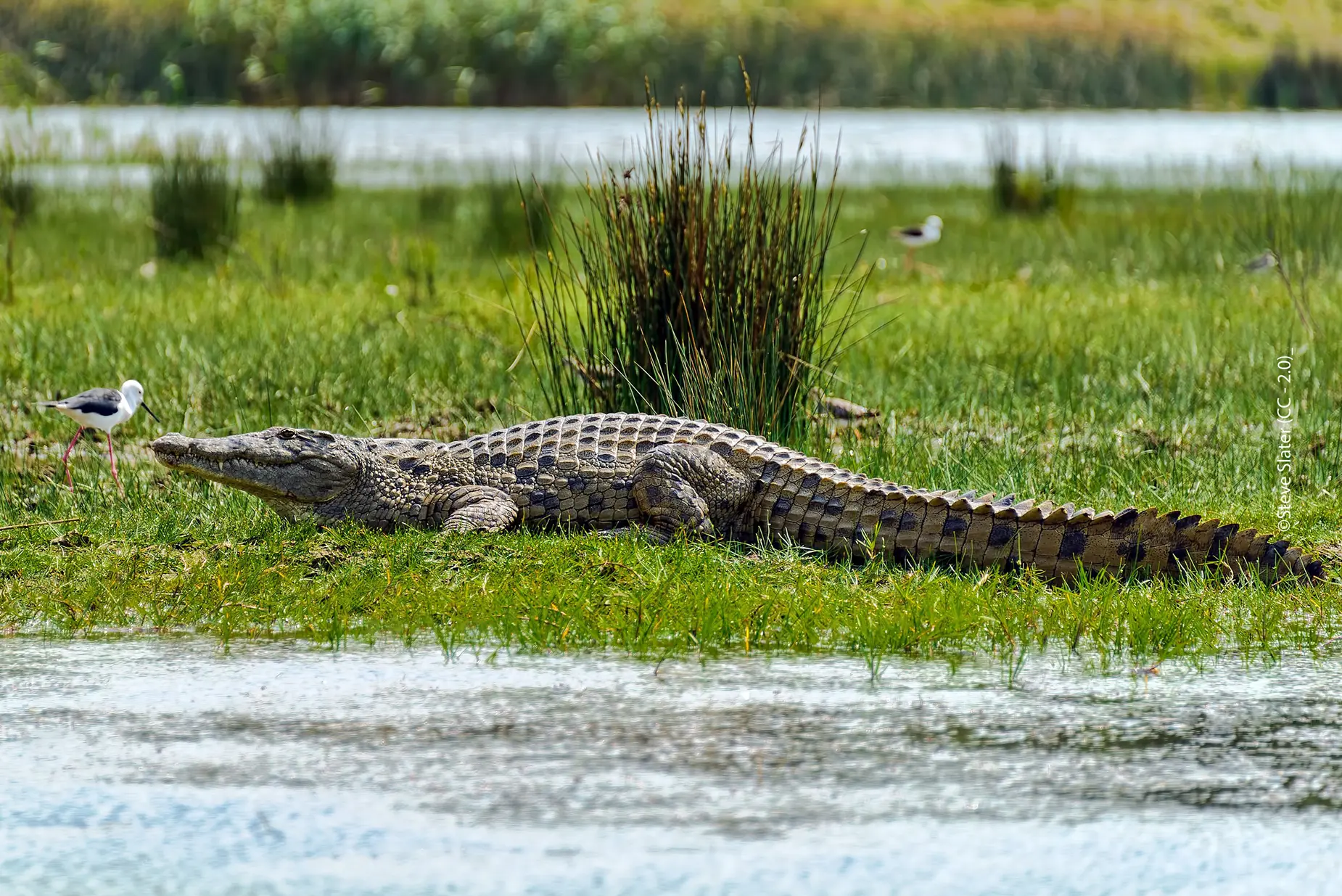
Lake Ihema and other waterways provide habitat for Nile crocodiles.
Boat safaris may reveal crocodiles resting on shorelines or floating with only their eyes and nostrils visible.
Large crocodiles can remain motionless for long periods before entering the water quickly.
Always follow the boat guide’s instructions and never approach the water’s edge in an undesignated area.
Nile Monitor
Nile monitors are large lizards that live near lakes, wetlands and rivers.
They swim well and feed on eggs, fish, insects and small animals.
Look for them basking beside the water or moving through vegetation.
African Rock Python
The African rock python ranks among the continent’s largest snakes.
It relies on camouflage and may remain difficult to notice. Although sightings remain rare, suitable wetland and woodland habitats occur within Akagera.
Never handle or disturb any snake. Give it room to move away.
Tortoises and Terrapins
Tortoises may cross quiet roads, especially after rain. Aquatic terrapins can appear around wetlands and lakes.
Drive carefully and avoid moving wild reptiles unless park staff instruct you to assist.
Akagera Bird Checklist
Birdwatchers can build an impressive list in Akagera because the park combines savannah, woodland, lakes and papyrus swamps. Current official sources describe approximately 500 recorded bird species, although published totals vary as surveys and taxonomic records develop. Visit Rwanda
A game drive reveals raptors, hornbills, rollers and grassland birds. Lake Ihema boat trips provide excellent opportunities for kingfishers, herons, fish eagles and other waterbirds.
Shoebill
The shoebill ranks among Akagera’s most desired birds.
Its enormous shoe-shaped bill and prehistoric appearance make identification easy. Papyrus wetlands provide suitable feeding habitat.
Shoebills often stand motionless while waiting for lungfish or other aquatic prey. Patience and a knowledgeable bird guide improve the chance of finding one.
Although Akagera records regular sightings, nobody can guarantee an encounter.
Red-Faced Barbet
The red-faced barbet attracts birdwatchers because of its restricted regional range.
Its colorful face, dark upperparts and yellowish underparts create a distinctive appearance. Wooded savannah and areas around mature trees offer useful habitat.
Visit Rwanda identifies locations around Akagera Game Lodge and Muyumbu as productive areas for this species. Visit Rwanda
Papyrus Gonolek
The papyrus gonolek lives in dense papyrus wetlands.
Its striking black-and-red plumage makes it beautiful, but thick vegetation often hides the bird. Listening for calls may provide the first clue.
A boat trip or visit to suitable wetland margins can improve the chance of a sighting.
Grey Crowned Crane
Rwanda’s elegant grey crowned crane appears in wetlands, grasslands and open areas near water.
A golden crown of stiff feathers distinguishes the species. Adults also show white cheeks and red throat wattles.
Pairs perform elaborate displays that include jumping, bowing and wing movements.
African Fish Eagle
The African fish eagle’s ringing call provides one of Africa’s most recognizable natural sounds.
Adults have white heads, chestnut bodies and powerful yellow-and-black bills.
Look for them in tall trees beside Lake Ihema and other water bodies. They hunt fish but may also steal food from other birds.
African Finfoot
The African finfoot prefers quiet water bordered by dense vegetation.
Its secretive behavior can make it difficult to locate. Boat trips offer a better chance than open grassland game drives.
Watch shaded shorelines and overhanging branches carefully.
Saddle-Billed Stork
This large stork has striking black-and-white plumage and a colorful red, black and yellow bill.
Wetlands and shallow lake edges provide suitable feeding areas. Individuals often walk slowly through water while searching for fish, frogs and other prey.
Marabou Stork
The marabou stork has a bald head, heavy bill and large throat pouch.
Although its appearance may seem unattractive, the bird performs valuable environmental work by consuming carrion and organic waste.
Visitors may see marabous around wetlands, open plains and areas with large mammals.
Goliath Heron
The Goliath heron ranks as the world’s largest heron.
Its enormous size, chestnut head and long bill make it distinctive. Search lake edges, channels and shallow wetlands.
The bird hunts slowly and may remain focused on one area for a long period.
Malachite Kingfisher
This small kingfisher has bright blue upperparts and orange underparts.
It often perches low above water before diving for small fish.
A boat safari allows close but respectful observation along reed beds and quiet shorelines.
Pied Kingfisher
Pied kingfishers appear commonly around Akagera’s lakes.
Their black-and-white pattern stands out clearly. They often hover above water before diving headfirst.
Several birds may use the same productive fishing area.
Giant Kingfisher
The giant kingfisher has a large bill, powerful body and bold black-and-white markings.
Look for it on branches overlooking water. Its larger size distinguishes it from the pied kingfisher.
Lilac-Breasted Roller
The lilac-breasted roller provides brilliant color on savannah drives.
Its plumage includes lilac, blue, green and brown. The bird often sits on exposed branches while searching for insects.
When it flies, bright blue wings create a spectacular display.
Woodland Kingfisher
Despite its name, the woodland kingfisher often feeds away from water.
Its blue wings, pale head and red-and-black bill help with identification. Visitors frequently hear its call during the warmer, wetter months.
Southern Ground Hornbill
Ground hornbills walk across grassland in small groups while hunting insects, reptiles and other small animals.
Their black feathers and red facial skin make them easy to recognize.
These slow-breeding birds need large territories, so every sighting deserves careful appreciation.
Ross’s Turaco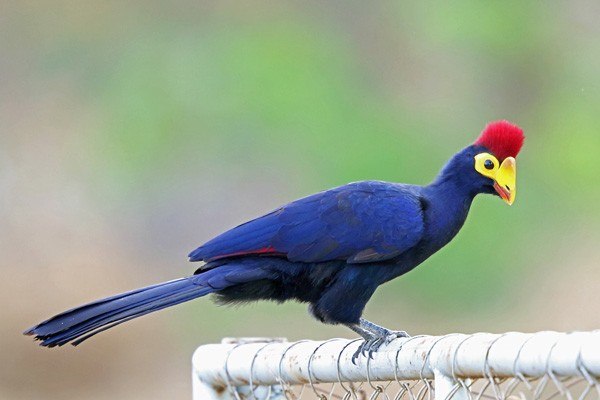
Ross’s turaco has deep blue-purple plumage, a red crest and brilliant crimson wing feathers.
Wooded areas provide the best habitat. The red wings become most visible when the bird flies between trees.
White-Winged Swamp Warbler
This papyrus-associated bird attracts dedicated birdwatchers.
Dense wetland vegetation makes visual sightings challenging. Guides often identify it first through its call.
Carruthers’s Cisticola
Carruthers’s cisticola inhabits papyrus and wetland vegetation.
Its subtle appearance contrasts with the colorful gonolek or barbet. Birders often rely on habitat, behavior and vocalization for identification.
Northern Brown-Throated Weaver
Wetlands and papyrus stands support this localized weaver.
Look for woven nests suspended from vegetation and watch mixed flocks carefully.
Hamerkop
The hamerkop has a hammer-shaped head and brown plumage.
It builds enormous stick nests near water. Other bird species may later use the same structures.
Black Crake
The black crake has dark plumage, a yellow bill and bright red legs.
It walks along floating vegetation and wetland edges. Lake Ihema offers productive habitat.
Long-Crested Eagle
The long-crested eagle has dark plumage and a distinctive upright crest.
It often perches on poles or exposed branches while watching for rodents.
Bateleur
The bateleur has long wings, a very short tail and striking adult plumage.
It spends considerable time soaring above the savannah while searching for carrion and live prey.
Verreaux’s Eagle-Owl
This large owl becomes active after dark.
Its pale pink eyelids provide a useful identification feature when seen clearly. Night drives may reveal it on a large branch.
Nightjars
Nightjars rest on the ground or along roads and become active after sunset.
Their cryptic plumage blends with leaves and soil. A spotlight may reveal their eyeshine before they fly.
Best Places to Find Wildlife in Akagera
Different sections of Akagera support different wildlife communities. Your chances improve when you match the animal with its preferred habitat.
Southern Akagera
The southern sector contains woodland, rolling hills and several lakes. Visitors may encounter elephants, buffaloes, impalas, baboons, monkeys and numerous birds.
Because the main southern entrance provides access from Kigali, day visitors often explore this region first.
Lake Ihema
Lake Ihema offers hippos, crocodiles and an excellent selection of waterbirds.
A scheduled boat safari may reveal African fish eagles, kingfishers, herons, storks and jacanas. Papyrus edges also attract specialized birds.
Morning trips provide cooler conditions and active birdlife. Afternoon departures can create beautiful light for photography.
Kilala Plains and Northern Savannah
Northern Akagera contains extensive open grassland where visitors often search for zebras, giraffes, topis, buffaloes and lions.
Predators may become easier to locate when herbivore herds gather in open areas.
The northern sector also creates broad landscape photographs, especially during golden morning or evening light.
Wetlands and Papyrus Areas
Papyrus habitats support shoebills, papyrus gonoleks, swamp warblers and other wetland specialists.
Access may require a boat trip or careful observation from approved roads and viewpoints.
Woodland and Thickets
Leopards, bushbucks, monkeys and smaller carnivores use woodland cover.
Drive slowly and scan both the ground and tree branches. Alarm calls from monkeys or antelopes may reveal a hidden predator.
Best Activities for Completing Your Akagera Wildlife Checklist
A full-day game drive provides the broadest coverage. Starting early allows you to explore the southern woodlands, central lakes and northern plains during one journey.
However, two or three days produce a more relaxed safari. Additional time improves the chance of finding predators and allows visitors to repeat productive areas.
Day Game Drive
Daytime drives offer elephants, buffaloes, giraffes, zebras, antelopes and numerous birds.
Early morning creates cooler temperatures and soft photography light. Animals often become less active during midday heat.
Night Game Drive
Night drives reveal a different side of Akagera.
Spotlights may locate leopards, hyenas, servals, civets, genets, bushpigs, hares and owls. Visitors should use authorized park arrangements rather than driving independently at night.
Lake Ihema Boat Safari
A boat trip adds hippos, crocodiles and waterbirds to the wildlife experience.
Because the boat approaches habitats that road vehicles cannot reach, it complements a land-based game drive.
Birdwatching Safari
A specialized bird guide can identify calls, habitats and subtle field marks.
Dedicated birders should allow several days to explore grassland, woodland and wetland environments.
Best Time to See Akagera Wildlife
Akagera offers wildlife viewing throughout the year.
The drier months commonly concentrate animals around permanent water. Shorter grass may also improve visibility.
Wet-season travel brings green scenery, dramatic skies, newborn animals and strong birding. Migratory birds can add further variety during the appropriate months.
Rain may affect some tracks, so drivers should request current road information. A professional safari vehicle and experienced guide provide additional confidence during wet conditions.
Early morning and late afternoon generally offer the best game-viewing light. Cooler temperatures also encourage greater animal activity.
Night drives provide opportunities for species that remain hidden during daylight.
One-Day Versus Multi-Day Akagera Safari
A one-day safari from Kigali can cover much of the park when travelers leave early. The drive from Kigali to Akagera’s southern entrance takes roughly two and a half to three hours, depending on traffic and road conditions.
After registration, visitors can complete a south-to-north game drive and leave through the northern gate. This journey provides opportunities to see giraffes, zebras, buffaloes, elephants, antelopes and perhaps predators.
Nevertheless, a one-day itinerary requires a long schedule. It may also leave limited time for a Lake Ihema boat trip.
Two days allow an afternoon activity, early morning game drive and more patient wildlife observation.
Three days create the best pace for combining day drives, a boat safari, birding and a night game drive.
Sample Two-Day Akagera Wildlife Itinerary
Day One: Kigali to Akagera and Lake Ihema
Leave Kigali early and travel toward Akagera National Park.
After registration, begin a game drive through the southern sector. Look for impalas, baboons, monkeys, buffaloes and elephants.
In the afternoon, join a boat safari on Lake Ihema. Add hippos, crocodiles, fish eagles, kingfishers and herons to your Akagera Wildlife Checklist.
Spend the night at a lodge or campsite inside or near the park.
Day Two: Full Game Drive and Return to Kigali
Begin before sunrise and travel north through Akagera’s varied habitats.
Search open plains for lions, rhinos, giraffes, zebras, topis, elands and buffalo herds.
Stop only at designated viewpoints and picnic sites. Continue toward the northern exit before returning to Kigali.
Sample Three-Day Akagera Wildlife Safari
Day One: Arrival and Sunset Boat Safari
Travel from Kigali to Akagera at a relaxed pace.
Check into your lodge or campsite before joining an afternoon boat trip on Lake Ihema.
Watch hippos, crocodiles and waterbirds as the light softens.
Day Two: Full-Day Game Drive
Start early and explore from south to north.
Spend time around lakes, woodland and open plains. Your guide will search for the Big Five as well as giraffes, zebras and antelopes.
Return to the accommodation before sunset or join an authorized night drive.
Day Three: Morning Wildlife Viewing and Kigali
Use the final morning for birdwatching or a shorter game drive.
After breakfast, leave Akagera and return to Kigali.
Wildlife Photography Tips
Prepare the camera before animals appear. Changing lenses beside a lion or moving elephant may cause you to miss the moment.
Use a longer lens for portraits while keeping a wider lens available for landscapes and animals within their environment.
Early morning and late afternoon provide warm light. Midday can still work well for high-contrast scenes, birds and animals near water.
Support the camera on a beanbag or vehicle frame without placing equipment outside the car unsafely.
Avoid asking the guide to move too close. Distance protects wildlife and often produces more natural behavior.
Photograph interactions rather than collecting only static portraits. Grooming baboons, feeding elephants and alert impalas tell stronger stories.
Keep noise low and disable unnecessary camera sounds.
Responsible Wildlife Watching
Wild animals need space and control over their movements.
Never block a road-crossing point or surround an animal with several vehicles.
Remain on designated tracks. Off-road driving damages vegetation and disturbs nesting birds and smaller creatures.
Do not feed any animal. Food changes natural behavior and can create dangerous dependence.
Keep voices low and avoid sudden movements around sensitive wildlife.
Follow every instruction from guides, rangers and boat captains.
Avoid publishing the precise real-time location of rhinos or other highly threatened animals.
Take every piece of rubbish out of the park or place it in an approved waste facility.
Frequently Asked Questions About the Akagera Wildlife Checklist
Does Akagera National Park have the Big Five?
Yes. Akagera protects lions, leopards, elephants, buffaloes, black rhinos and white rhinos, making it Rwanda’s only Big Five safari destination.
Can visitors see all the Big Five in one day?
A sighting of all five in one day can occur, but nobody can guarantee it. Leopards and rhinos may remain particularly difficult to locate.
Are there lions in Akagera?
Yes. Conservation partners reintroduced lions in 2015 after the species had disappeared from the park. Successful breeding has helped the population grow.
Does Akagera have black and white rhinos?
Yes. The park protects eastern black rhinos and southern white rhinos.
Are there giraffes in Akagera?
Yes. Masai giraffes occur in Akagera and often appear in woodland or on open plains.
Can I see hippos in Akagera?
Yes. The park’s lakes support hippos. A Lake Ihema boat safari offers an excellent opportunity to observe them safely.
Are there crocodiles in Lake Ihema?
Yes. Nile crocodiles inhabit Lake Ihema and other suitable waterways in the park.
Does Akagera have cheetahs?
Visitors should not plan an Akagera safari around seeing cheetahs. The park’s regularly promoted large predators include lions, leopards and spotted hyenas.
Are there gorillas in Akagera?
No. Mountain gorillas live in Volcanoes National Park. Akagera provides a savannah and wetland safari experience.
Are there chimpanzees in Akagera?
No. Travelers visit Nyungwe National Park for Rwanda’s best-known chimpanzee trekking experience.
How many bird species live in Akagera?
Official sources report approximately 500 recorded bird species, although totals vary between sources and may change as ornithologists update records.
Can I see a shoebill in Akagera?
Yes, Akagera records shoebills in suitable wetland habitat. However, the species remains elusive, and no guide can guarantee a sighting.
What wildlife can I see on Lake Ihema?
Visitors may see hippos, crocodiles, African fish eagles, kingfishers, herons, storks, jacanas, cormorants and other waterbirds.
What is the best time for a game drive?
Early morning and late afternoon often provide active wildlife and attractive light. Night drives reveal nocturnal species.
How many days should I spend in Akagera?
Two days provide a balanced introduction. Three days create more time for game drives, a boat safari, birdwatching and a night drive.
Can I drive myself through Akagera?
Yes. The park permits self-drive tours on authorized roads. First-time visitors may see and understand more wildlife with a knowledgeable guide.
Can children visit Akagera?
Yes. A family safari can introduce children to wildlife, conservation and different habitats. Adults should supervise them closely at all times.
Where should I stay in Akagera?
Travelers can choose from lodges, tented camps and campsites inside or near the park. Select accommodation according to budget, comfort and preferred activities.
Complete Your Akagera Wildlife Checklist with Universal Ventures Rwanda
Akagera National Park combines Big Five game viewing, spectacular wetlands and exceptional birdlife within a convenient distance of Kigali. A carefully planned itinerary can include a full game drive, Lake Ihema boat safari, night drive and comfortable accommodation.
Universal Ventures Rwanda organizes private Akagera day trips, two-day safaris, multi-day Rwanda wildlife holidays and customized combinations with Volcanoes National Park, Lake Kivu and Nyungwe National Park.
Our team can arrange a professional driver-guide, private 4×4 safari vehicle, accommodation, park logistics and boat activities according to your dates and budget.
Contact us to plan your Akagera safari and begin completing your personal Akagera Wildlife Checklist.
Universal Ventures Rwanda
Email: info@universalventuresrwanda.com
Telephone and WhatsApp: +250 781 441 853
Address: KN 15 Road, opposite IPRC Entrance, 1st Floor, SANGWA Plaza, Kigali, Rwanda
Website: www.universalventuresrwanda.com