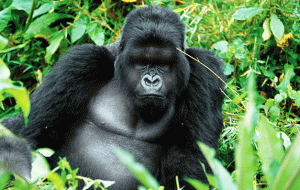
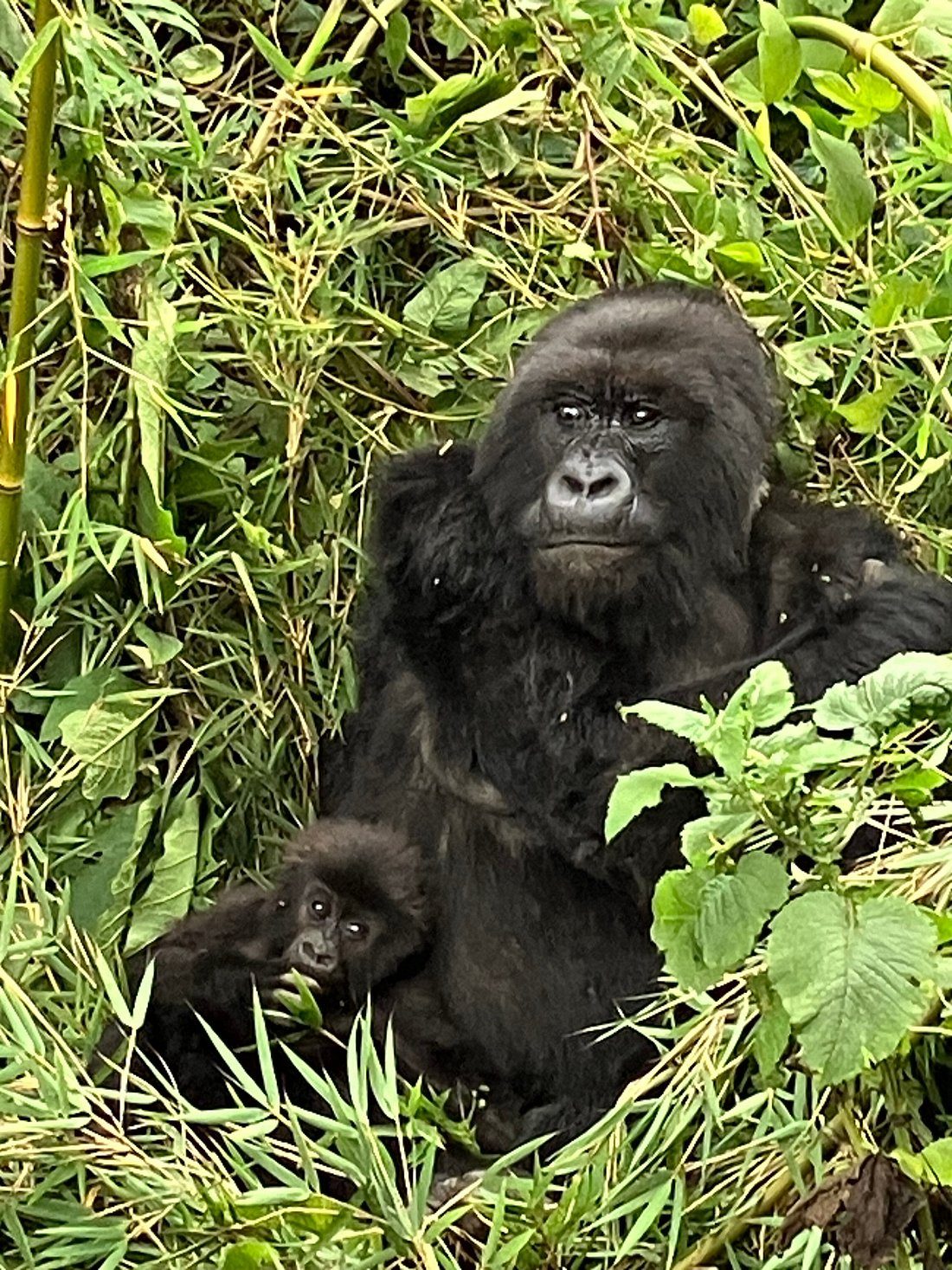
Uganda offers one of the world’s most immersive mountain gorilla adventures. The Gorilla Habituation Experience in Uganda allows a small group of visitors to spend extended time with a gorilla family that is gradually becoming accustomed to the presence of humans. Unlike standard gorilla trekking, which usually permits one hour with a fully habituated family, this experience allows up to four hours with the gorillas after they have been located.
The activity takes place in Bwindi Impenetrable National Park, a UNESCO-listed rainforest in southwestern Uganda. Visitors enter the forest with Uganda Wildlife Authority rangers, trackers, researchers, and conservation specialists. During the excursion, participants may observe how gorillas feed, travel, communicate, rest, and care for their young.
However, the experience involves much more than watching gorillas. It gives visitors a closer look at the scientific work behind gorilla research and conservation. Furthermore, permit revenue supports wildlife protection and communities living around Bwindi Impenetrable National Park.
This complete guide explains how the experience works, where it takes place, how much permits cost, when to travel, what to pack, and how to prepare. It also compares gorilla habituation with ordinary gorilla trekking and suggests practical Uganda safari itineraries.
What Is the Gorilla Habituation Experience in Uganda?
The Gorilla Habituation Experience in Uganda is a specialised primate activity that allows visitors to join conservation teams working with a semi-habituated mountain gorilla family. A semi-habituated family is still learning to accept the controlled presence of people. Therefore, its behaviour may be less predictable than that of a family used for normal gorilla trekking.
Gorilla habituation is a careful and gradual process. Researchers and trackers visit a selected gorilla family regularly. Their goal is to reduce the animals’ fear of people without changing their natural habits. The process can take several years because every gorilla family responds differently.
Visitors do not direct or control the process. Instead, they follow the instructions of the trained professionals leading the excursion. The researchers may identify individual gorillas, study their behaviour, record changes within the family, and monitor their health. Guests observe this work while learning how mountain gorillas are protected.
The forest experience can last most of the day. The exact duration depends on the location of the gorillas, the terrain, the weather, and the family’s movements. Once the group is found, visitors may spend up to four hours in its presence. This extended observation period is the main difference between habituation and regular Uganda gorilla trekking.
Why Choose a Gorilla Habituation Safari in Uganda?
A gorilla habituation safari appeals to travellers who want a deeper wildlife experience. Four hours provide more time to observe the relationships within a mountain gorilla family. Visitors may see young gorillas playing, adults feeding, females caring for infants, and a silverback monitoring the group.
Nevertheless, wildlife encounters cannot be scripted. The gorillas may remain in one area or move through thick vegetation. They may rest for part of the observation period or travel across a hillside. These natural changes make every Gorilla Habituation Experience in Uganda different.
The activity is also valuable for wildlife photographers. A longer observation period provides more opportunities to adjust camera settings and wait for natural moments. Forest light can change quickly, while leaves and branches may block certain angles. Extra time can therefore make an important difference.
In addition, the activity creates a connection between tourism and conservation. Permit fees help fund ranger patrols, wildlife monitoring, veterinary support, habitat protection, and community programmes. Visitors gain an unforgettable experience while contributing to the long-term survival of mountain gorillas.
Where Does the Gorilla Habituation Experience Take Place?
Gorilla Habituation in Bwindi Impenetrable National Park
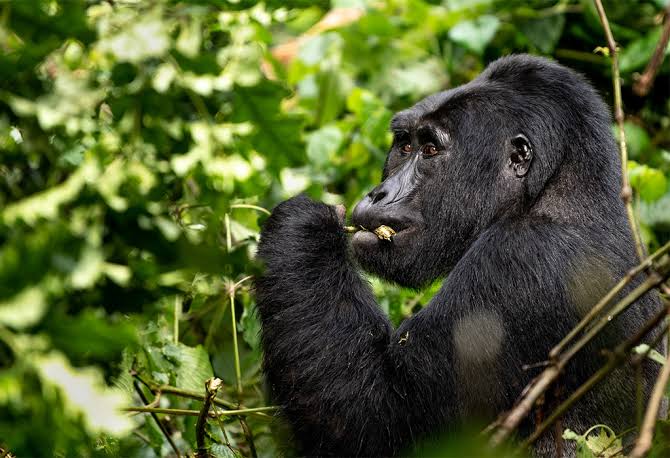
The activity takes place in Bwindi Impenetrable National Park in southwestern Uganda. Bwindi is one of Africa’s oldest and most biologically diverse forests. Its mist-covered hills, deep valleys, streams, tangled vegetation, and high-altitude forest create an ideal habitat for mountain gorillas.
According to the Uganda Wildlife Authority, Bwindi protects approximately 459 mountain gorillas and supports an exceptional variety of other wildlife. The forest also contains more than 120 mammal species, over 350 recorded bird species, and numerous butterflies, reptiles, and amphibians. Uganda Wildlife Authority – Bwindi Impenetrable National Park
Bwindi has four principal gorilla trekking sectors: Buhoma, Ruhija, Rushaga, and Nkuringo. However, visitors should never assume that every sector offers the habituation experience. Availability depends on the semi-habituated families being monitored and the arrangements approved by the Uganda Wildlife Authority.
Gorilla Habituation Experience in the Rushaga Sector
Rushaga, in southern Bwindi, is most closely associated with Uganda’s gorilla habituation programme. It can be reached from Kisoro, Kabale, Kigali, Entebbe, or other Uganda safari destinations.
The Rushaga landscape has steep forested ridges and beautiful views towards the Virunga Mountains. Several lodges and camps operate around the park entrance. Accommodation ranges from simple guesthouses to comfortable mid-range lodges and luxury forest retreats.
Rushaga is also well positioned for travellers entering Uganda from Rwanda. A journey from Kigali normally crosses at the Cyanika or Gatuna border before continuing towards Kisoro and southern Bwindi. Travel time depends on the border used, road conditions, immigration procedures, and the location of the lodge.
Visitors should stay close to their assigned briefing point on the night before the activity. Gorilla excursions begin early. A lodge in another Bwindi sector may be several hours away, even when it appears close on a map.
How Gorilla Habituation Works
The Long Process of Habituating Mountain Gorillas
Habituation does not mean training or domesticating gorillas. Mountain gorillas remain wild animals throughout the process. Researchers simply help a selected family become familiar with the predictable and respectful presence of people.
At the beginning, family members may hide, move away, or show signs of uncertainty. Experienced trackers return regularly while maintaining safe behaviour. With time, the gorillas may become calmer around the conservation team.
Researchers learn to recognise individual gorillas through facial features, body size, scars, behaviour, and other physical details. They also study relationships within the family. For example, they may document births, changes in leadership, feeding patterns, illnesses, or the movement of individuals between groups.
The process must advance at the pace of the gorillas. A family cannot be rushed simply because tourism demand is high. The welfare of the animals remains the main priority.
Who Accompanies Visitors in the Forest?
A habituation excursion is led by a professional team. Its exact composition can vary, but it may include Uganda Wildlife Authority rangers, trackers, guides, researchers, and conservation staff.
Trackers often enter the forest before the visitors. They search for nests and other signs that show where the family travelled. Mountain gorillas build new nests regularly, so the previous nesting area provides an important starting point.
The visitor group later follows with its guide and ranger team. Along the way, the guide explains the forest ecosystem and may identify birds, primates, plants, insects, and signs of other animals.
How Long Does the Experience Last?
The full excursion may take several hours or most of the day. Tracking time cannot be guaranteed because mountain gorillas move freely through the forest. They may remain near the previous night’s nests or travel far across steep terrain.
Once the gorilla family is located and the official observation period begins, visitors may spend up to four hours with it. This is considerably longer than the one-hour encounter offered during standard gorilla trekking.
The four-hour period does not mean that guests will always have a clear, uninterrupted view. Gorillas may move through thick vegetation, rest behind bushes, or spread out while feeding. However, the extra time usually creates more opportunities to observe different behaviours.
Gorilla Habituation Versus Gorilla Trekking in Uganda
Both activities offer close encounters with wild mountain gorillas, but they differ in duration, price, group size, and the type of gorilla family visited.
Time With the Gorillas
Regular gorilla trekking allows visitors to spend up to one hour with a fully habituated gorilla family. Gorilla habituation allows up to four hours with a family still undergoing the habituation process.
The longer period is valuable for photographers, researchers, conservation enthusiasts, and travellers who prefer a slower experience. However, the complete forest excursion can also be more demanding.
Type of Gorilla Family

Standard treks visit families that have already completed habituation and are accustomed to controlled tourist visits. The habituation experience visits a family that is still becoming familiar with people.
As a result, the animals may behave differently. They may keep a greater distance, move more often, or remain partly hidden. Visitors must follow every ranger instruction and manage their expectations.
Number of Visitors
The Gorilla Habituation Experience normally has a smaller visitor group than standard gorilla trekking. The Uganda Wildlife Authority controls group size to reduce disturbance and protect the animals.
Permit numbers are therefore extremely limited. Travellers should reserve well in advance, especially for popular months such as June, July, August, September, December, and January.
Permit Price
A habituation permit costs considerably more than a standard Uganda gorilla trekking permit. The additional price reflects the longer observation period, smaller group, specialised conservation staff, and limited availability.
Uganda Wildlife Authority tariffs can change. Its 2026–2027 notice indicates revised standard and selected low-season rates, with conditions attached to discounted permits. Travellers should confirm the rate for their dates and residency category before paying. Uganda Wildlife Authority 2026–2027 tariff notice
Which Experience Is Better?
Neither activity is automatically better for every visitor. Standard trekking is ideal for travellers who want a more affordable encounter or have limited time. It also works well within a wider Uganda wildlife safari.
Habituation is better suited to travellers who want extended observation and a closer understanding of conservation work. It is also an excellent option for serious photographers.
Gorilla Habituation Permit Prices and Inclusions
A valid Uganda gorilla habituation permit is compulsory. The permit is issued for one person, one date, and an assigned location. It cannot be shared between travellers.
The standard foreign non-resident rate under the latest published 2026–2027 notice is higher than the previous USD 1,500 tariff. Uganda Wildlife Authority has also announced selected low-season discounts, but eligibility, travel dates, booking conditions, and rescheduling restrictions apply. Because tariffs may change, visitors should request written confirmation before finalising their safari.
A permit generally covers:
- Participation in the scheduled habituation activity
- Uganda Wildlife Authority ranger and guide services
- The authorised observation period
- Park entry connected to the activity
- A contribution towards conservation and community development
It normally does not cover accommodation, private transportation, meals, porter services, visas, tips, travel insurance, or personal expenses.
A licensed tour operator can check availability and arrange the permit as part of a complete Uganda gorilla safari. The traveller must provide the correct passport details because they may be checked during registration.
How to Book a Gorilla Habituation Permit
Permit availability should be checked before booking non-refundable flights or accommodation. The number of permits is very small, and certain dates can sell out months in advance.
The booking process normally involves selecting a travel date, checking official availability, providing passport details, and paying the required amount. A permit is only secured after the Uganda Wildlife Authority confirms the reservation and receives the necessary payment.
Travellers should verify the following details:
- The visitor’s full name as shown on the passport
- Passport number and nationality
- Residency category, where applicable
- Trekking date
- Assigned Bwindi sector
- Payment and cancellation conditions
A gorilla permit is attached to a specific date. Changing that date may be difficult, expensive, or impossible. In particular, promotional or low-season permits may have stricter conditions and may not allow rescheduling.
Best Time for the Gorilla Habituation Experience in Uganda
The Gorilla Habituation Experience in Uganda operates throughout the year. Mountain gorillas do not migrate out of Bwindi, so visitors can encounter them during any month. However, weather affects trail conditions and general travel comfort.
June to September
June, July, August, and September are among the most popular months for Uganda gorilla tours. Rainfall is often lower, although showers can occur at any time in a tropical mountain forest.
Trails may be easier during relatively dry conditions. These months also combine well with wildlife safaris in Queen Elizabeth, Murchison Falls, Lake Mburo, and Kidepo Valley national parks.
Demand is high, so permits and well-located lodges should be reserved early.
December to February
December, January, and February offer another popular travel period. Conditions are often suitable for forest walks, wildlife viewing, and photography. Nevertheless, Bwindi’s climate remains cool and changeable.
The Christmas and New Year period can be busy. Therefore, early booking is important.
March to May
March, April, and May generally receive more rain. Forest trails can become slippery, and vegetation may appear thicker. However, the rainforest is especially green, accommodation may have greater availability, and visitor numbers can be lower.
Rain does not usually continue all day. Travellers should still prepare for wet conditions, muddy paths, and changes in visibility.
October and November
October and November form another wetter period. The forest looks rich and vibrant, while mist can produce atmospheric photography. On the other hand, hiking may require more effort.
Some travellers choose these months because they prefer quieter lodges and fewer safari vehicles in other parks.
What Happens on the Day of Gorilla Habituation?
Early-Morning Registration and Briefing
The day begins early at the assigned Uganda Wildlife Authority briefing point. Visitors should arrive with their passport, permit confirmation, packed lunch, drinking water, and trekking equipment.
During the briefing, rangers explain forest conditions, safety procedures, gorilla behaviour, and conservation rules. Visitors are then organised into the approved group and introduced to their guides.
This is also the right time to hire a porter. Porters carry bags, help visitors across difficult sections, and provide valuable support on steep trails. Hiring one also creates direct employment for people living around the national park.
Entering Bwindi Impenetrable Forest
The trek may begin directly from the park entrance or after a short vehicle transfer. The forest soon becomes dense, with climbing plants, ferns, bamboo, large trees, and thick undergrowth.
The pace depends on the terrain and the location of the gorillas. Rangers may clear a safe path through overgrown sections. Visitors should remain together and avoid walking ahead of the guide.
The journey itself is part of the experience. Bwindi contains colourful butterflies, forest birds, monkeys, and many rare plants. Although gorillas are the main objective, the wider ecosystem makes the walk equally memorable.
Finding the Gorilla Family
Trackers communicate with the visitor team and help guide it towards the gorillas. Once the family is close, the guide may ask visitors to leave walking sticks, food, and large bags with the support team.
Everyone should remain calm and follow the ranger’s positioning instructions. The official observation period begins according to the guide’s direction.
Four Hours With Mountain Gorillas
Four hours provide time to observe the family’s routine. Some gorillas may feed on leaves, shoots, bark, fruit, or stems. Others may groom, rest, travel, or interact with younger family members.
A dominant silverback often remains aware of activity around the family. His calm behaviour does not remove the need for caution. Visitors must avoid sudden movements and never attempt to touch a gorilla.
The researchers may share information about individual family members and their relationships. This interpretation helps visitors understand the meaning of different movements, sounds, and interactions.
Returning to the Park Headquarters
After the observation period, the group leaves the gorillas and begins the return journey. The walk back can still be demanding, particularly after rain or a long tracking period.
Visitors should keep water and some energy snacks available for the return. After completing the excursion, the group may receive recognition for participating in the activity.
Gorilla Habituation Rules and Responsible Behaviour
Mountain gorillas share a close biological relationship with humans and may be vulnerable to human illnesses. Therefore, visitor rules protect both the gorillas and the people entering their habitat.
The Uganda Wildlife Authority’s management guidelines explain that the habituation experience allows visitors to accompany researchers and habituation teams into the forest. Official gorilla and chimpanzee tracking guidelines
Important rules include the following:
- The minimum participation age is normally 15 years.
- Visitors who are sick should report their condition and must not approach the gorillas.
- Flash photography is prohibited.
- Eating, drinking, and smoking are not allowed near the gorillas.
- Visitors must follow the distance directed by the rangers.
- Sudden movement and loud noise should be avoided.
- Guests must not touch or attempt to feed a gorilla.
- All waste must leave the forest.
- Anyone who coughs or sneezes should turn away and cover their face.
- Visitors must follow ranger instructions if a gorilla approaches.
Sometimes a gorilla may move closer than the recommended distance. The visitor should not step towards it. Instead, the person should remain calm and allow the ranger to manage the situation.
Fitness Level and Trekking Difficulty
Gorilla habituation requires a reasonable level of mobility and endurance. Bwindi contains steep slopes, uneven ground, roots, mud, streams, and thick vegetation. The hike can last several hours before the gorillas are found.
However, difficulty varies from day to day. A family may be close to the starting point or much farther inside the forest. Weather also changes the condition of the trails.
Travellers should prepare with regular walking before their safari. Walking on hills and uneven paths is especially useful. During the trek, visitors should maintain a comfortable pace, drink water regularly, and communicate with their guide.
A porter is strongly recommended, even for travellers who usually hike without assistance. Carrying a camera, lunch, rain jacket, and water becomes tiring during a long forest excursion. Porters also provide a steady hand across slippery or steep sections.
What to Pack for Gorilla Habituation in Uganda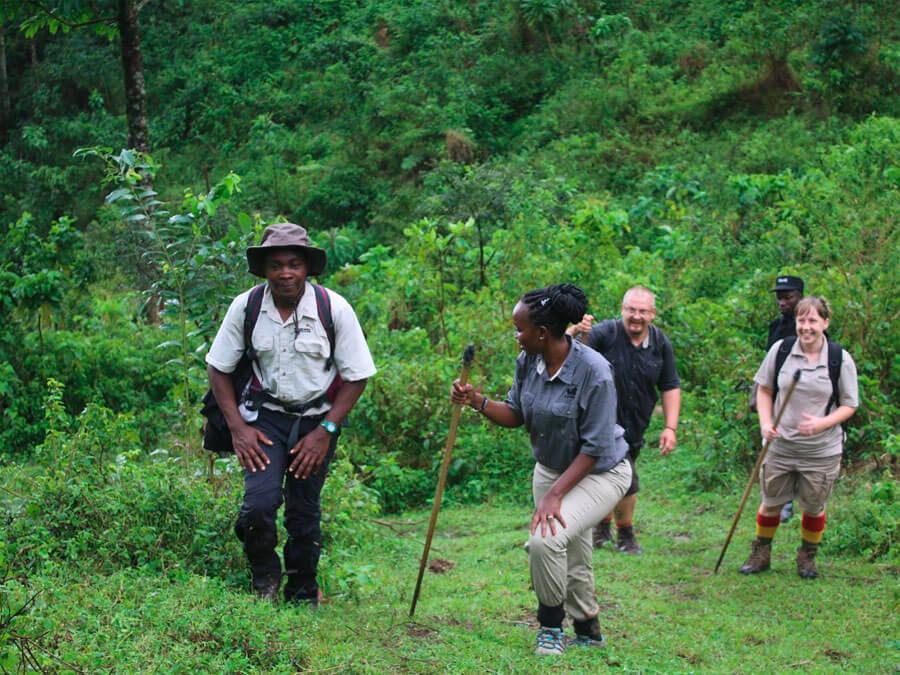
Good equipment makes the forest experience safer and more comfortable. Travellers do not need specialist climbing gear, but they should prepare for mud, rain, insects, and changing temperatures.
Wear strong, waterproof hiking boots with good grip. Lightweight long trousers protect the legs from branches and insects. A long-sleeved shirt provides similar protection for the arms.
Bring a waterproof jacket because rain can begin unexpectedly. Gardening gloves can protect the hands when holding vegetation for balance. Gaiters are useful during wet months because they help keep mud and insects away from the lower legs.
A small backpack should contain drinking water, a packed lunch, sunscreen, insect repellent, personal medication, tissues, and a waterproof cover for electronic equipment. Binoculars can also be useful for forest birds and monkeys.
Photographers should carry spare batteries and enough memory cards. Flash cannot be used. A lens suited to low-light forest photography is helpful, but travellers should avoid carrying equipment that becomes difficult to manage during a long trek.
Photography During Gorilla Habituation
The extended observation period makes gorilla habituation one of Uganda’s best wildlife photography experiences. However, Bwindi can be challenging because forest light is often low and uneven.
Visitors should understand their camera before entering the forest. Adjusting basic settings quickly is more useful than carrying too much equipment. A moderate zoom lens usually offers greater flexibility than repeatedly changing lenses in wet conditions.
Flash photography is not permitted. Instead, photographers can use a wider aperture, a suitable shutter speed, and a higher ISO when necessary. Image stabilisation may also help in low light.
Respect must come before photography. Do not block another visitor, move away from the ranger, or approach a gorilla to obtain a better angle. Quiet observation often produces the most natural photographs.
Conservation Benefits of Gorilla Habituation Tourism
The Gorilla Habituation Experience in Uganda supports a wider conservation system. Mountain gorillas need protected habitat, trained rangers, veterinary monitoring, scientific research, and cooperation with surrounding communities.
Permit revenue helps finance the management of Bwindi Impenetrable National Park. It supports ranger operations and helps authorities monitor gorilla families over long periods. Tourism also creates employment for guides, drivers, lodge workers, porters, farmers, craftspeople, and community tourism groups.
Community involvement remains essential because Bwindi is surrounded by densely populated areas. When local households receive real benefits from tourism, conservation becomes more valuable to the regional economy.
Visitors can increase their positive impact by using licensed operators, hiring local porters, respecting community customs, buying locally made products, and avoiding activities that exploit wildlife or people.
How to Reach Bwindi for Gorilla Habituation
Travelling from Entebbe or Kampala
The road journey from Entebbe or Kampala to southern Bwindi usually takes most of the day. Most itineraries include an overnight stop in or near Bwindi before the activity.
The route may pass through Uganda’s central and southwestern regions before continuing towards Kabale, Kisoro, or the selected park sector. A private four-wheel-drive safari vehicle offers the greatest comfort and flexibility.
Domestic flights can reduce travel time. Travellers may fly from Entebbe to an airstrip serving southwestern Uganda and continue by road. Flight schedules, luggage limits, weather, and transfer times should be checked in advance.
Travelling from Kigali, Rwanda
Kigali provides a convenient gateway to southern Bwindi. The route crosses the Rwanda–Uganda border and continues towards Kisoro and the Rushaga area.
Travellers need the correct entry documents for both countries. Border processing time varies, so itineraries should include a reasonable time allowance. A same-day transfer after an international flight is possible in some cases, but arriving one day earlier creates a safer and more relaxed schedule.
Combining Bwindi With Other Safari Destinations
Bwindi can be combined with Queen Elizabeth National Park for game drives, the Ishasha sector for tree-climbing lions, and the Kazinga Channel for a wildlife boat cruise. Travellers can also continue to Kibale National Park for chimpanzee trekking.
Lake Bunyonyi offers a peaceful stop after the forest experience. Mgahinga Gorilla National Park provides golden monkey tracking and volcanic scenery. Rwanda extensions may include Kigali, Volcanoes National Park, and Lake Kivu.
Recommended Gorilla Habituation Safari Itinerary
A four-day itinerary works well for travellers starting and finishing in Kigali.
Day 1: Kigali to Bwindi Impenetrable National Park
Meet your driver-guide in Kigali and travel towards the Rwanda–Uganda border. After completing immigration formalities, continue through the hills of southwestern Uganda to your lodge near the Rushaga sector.
Check in, enjoy the forest scenery, and receive a briefing about the following day. Dinner and an early night are recommended.
Day 2: Gorilla Habituation Experience in Uganda
Wake early and travel to the park briefing point. Join the ranger and research team before entering Bwindi Impenetrable Forest.
Track the semi-habituated gorilla family and spend up to four hours observing it once located. Return to the lodge for a warm meal and rest.
Day 3: Community Experience or Lake Bunyonyi
Visit a community project near Bwindi or transfer to Lake Bunyonyi. The afternoon can include a canoe trip, island visit, nature walk, or time to relax beside the lake.
Community activities should be respectful and locally managed. They may introduce visitors to regional farming, crafts, music, and traditional knowledge.
Day 4: Return to Kigali
After breakfast, drive back to Rwanda. Depending on the flight schedule, the day may include a Kigali city tour, craft shopping, or a visit to the Kigali Genocide Memorial before airport drop-off.
Planning Your Gorilla Habituation Experience in Uganda
A successful safari begins with the permit. Travellers should confirm availability before paying for flights and accommodation. They should then choose a lodge close to the assigned sector and allow enough time to reach Bwindi.
A professional operator can organise permits, border transfers, suitable accommodation, private transport, meals, and additional Uganda safari activities. This is particularly useful for travellers combining Uganda with Rwanda.
The Gorilla Habituation Experience in Uganda is more expensive and demanding than ordinary gorilla trekking. However, it offers something rare: an extended opportunity to observe wild mountain gorillas while learning directly from the people working to protect them.
For photographers, conservation enthusiasts, and travellers seeking a deeper primate safari, it can become the highlight of an entire African journey.
Contact Universal Ventures Rwanda
Would you like to enjoy four unforgettable hours with mountain gorillas in Bwindi Impenetrable National Park? Universal Ventures Rwanda can help you check permit availability and arrange transportation, accommodation, border transfers, and a customised Uganda gorilla safari.
Address: KN 15 Road, opposite the IPRC entrance, 1st Floor, Sangwa Plaza, Kigali, Rwanda
Phone/WhatsApp: +250 781 441 853
Email: info@universalventuresrwanda.com
Website: www.universalventuresrwanda.com