Understanding How Rwanda Protects Mountain Gorillas helps visitors appreciate that every gorilla trekking permit contributes directly to safeguarding these endangered primates and their forest habitat. Conservation in Rwanda extends far beyond protecting animals. It also supports local communities, strengthens scientific research, restores ecosystems, and creates sustainable economic opportunities through responsible tourism.
Mountain gorillas are among the rarest and most remarkable animals on Earth. Found only in the forests of the Virunga Massif and Uganda’s Bwindi Impenetrable National Park, these gentle giants represent one of Africa’s greatest conservation success stories. Rwanda has played a leading role in that success through decades of dedicated wildlife protection, scientific research, community engagement, and sustainable tourism. Today, visitors from around the world travel to Volcanoes National Park not only to observe mountain gorillas but also to witness one of the world’s finest examples of conservation in action.
This guide explores the remarkable journey of Rwanda’s mountain gorilla conservation efforts. You will learn why these primates are so important, the challenges they continue to face, and the strategies that have helped their population recover over the past several decades.
Why Mountain Gorillas Are So Important
Mountain gorillas are a unique subspecies of the eastern gorilla and exist nowhere else except in a small region of East and Central Africa. Unlike lowland gorillas, they have adapted to cool, high-altitude forests where thick vegetation provides food and shelter throughout the year.
Beyond their biological importance, mountain gorillas are considered a flagship species for wildlife conservation. Protecting them also protects countless other plants and animals that share the same ecosystem. As a result, efforts aimed at conserving gorillas benefit the entire forest environment.
These primates also contribute significantly to Rwanda’s tourism industry. Gorilla trekking attracts thousands of international visitors each year, generating revenue that supports conservation programs, local employment, and community development projects. Consequently, mountain gorillas have become both an environmental treasure and an economic asset for the country.
Understanding Mountain Gorillas
A Close Relative of Humans
Mountain gorillas share approximately 98 percent of their DNA with humans, making them one of our closest living relatives. Their social behavior, intelligence, and emotional connections often surprise visitors during gorilla trekking experiences.
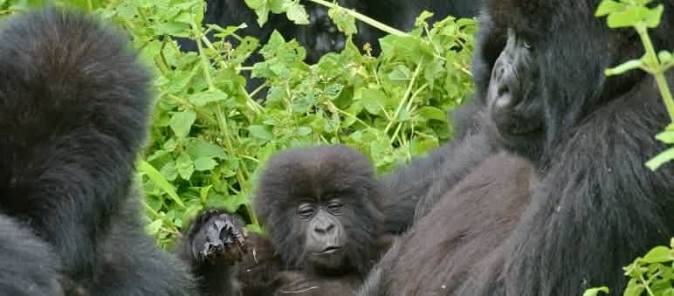
Each gorilla family lives under the leadership of a dominant silverback. He protects the group, resolves conflicts, and guides daily activities such as feeding, resting, and moving through the forest. Meanwhile, adult females care for young infants while juveniles spend much of their time playing and learning important survival skills.
Because gorillas live in closely bonded family groups, every member plays an important role in maintaining social stability.
Where Do Mountain Gorillas Live?
Rwanda’s mountain gorillas inhabit Volcanoes National Park, which forms part of the larger Virunga Massif. This volcanic mountain range extends across Rwanda, Uganda, and the Democratic Republic of the Congo.
The forests are characterized by:
- Dense bamboo vegetation
- Afro-montane forests
- High-altitude meadows
- Moss-covered trees
- Rich volcanic soils
These habitats provide abundant food throughout the year while offering shelter from changing weather conditions.
The History of Mountain Gorilla Conservation in Rwanda
Understanding How Rwanda Protects Mountain Gorillas requires looking back at the country’s conservation history. Several decades ago, mountain gorilla populations faced severe threats from habitat destruction, illegal hunting, political instability, and human encroachment.
During the twentieth century, expanding agriculture reduced forest cover throughout the Virunga region. At the same time, poaching placed additional pressure on already vulnerable gorilla populations. Although gorillas were rarely the direct targets, many became trapped in snares intended for antelope and other wildlife.
Population numbers declined dramatically, raising serious concerns about the future of the species.
Fortunately, conservationists, scientists, government agencies, and local communities recognized the urgency of protecting these remarkable animals. Their combined efforts laid the foundation for one of Africa’s greatest conservation achievements.
The Legacy of Dian Fossey
No discussion about How Rwanda Protects Mountain Gorillas would be complete without recognizing the extraordinary contribution of Dian Fossey.
In 1967, Fossey established the Karisoke Research Center between Mount Karisimbi and Mount Bisoke. Her groundbreaking research transformed scientific understanding of mountain gorilla behavior while drawing international attention to the threats facing the species.
Beyond her research, Fossey actively fought against poaching by removing snares, documenting illegal activities, and advocating for stronger wildlife protection. Her work inspired future generations of conservationists and highlighted the importance of protecting gorillas through long-term scientific research.
Today, her legacy continues through ongoing research, conservation education, and the work of organizations that remain committed to safeguarding mountain gorillas.
Volcanoes National Park: Rwanda’s Gorilla Sanctuary
Volcanoes National Park serves as the heart of Rwanda’s mountain gorilla conservation efforts. Covering approximately 160 square kilometers, the park protects one of the most important remaining habitats for mountain gorillas.
Although the park is internationally famous for gorilla trekking, it also protects numerous other wildlife species, including:
- Golden monkeys
- Forest elephants
- Buffaloes
- Bushbucks
- Duikers
- More than 200 bird species
The park’s forests also regulate water supplies, protect soils, and support regional biodiversity.
Because of its ecological importance, Volcanoes National Park receives continuous investment in conservation, scientific monitoring, and habitat management.
The Main Threats Facing Mountain Gorillas
Although conservation efforts have achieved remarkable success, mountain gorillas still face several ongoing challenges. Understanding these threats explains why continuous protection remains essential.
Habitat Loss
Growing human populations increase demand for agricultural land and natural resources. Without careful land-use planning, forests can become fragmented, reducing available habitat for gorilla families.
Fortunately, Rwanda has strengthened protected area management while promoting sustainable development around national parks.
Illegal Poaching
Poaching remains one of the greatest historical threats to wildlife throughout Africa.
While gorillas are rarely hunted intentionally, wire snares placed for smaller animals can seriously injure or even kill them. Consequently, anti-poaching patrols regularly search protected forests and remove illegal traps before they cause harm.
Human Diseases
Because gorillas are closely related to humans, they are vulnerable to many human illnesses.
Simple respiratory infections, influenza, or other contagious diseases can spread rapidly within gorilla families. Therefore, strict health regulations are enforced during gorilla trekking to reduce disease transmission.
Climate Change
Changing weather patterns may gradually alter mountain forest ecosystems.
Variations in rainfall and temperature can influence vegetation growth, water availability, and habitat quality. As a result, scientists continue monitoring environmental changes while developing long-term conservation strategies.
Why Conservation Matters More Than Ever
Mountain gorilla populations have increased significantly over recent decades, making them one of the few great ape species whose numbers are growing. Nevertheless, their total global population remains relatively small.
This means continued protection is essential.
Every conservation program contributes to:
- Wildlife protection
- Forest preservation
- Scientific research
- Community development
- Sustainable tourism
- Environmental education
Together, these efforts create a balanced approach that benefits both people and wildlife.
How Gorilla Tourism Supports Conservation
Responsible tourism has become one of Rwanda’s most effective conservation tools. Every gorilla trekking permit generates revenue that directly supports wildlife protection, park management, ranger operations, veterinary programs, and community development.
Rather than exploiting natural resources, Rwanda has demonstrated that protecting wildlife can create long-term economic benefits. Consequently, many local communities now view mountain gorillas as valuable assets worth protecting.
Tourism also creates employment opportunities for guides, trackers, porters, drivers, lodge staff, artisans, and many other local businesses. This broad economic impact strengthens public support for conservation across the region.
A Conservation Model for the World
The remarkable recovery of Rwanda’s mountain gorilla population demonstrates what is possible when governments, scientists, conservation organizations, local communities, and responsible travelers work toward a shared goal.
The story of How Rwanda Protects Mountain Gorillas is not simply about saving one endangered species. It is about protecting entire ecosystems while improving livelihoods through sustainable tourism and responsible conservation.
Daily Conservation Efforts That Protect Mountain Gorillas
Protecting mountain gorillas requires continuous work every single day. Conservation does not depend on one organization or one government agency alone. Instead, it succeeds because wildlife authorities, researchers, veterinarians, local communities, and international conservation partners work together toward the same goal.
Understanding How Rwanda Protects Mountain Gorillas means looking beyond gorilla trekking and exploring the dedicated efforts taking place behind the scenes. Every patrol, health check, research project, and community initiative contributes to the long-term survival of these endangered primates.
Although visitors may only spend one hour with a gorilla family, conservation teams spend every day ensuring those families remain healthy and secure.
Anti-Poaching Patrols: The First Line of Defense
Protecting Gorillas from Illegal Activities
Anti-poaching patrols form one of the most important parts of Rwanda’s conservation strategy. Highly trained park rangers patrol Volcanoes National Park throughout the year, searching for illegal activities before they threaten wildlife.
Unlike many decades ago, poaching has been significantly reduced through strict law enforcement and continuous monitoring. Nevertheless, rangers remain vigilant because even a single snare can seriously injure a mountain gorilla.
Patrol teams regularly remove:
- Wire snares
- Illegal traps
- Unauthorized camps
- Hunting equipment
- Illegal logging activities
As a result, the park remains one of the safest habitats for mountain gorillas anywhere in Africa.
Highly Trained Ranger Teams
Rangers do far more than enforce conservation laws. They also monitor gorilla families, assist researchers, guide visitors, respond to emergencies, and collect valuable ecological information.
Each patrol follows carefully planned routes through dense forests, volcanic slopes, and bamboo zones. Meanwhile, team members record wildlife observations that help scientists understand changes within the ecosystem.
Because patrols operate throughout the year, conservation teams can quickly respond whenever potential threats appear.
Continuous Gorilla Monitoring
Every Habituated Gorilla Family Is Carefully Observed
One remarkable aspect of How Rwanda Protects Mountain Gorillas is the continuous monitoring of habituated gorilla families.
Dedicated trackers locate each gorilla group early every morning before visitors begin trekking. Their work ensures guides know the family’s location while also confirming that every gorilla appears healthy.
Daily monitoring allows conservation teams to:
- Identify injuries
- Observe newborn infants
- Record behavioral changes
- Detect unusual movements
- Monitor group dynamics
- Respond rapidly to emergencies
Because gorillas are monitored so closely, problems are often identified long before they become serious.
Tracking Supports Conservation Research
Monitoring also provides valuable scientific information.
Researchers collect data on feeding behavior, social interactions, reproduction, habitat use, and population growth. Consequently, conservation strategies continue improving based on reliable long-term research rather than assumptions.
Veterinary Care Saves Gorilla Lives
Specialized Wildlife Veterinarians
Mountain gorillas occasionally suffer injuries, illnesses, or infections that require medical treatment.
Veterinary teams specializing in great ape health work closely with park authorities to assess situations where intervention becomes necessary. Their expertise has saved many gorillas that might otherwise have died from infected wounds or serious injuries.
Although conservationists avoid unnecessary human interaction, carefully planned medical treatment can be essential when an individual gorilla’s survival is at risk.
Emergency Medical Interventions
Veterinary teams respond to several situations, including:
- Snare injuries
- Respiratory infections
- Severe wounds
- Illness outbreaks
- Accidental injuries
Whenever intervention is required, specialists carefully evaluate whether treatment will improve the gorilla’s chances of recovery while minimizing stress to the animal.
Because of these rapid responses, survival rates have improved considerably over recent decades.
Disease Prevention Protects Entire Gorilla Families
Human Health Directly Affects Gorilla Health
Mountain gorillas are highly vulnerable to diseases carried by humans because of their close genetic relationship.
Even common illnesses such as influenza or respiratory infections can spread rapidly within gorilla groups. Therefore, Rwanda enforces strict health regulations during gorilla trekking.
Visitors who feel unwell are advised not to participate in trekking activities. This simple precaution helps reduce the risk of disease transmission.
Strict Gorilla Trekking Rules
Several regulations have been introduced to protect gorilla health.
Visitors must:
- Maintain a safe viewing distance.
- Spend no more than one hour with the gorillas.
- Avoid touching any gorilla.
- Cover their mouth and nose when coughing or sneezing.
- Follow all ranger instructions.
These measures protect both wildlife and visitors while ensuring tourism remains sustainable.
Scientific Research Improves Conservation
Long-Term Research Creates Better Decisions
Scientific research plays a central role in How Rwanda Protects Mountain Gorillas.
Researchers continuously study gorilla populations to understand their health, behavior, genetics, reproduction, and habitat requirements. This information helps conservation managers make informed decisions that benefit both gorillas and their environment.
Without ongoing research, many conservation successes achieved today would not have been possible.
Monitoring Population Growth
Population surveys are conducted regularly to estimate the number of mountain gorillas living throughout the Virunga ecosystem.
Researchers examine:
- Family group size
- Birth rates
- Survival rates
- Migration patterns
- Habitat quality
These surveys demonstrate how conservation programs influence long-term population recovery.
Fortunately, mountain gorilla numbers have steadily increased during recent decades, highlighting the effectiveness of Rwanda’s conservation model.
Habitat Restoration and Forest Protection
Conserving the Gorilla’s Home
Protecting gorillas also means protecting their habitat.
Healthy forests provide food, shelter, nesting sites, and safe movement corridors for gorilla families. Consequently, habitat conservation remains a major priority within Volcanoes National Park.
Conservation activities include:
- Native tree planting
- Forest restoration
- Erosion control
- Boundary protection
- Invasive species management
Together, these efforts strengthen the long-term health of the entire ecosystem.
Expanding Ecological Knowledge
Scientists also study forest vegetation, rainfall patterns, and climate conditions.
Their findings improve understanding of how environmental changes influence gorilla populations. Moreover, this information helps managers develop future conservation strategies that remain effective under changing climate conditions.
Technology Supports Modern Conservation
Advanced Monitoring Systems
Technology has become an increasingly valuable conservation tool.
Park authorities now use GPS devices, digital mapping systems, communication equipment, and modern data collection methods to improve patrol efficiency.
These technologies allow conservation teams to:
- Record patrol routes
- Map gorilla movements
- Document wildlife sightings
- Respond more quickly to emergencies
- Improve habitat monitoring
As technology continues advancing, conservation efforts become even more efficient.
Better Communication Improves Response Times
Reliable communication systems enable rangers, veterinarians, researchers, and park managers to coordinate their work effectively.
Consequently, injured gorillas can receive assistance more quickly, while unusual wildlife observations are reported without delay.
Strong Partnerships Strengthen Conservation
Working Together for Wildlife
The success of Rwanda’s conservation program depends on collaboration.
Government agencies work alongside international conservation organizations, researchers, universities, veterinary specialists, tourism operators, and local communities.
Each partner contributes different expertise, creating a comprehensive approach to wildlife protection.
For example, researchers generate scientific knowledge, veterinarians provide medical care, rangers protect habitats, and tourism supports conservation funding.
Together, these efforts create one of the world’s most successful wildlife conservation programs.
Conservation Success Continues
The remarkable recovery of Rwanda’s mountain gorilla population demonstrates that long-term conservation works when every stakeholder contributes. Daily ranger patrols, scientific research, veterinary care, habitat restoration, and modern technology all play essential roles in protecting these endangered primates.
Perhaps most importantly, these conservation efforts continue evolving as new scientific knowledge becomes available. Rather than relying on a single solution, Rwanda constantly improves its strategies to ensure mountain gorillas remain protected for generations to come.
Community Conservation and Sustainable Tourism
Protecting mountain gorillas requires much more than safeguarding forests. Long-term conservation only succeeds when nearby communities benefit from protecting wildlife. Rwanda recognized this principle many years ago and developed a conservation model that connects environmental protection with local economic development.
Today, How Rwanda Protects Mountain Gorillas is recognized worldwide because conservation, tourism, education, and community partnerships work together. Instead of viewing national parks as barriers to development, many local residents now see mountain gorillas as valuable assets that create jobs, improve infrastructure, and support local businesses.
This balanced approach has transformed Volcanoes National Park into one of Africa’s leading examples of sustainable wildlife conservation.
Sustainable Gorilla Tourism
Tourism That Supports Conservation
Gorilla trekking is carefully managed to protect both the animals and their habitat. Unlike mass tourism, Rwanda limits visitor numbers to reduce stress on gorilla families while maintaining a high-quality wildlife experience.
Every trekking permit contributes directly to conservation funding. As a result, tourism generates financial resources that support ranger patrols, veterinary care, scientific research, habitat management, and community development.
Rather than focusing on visitor numbers alone, Rwanda prioritizes quality tourism. Consequently, fewer visitors create greater conservation value while enjoying a more exclusive experience.
Why Gorilla Trekking Permits Matter
Every gorilla trekking permit represents an investment in conservation.
Revenue from permits helps fund numerous activities, including:
- Wildlife protection
- Ranger salaries
- Veterinary programs
- Forest management
- Scientific research
- Community projects
- Environmental education
- Tourism infrastructure
Because visitors contribute directly through permit fees, every trek helps protect future generations of mountain gorillas.
This conservation financing model has become one of Rwanda’s greatest achievements.
Strict Gorilla Trekking Regulations
Rules That Protect Wildlife
Many visitors wonder why gorilla trekking follows strict guidelines. The answer is simple: every regulation exists to protect the gorillas.
Before entering Volcanoes National Park, all visitors attend a detailed briefing conducted by experienced park guides. During this session, they learn how to behave responsibly around gorilla families.
These regulations minimize disturbance while reducing the risk of disease transmission.
Important Visitor Guidelines
Several rules apply during every gorilla trek.
Visitors must:
- Keep at least seven meters away from gorillas whenever possible.
- Spend no more than one hour observing the family.
- Avoid touching any gorilla.
- Speak quietly throughout the visit.
- Never feed wildlife.
- Follow ranger instructions at all times.
- Leave no rubbish inside the park.
Although these guidelines may appear simple, they play a significant role in protecting endangered mountain gorillas.
Limiting Daily Visitor Numbers
Another important conservation strategy involves restricting the number of visitors.
Only a limited number of permits are issued each day. Furthermore, each habituated gorilla family receives only one small visitor group daily.
This policy reduces noise, minimizes stress, and allows gorillas to continue their natural behavior with limited human disturbance.
Consequently, both conservation and visitor satisfaction improve.
Community Involvement in Conservation
Conservation Benefits Local Communities

One of the strongest examples of How Rwanda Protects Mountain Gorillas is the active involvement of communities living near Volcanoes National Park.
Instead of excluding local residents, Rwanda encourages their participation through employment, education, tourism, and development projects.
Because communities receive direct benefits from conservation, they have strong incentives to help protect wildlife and forests.
Revenue Sharing Programs
A portion of tourism revenue supports community development around Volcanoes National Park.
These funds help finance projects such as:
- Schools
- Health centers
- Clean water systems
- Roads
- Community markets
- Environmental projects
As living conditions improve, dependence on forest resources decreases, reducing pressure on protected habitats.
This approach creates a positive relationship between conservation and economic development.
Employment Opportunities
Mountain gorilla tourism supports thousands of jobs throughout Rwanda.
Employment opportunities include:
- Park rangers
- Gorilla trackers
- Safari guides
- Porters
- Drivers
- Hotel staff
- Lodge managers
- Restaurant workers
- Craft producers
- Tour operators
Additionally, many local farmers supply fresh food to hotels and lodges serving international visitors.
As tourism continues growing, these employment opportunities also expand.
Conservation Education
Teaching Future Generations
Education forms another essential part of Rwanda’s conservation strategy.
Schools, community organizations, and conservation groups regularly organize environmental education programs that explain the importance of protecting mountain gorillas and their habitat.
Young people learn about:
- Wildlife conservation
- Forest ecosystems
- Biodiversity
- Sustainable tourism
- Climate change
- Responsible natural resource use
These programs encourage future generations to become active conservation supporters.
Visitor Education
Tourists also play an important role in conservation.
Before every gorilla trek, experienced guides explain gorilla behavior, conservation challenges, and responsible visitor practices.
As a result, visitors leave Rwanda with a much deeper understanding of mountain gorillas and the importance of protecting endangered wildlife.
Many continue supporting conservation organizations long after returning home.
Supporting Local Businesses
Tourism Creates Wider Economic Benefits
The impact of gorilla tourism extends well beyond the national park.
Visitors spend money on:
- Hotels
- Restaurants
- Transportation
- Local guides
- Cultural experiences
- Handmade crafts
- Coffee tours
- Community visits
Therefore, conservation supports many sectors of Rwanda’s economy.
Small businesses benefit directly from tourism, creating additional reasons for communities to protect mountain gorillas.
Community Tourism Experiences
Many visitors combine gorilla trekking with cultural activities that introduce them to local traditions.
Popular experiences include:
- Traditional dance performances
- Village walks
- Basket weaving demonstrations
- Banana beer making
- Local farming visits
- Cultural museums
These activities generate additional income while preserving Rwanda’s cultural heritage.
International Conservation Partnerships
Working Beyond National Borders
Mountain gorillas move freely across international boundaries within the Virunga Massif.
For this reason, Rwanda works closely with neighboring countries and international conservation organizations.
Cross-border cooperation strengthens:
- Wildlife monitoring
- Scientific research
- Veterinary care
- Ranger training
- Habitat protection
- Population surveys
Because conservation efforts extend across national borders, gorillas receive more comprehensive protection.
Research Partnerships
Researchers from around the world collaborate with Rwandan institutions to study mountain gorillas.
Research topics include:
- Genetics
- Behavior
- Nutrition
- Disease prevention
- Reproduction
- Habitat management
These studies provide valuable information that improves conservation strategies year after year.
Responsible Tourism Makes a Difference
Every Visitor Has a Role
Every tourist contributes to conservation by following park regulations and respecting wildlife.
Simple actions have lasting impacts.
Visitors should:
- Follow guide instructions.
- Respect viewing distances.
- Avoid littering.
- Stay on designated trails.
- Support local businesses.
- Choose licensed tour operators.
- Respect local culture.
Together, these actions help maintain Rwanda’s reputation as a global conservation leader.
Why Rwanda’s Conservation Model Works
Many countries protect endangered wildlife. However, Rwanda has demonstrated that conservation becomes far more successful when local communities share the benefits.
Rather than relying only on law enforcement, Rwanda combines environmental protection with education, employment, tourism, healthcare, and community development.
This balanced strategy encourages people to protect forests because healthy ecosystems improve both wildlife conservation and local livelihoods.
As a result, mountain gorilla populations have continued to recover while tourism has become one of Rwanda’s most valuable economic sectors.
Preparing for the Future
Although conservation has achieved remarkable success, new challenges continue to emerge. Climate change, growing human populations, and evolving tourism demands require ongoing adaptation.
Fortunately, Rwanda continues investing in research, community partnerships, habitat protection, and sustainable tourism. These long-term commitments provide confidence that mountain gorillas will remain protected for generations to come.
The Future of Mountain Gorilla Conservation in Rwanda
The recovery of Rwanda’s mountain gorillas is one of the world’s greatest wildlife conservation achievements. However, conservation is an ongoing commitment rather than a finished project. Every year brings new opportunities as well as new challenges that require careful planning, scientific research, and continued collaboration.
Understanding How Rwanda Protects Mountain Gorillas means recognizing that success depends on constant improvement. Government agencies, conservation organizations, researchers, local communities, and responsible travelers all contribute to protecting these remarkable primates. Together, they ensure that future generations can continue experiencing mountain gorillas in their natural habitat.
As conservation evolves, Rwanda remains committed to balancing environmental protection with sustainable tourism and community development.
Future Challenges for Mountain Gorilla Conservation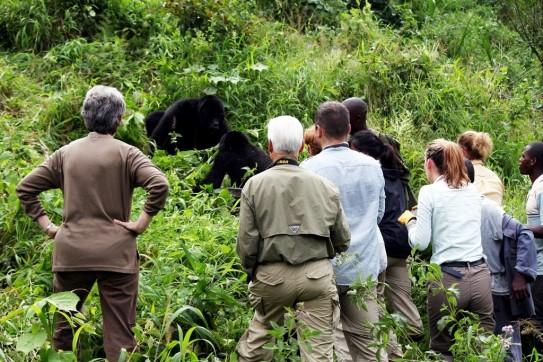
Climate Change
Climate change is becoming an important concern for protected areas across Africa. Although mountain gorillas have shown remarkable resilience, changing weather patterns may gradually affect their habitat.
Rising temperatures, shifting rainfall patterns, and stronger storms can influence forest ecosystems over time. Consequently, scientists continue studying how these environmental changes affect food availability, vegetation growth, and gorilla movements.
Research findings help conservation managers develop long-term strategies that strengthen ecosystem resilience while protecting biodiversity.
Population Growth Around Protected Areas
Rwanda is one of Africa’s most densely populated countries. As communities continue to grow, demand for agricultural land, housing, and natural resources also increases.
Fortunately, careful land-use planning helps reduce pressure on protected forests. At the same time, community development programs create alternative sources of income that lessen dependence on natural resources.
This balanced approach allows both people and wildlife to thrive.
Disease Prevention
Disease remains one of the greatest risks facing mountain gorillas because they share approximately 98 percent of their DNA with humans.
Even common respiratory illnesses can spread quickly through gorilla families. Therefore, strict health protocols continue to play a vital role in How Rwanda Protects Mountain Gorillas.
Park authorities regularly review visitor guidelines while veterinary teams monitor gorilla health throughout the year. As a result, potential health threats can often be identified and managed before they become widespread.
The Role of Technology in Gorilla Conservation
Modern technology continues to strengthen conservation efforts across Volcanoes National Park.
GPS Monitoring
GPS technology helps rangers record patrol routes and monitor important areas within the park. It also improves coordination between field teams, allowing them to respond more efficiently to emerging situations.
Digital Data Collection
Researchers now use digital tools to record observations directly in the field. Consequently, information about gorilla behavior, habitat conditions, and population changes becomes available more quickly for scientific analysis.
Communication Systems
Reliable communication allows rangers, veterinarians, researchers, and park managers to work together effectively. Faster information sharing improves emergency response while supporting daily conservation activities.
Although technology supports conservation, experienced field staff remain the foundation of every successful protection program.
How Visitors Can Support Conservation
Every traveler plays an important role in protecting Rwanda’s mountain gorillas. Responsible tourism generates income for conservation while encouraging sustainable development throughout nearby communities.
Simple choices can make a meaningful difference.
Follow Park Regulations
Always listen carefully during the pre-trek briefing and follow your guide’s instructions throughout the experience.
Respect Wildlife
Maintain the recommended viewing distance and avoid sudden movements or loud noises. This allows gorillas to continue their natural behavior without unnecessary disturbance.
Stay Home if You Feel Unwell
Protecting gorilla health begins with responsible decisions. Visitors experiencing symptoms of illness should postpone their trek to reduce the risk of disease transmission.
Support Local Communities
Choosing locally owned accommodation, purchasing handmade crafts, and participating in community experiences help spread tourism benefits throughout the region.
Travel Responsibly
Dispose of waste properly, respect local customs, and protect Rwanda’s natural environment wherever you travel.
Collectively, these actions strengthen conservation while creating positive experiences for both visitors and local residents.
Why Gorilla Trekking Is Limited
Many travelers wonder why gorilla trekking permits are restricted.
The answer is conservation.
Only a small number of visitors may visit each habituated gorilla family each day. Furthermore, trekking time is limited to one hour after the gorillas are located.
These regulations reduce stress, lower the risk of disease transmission, and allow gorillas to continue their daily routines with minimal disturbance.
Although permit availability is limited, this carefully managed system has helped Rwanda become a global leader in sustainable wildlife tourism.
Fascinating Facts About Mountain Gorillas
Mountain gorillas continue to inspire scientists and wildlife enthusiasts around the world.
Here are a few remarkable facts:
- Mountain gorillas are among humanity’s closest living relatives.
- Adult silverbacks can weigh more than 180 kilograms.
- Every gorilla has a unique nose print, much like a human fingerprint.
- Gorillas communicate using facial expressions, body language, and a variety of vocal sounds.
- Infants remain close to their mothers for several years while learning essential survival skills.
- Gorilla families are highly social and cooperate to protect young members.
- Most of their diet consists of leaves, stems, shoots, bamboo, and other vegetation.
- Wild mountain gorillas have no known natural predators, but human activities remain their greatest long-term threat.
These characteristics make mountain gorillas one of the most fascinating species on Earth.
Why Rwanda Is a Global Conservation Leader
Rwanda’s conservation achievements extend beyond mountain gorillas. The country’s approach demonstrates how environmental protection can support economic growth while improving community livelihoods.
Several factors contribute to this success:
- Strong government commitment
- Professional park management
- Well-trained ranger teams
- Scientific research
- Veterinary care
- Community participation
- Sustainable tourism
- International partnerships
- Long-term conservation planning
Rather than focusing on a single solution, Rwanda combines multiple strategies that reinforce one another. Consequently, mountain gorilla conservation continues to achieve positive results year after year.
Frequently Asked Questions
Why are mountain gorillas endangered?
Historically, mountain gorillas faced habitat loss, poaching, political instability, and disease. Thanks to long-term conservation efforts, their population has increased significantly, although they still require ongoing protection.
How many mountain gorillas live in Rwanda?
Mountain gorillas move freely throughout the Virunga Massif, which spans Rwanda, Uganda, and the Democratic Republic of the Congo. Rwanda protects an important portion of this shared population within Volcanoes National Park.
How does gorilla trekking help conservation?
Permit revenue supports ranger patrols, veterinary care, scientific research, habitat management, community development, and environmental education.
Why can visitors spend only one hour with gorillas?
Limiting viewing time reduces stress on gorilla families while minimizing the possibility of disease transmission.
Can children participate in gorilla trekking?
No. Visitors must be at least 15 years old to participate in gorilla trekking in Rwanda. This rule helps protect both the gorillas and younger visitors.
Is it safe to visit mountain gorillas?
Yes. Gorilla trekking is considered very safe when conducted with licensed guides and park rangers. Visitors receive a detailed safety briefing before entering the forest.
How can I contribute to gorilla conservation?
Travel responsibly, respect park regulations, support local businesses, and choose licensed tour operators committed to sustainable tourism.
Why Choose Universal Ventures Rwanda?
Planning a gorilla trekking safari involves much more than securing a permit. Choosing an experienced local tour operator ensures that every part of your journey runs smoothly while supporting responsible tourism.
Universal Ventures Rwanda specializes in professionally guided gorilla trekking experiences, wildlife safaris, cultural tours, and customized itineraries throughout Rwanda and East Africa.
Personalized Safari Planning
Every traveler has different interests and travel goals. Whether you prefer a luxury lodge, a mid-range safari, or a budget-friendly adventure, the team designs itineraries that match your schedule and budget.
Professional Local Guides
Knowledgeable guides provide valuable insights into Rwanda’s wildlife, history, and culture. Their local expertise enriches every stage of your journey while ensuring a safe and enjoyable experience.
Responsible Tourism
Universal Ventures Rwanda actively promotes sustainable travel by working with local communities, supporting conservation initiatives, and encouraging environmentally responsible tourism practices.
Complete Travel Services
Visitors can arrange:
- Gorilla trekking safaris
- Golden monkey trekking
- Akagera wildlife safaris
- Nyungwe chimpanzee trekking
- Kigali city tours
- Lake Kivu adventures
- Cross-border safaris
- Airport transfers
- Accommodation bookings
- 4×4 vehicle rentals
This comprehensive service allows travelers to experience Rwanda with confidence.
Conclusion
The story of How Rwanda Protects Mountain Gorillas is one of determination, cooperation, and long-term vision. Through strong conservation policies, dedicated ranger patrols, veterinary care, scientific research, community partnerships, and carefully managed tourism, Rwanda has helped transform the future of one of the world’s most endangered primates.
The success achieved in Volcanoes National Park demonstrates that wildlife conservation and economic development can work together. Every gorilla trekking permit supports essential conservation programs while creating employment opportunities and improving local livelihoods.
Visitors also play an important role. By respecting trekking regulations, supporting responsible tourism, and choosing experienced local operators, travelers contribute directly to the continued protection of mountain gorillas and their habitat.
Whether you dream of standing face to face with a silverback, exploring Rwanda’s beautiful volcanoes, or learning about one of Africa’s greatest conservation success stories, there has never been a better time to visit.
Book your gorilla trekking adventure with Universal Ventures Rwanda and experience firsthand how conservation, tourism, and community development come together to protect one of the planet’s most extraordinary wildlife treasures.
Contact Universal Ventures Rwanda
Universal Ventures Rwanda
Address: KN 5 Road, Kigali, Rwanda
Phone / WhatsApp: +250 781441853
Email: info@universalventuresrwanda.com
Website: https://universalventuresrwanda.com