This Kigali to Akagera Road Trip Guide explains the route, distance, driving conditions, ideal departure time, transport choices, expected costs, wildlife experiences, accommodation and practical preparations. It also helps you decide whether to drive yourself or travel with a professional safari guide.
A road trip from Kigali to Akagera National Park is one of the most rewarding short journeys in Rwanda. Within a few hours, the landscape changes from Kigali’s lively streets and green hills to open farmland, small Eastern Province towns, broad savannah and wildlife-rich wetlands. At the end of the drive, travelers enter Rwanda’s only savannah national park and one of the country’s most important conservation areas.
The journey suits first-time safari visitors, couples, families, solo travelers, photographers and business travelers with a free day in Kigali. You can visit Akagera on a long day trip, spend one night near Lake Ihema or plan a slower two- or three-day wildlife safari.
Akagera National Park lies in Rwanda’s Eastern Province near the Tanzanian border. The park is approximately 110 kilometres from Kigali, and the journey to its southern entrance normally takes about two to two and a half hours. Actual travel time depends on your starting point, traffic, road conditions and the number of stops you make. Akagera National Park’s official website confirms that the park is around 110 kilometres and roughly two hours by road from Kigali.
Although the distance looks short, a successful Akagera trip requires more planning than an ordinary transfer. Visitors must consider the park’s operating hours, the time needed for registration, the length of the game-drive route and the return journey to Kigali. Starting early makes a major difference, particularly for a one-day safari.
Why Take a Kigali to Akagera Road Trip?
The road trip gives travelers an opportunity to experience two contrasting sides of Rwanda in a single journey. Kigali presents modern city life, cultural attractions, restaurants and urban development. Akagera offers savannah, lakes, woodland, rolling plains and the possibility of seeing lions, rhinoceroses, elephants, buffaloes and leopards.
Unlike wildlife parks that require an additional domestic flight or a full day of travel, Akagera is close enough to Kigali for a day excursion. A traveler can leave the city before sunrise, spend several hours searching for animals and return to Kigali in the evening.
Nevertheless, the experience never feels like a simple city tour. Once you enter the park, the sounds, scenery and pace of the day change completely. Giraffes move across open plains, zebras gather beside the road, hippos rest in the lakes, and African fish eagles call above the wetlands.
The journey is especially valuable for visitors combining wildlife viewing with gorilla trekking in Volcanoes National Park. Gorilla trekking introduces travelers to Rwanda’s mountain forests, while Akagera provides a traditional African savannah safari. Together, the two destinations create a diverse Rwanda safari itinerary.
How Far Is Akagera National Park from Kigali?
Akagera National Park is approximately 110 kilometres east of Kigali. Most journeys to the southern entrance take between two and two and a half hours in normal conditions. Travelers leaving from the western side of Kigali may need additional time to cross the city.
Your exact journey time will depend on several factors. Morning traffic can slow your departure, while roadworks, rain, stops and your Kigali hotel location may also affect the schedule. Furthermore, reaching the park gate does not mean that the game drive begins immediately. Visitors must continue to reception, complete registration and receive the necessary orientation.
The road between Kigali and the Akagera area is generally suitable for ordinary vehicles. However, conditions inside the national park differ from the paved highway. Safari tracks consist mainly of dirt and gravel, and rain can make some sections muddy, slippery or difficult.
For that reason, a four-wheel-drive safari vehicle provides greater comfort, visibility and reliability. The park officially recommends a 4×4 during the wet season. Official visitor information also states that self-drive access is through the southern gate.
The Best Route from Kigali to Akagera National Park
The usual road journey begins in Kigali and continues east through Rwanda’s Eastern Province. Travelers normally drive toward Rwamagana and continue in the direction of Kayonza before turning toward Akagera National Park.
The broad route is:
Kigali – Rwamagana – Kayonza – Kabarondo – Akagera National Park southern entrance
Your navigation application may suggest minor route variations depending on the starting location and current road conditions. However, travelers should confirm the final approach to the park rather than relying entirely on an online map. Mobile coverage may weaken in remote areas, and the destination marker may not always represent the correct visitor entrance.
The drive out of Kigali passes residential areas, businesses and developing suburbs. Gradually, the urban environment gives way to cultivated hills, banana plantations, wetlands and rural communities. Rwamagana is one of the largest towns along the route and can serve as a convenient place for a short stop.
Kayonza is another important point on the journey. It functions as a transport and commercial centre for Eastern Province and is often the final practical location for fuel, refreshments and basic supplies before travelers continue toward the park.
After leaving the main highway, the surroundings become quieter and increasingly rural. The final approach offers views of farms, small settlements and the lower, warmer landscapes characteristic of eastern Rwanda.
The Best Departure Time from Kigali
For a one-day Akagera safari, leaving Kigali between 4:30 a.m. and 5:00 a.m. is normally ideal. An early departure allows you to reach the park around opening time, complete registration and begin searching for wildlife while temperatures remain relatively cool.
Predators and many other animals tend to be more active during the early morning. Later, as the temperature rises, lions may rest in tall grass or shade, elephants may move toward water, and other animals may become less visible.
Leaving early also gives you enough time to travel farther north through the park. Akagera is a long, narrow protected area, and a complete south-to-north game drive requires several hours. Visitors who arrive late may have to explore only the southern region or turn back before completing the route.
If you leave Kigali at 7:00 or 8:00 a.m., you can still visit Akagera, but the experience will become more rushed. You may reach the park after the best early-morning viewing period, and your guide will have less flexibility to pause at productive wildlife areas.
Travelers staying overnight have more freedom. They can leave Kigali later, enjoy an afternoon boat safari, spend the night inside or near the park and begin a full game drive early the next morning.
One-Day Kigali to Akagera Road Trip Itinerary
A well-organized day safari begins before sunrise. Your driver-guide collects you from your Kigali hotel, residence or airport-area accommodation and starts the eastward journey.
4:30–5:00 a.m.: Depart Kigali
The roads are usually quieter at this time. You can rest during the first part of the journey or watch the city lights disappear as you move into the countryside.
7:00–7:30 a.m.: Arrive at Akagera
After reaching the entrance area, your guide completes the registration process. You may use the facilities, receive a briefing and prepare cameras, binoculars and drinking water.
7:30 a.m.–12:30 p.m.: Morning Game Drive
The morning game drive explores savannah, woodland and wetland habitats. Common sightings include impalas, topis, zebras, giraffes, buffaloes, warthogs, baboons and vervet monkeys.
Your guide will also look for elephants, lions, rhinoceroses, hyenas and leopards. Wildlife sightings remain natural and cannot be guaranteed, but an experienced guide understands animal behaviour, recent movements and the most productive habitats.
12:30–1:30 p.m.: Picnic Lunch
Lunch usually takes place at an authorized picnic area. Travelers should remain attentive, avoid feeding wildlife and follow park instructions.
1:30–4:00 p.m.: Continue the Safari
The afternoon may include lakes, open plains and northern wildlife areas, depending on the chosen route and prevailing track conditions. Hippos, crocodiles and waterbirds often appear around wetland habitats.
4:00–4:30 p.m.: Exit Akagera
A south-to-north game drive may finish near the northern exit. The precise exit time should leave enough daylight for the drive back to Kigali.
7:00–8:00 p.m.: Return to Kigali
Arrival time depends on the exit point, traffic and your final drop-off location. A full-day trip is long, but it offers one of the most accessible Big Five safari experiences from an African capital.
Two-Day Kigali to Akagera Road Trip Itinerary
A two-day itinerary offers a more comfortable and complete experience. Instead of spending most of the day watching the clock, you can combine a game drive with a Lake Ihema boat safari and an overnight stay.
Day One: Kigali to Akagera and Lake Ihema
Leave Kigali after breakfast or in the early morning. Arrive at the park, complete registration and enjoy a short game drive in the southern region.
After lunch, take a scheduled or private boat safari on Lake Ihema. The cruise offers a different perspective from the vehicle-based game drive. Hippos gather in the water, crocodiles rest near the shoreline, and numerous waterbirds inhabit the lake’s bays and islands.
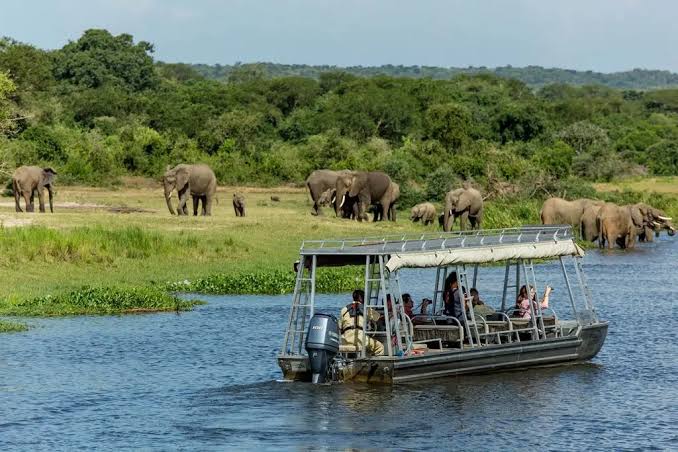
The official and specialist park information lists scheduled morning, afternoon and sunset boat departures, although schedules and prices should always be confirmed when booking. Current details are available through Akagera visitor information.
After the boat trip, check into your selected lodge or camp. Depending on availability and park rules, you may also reserve a guided night game drive. Night drives can reveal nocturnal wildlife that travelers rarely see during the day.
Day Two: Full Game Drive and Return to Kigali
Begin the game drive early and travel through changing habitats toward the north. Stop for wildlife observations, photography and a picnic lunch. Exit the park in the afternoon and return to Kigali in the evening.
This itinerary improves your chances of enjoying the park without feeling rushed. It also creates opportunities for sunrise scenery, night sounds and relaxed wildlife observation.
Three-Day Akagera Road Trip from Kigali
A three-day safari is suitable for wildlife enthusiasts, families, birdwatchers and photographers who want more than a quick overview.
On the first day, travel from Kigali and enjoy an afternoon boat cruise or southern game drive. The second day can focus on a complete game drive, while the third day allows time for another activity or a relaxed return to Kigali.
Extra activities may include a guided nature experience, another boat safari, a community visit, fishing or specialized wildlife viewing. Availability depends on the season and advance arrangements.
Longer stays are particularly useful for photography. Weather, light and wildlife movements change throughout the day. Spending several mornings and evenings in the park increases the variety of possible sightings and photographic conditions.
Self-Drive or Guided Kigali to Akagera Safari?
Travelers can visit Akagera using a self-drive rental car, a vehicle with a driver or a complete guided safari package. Each arrangement has advantages.
Self-Drive Safari
A self-drive safari offers privacy and flexibility. You choose when to stop, how long to watch an animal and which permitted route to follow. It can suit experienced travelers who are comfortable driving on African roads and unpaved safari tracks.
However, self-driving also creates additional responsibilities. You must navigate from Kigali, manage fuel, understand park routes, observe all regulations and respond appropriately if road conditions deteriorate.
Finding wildlife requires patience and experience. Lions may disappear into grass, leopards often remain concealed, and rhinoceroses can be difficult to locate. First-time visitors may drive past animals that a trained guide would notice immediately.
Safari with a Driver-Guide
A guided safari removes much of the logistical pressure. The guide manages the route, driving schedule, registration and game-viewing strategy. You can concentrate on the scenery and wildlife rather than navigation.
Professional safari guides also explain animal behaviour, plants, habitats, conservation and local communities. This interpretation transforms the journey from a sightseeing drive into a meaningful educational experience.
A guide cannot guarantee a Big Five sighting, but local knowledge can improve your chances. Guides often understand which habitats are productive at different times and how weather affects animal movement.
Park Ranger Guide
Self-drive visitors may also arrange for a park guide to accompany them. This option combines the independence of a private vehicle with local knowledge inside Akagera. Availability should be confirmed in advance, especially during busy periods.
For first-time visitors, families and travelers with only one day, a professional driver-guide generally provides the easiest and most efficient experience.
What Type of Vehicle Is Best?
A well-maintained four-wheel-drive vehicle is the best option for a Kigali to Akagera safari. A Toyota Land Cruiser or another capable 4×4 provides good ground clearance, stability and comfort on uneven tracks.
A safari vehicle with a raised roof improves wildlife viewing and photography. Passengers can look across tall grass and enjoy a wider field of vision while the vehicle is stationary in permitted areas.
During the dry season, some tracks may be manageable with a less powerful vehicle. Nevertheless, conditions can change, and even a short shower may create slippery sections. A 4×4 offers valuable protection against delays and route limitations.
Before leaving Kigali, check the tires, spare wheel, jack, fuel, brakes and essential tools. Self-drive travelers should confirm whether their rental agreement permits driving inside national parks. They should also understand what assistance the rental company provides if the vehicle develops a problem.
Road Conditions Between Kigali and Akagera
The main route from Kigali through Eastern Province is generally paved. The journey is therefore relatively smooth until you approach the park.
Drivers should still remain cautious. The road passes through populated areas where pedestrians, motorcycles, bicycles, livestock and local traffic may enter the roadway. Speed limits change near towns and settlements, and enforcement is taken seriously in Rwanda.
Rwanda drives on the right-hand side of the road. Seat belts should remain fastened, and drivers must follow local traffic rules. Avoid rushing simply because the road appears clear.
Inside Akagera, visitors encounter unpaved tracks. These can become dusty during dry months and muddy during rainy periods. The park speed limit is low to protect wildlife and visitors. Independent park guidance commonly states a maximum of 40 kilometres per hour on park tracks, alongside rules against off-road driving and leaving the vehicle outside designated areas.
Slow driving is not merely a regulation. It produces better sightings. A relaxed pace allows travelers to notice movement in the grass, listen for alarm calls and observe animals without unnecessary disturbance.
Akagera National Park Gates and Direction of Travel
Visitors should confirm the current gate arrangement before traveling. The official park website states that self-drive entry takes place through the southern gate. The park’s northern gate generally serves travelers completing a south-to-north game drive.
This one-direction structure affects itinerary planning. If you want to cross the full park, enter through the south, travel north and exit at the appropriate northern gate. From there, the return drive to Kigali may take longer than the morning journey to the southern entrance.
Do not assume that the drive ends as soon as you leave the park. The northern exit lies in a remote area, and reaching the main road takes time. A professional guide will calculate the game-drive pace carefully so that you leave the park and return to Kigali safely.
Akagera National Park Entrance Fees and Safari Costs
Safari costs depend on nationality or residence status, age, duration, vehicle, activities and accommodation. International adult visitors currently pay a different rate from Rwandan citizens, East African Community citizens, residents and children.
Published 2026 guidance indicates a one-day international adult entrance fee of approximately USD 100, with different rates for other visitor categories. Because park fees and activity prices can change, travelers should confirm the official amount before payment. Current fee categories are summarized by Akagera National Park information, while bookings should be verified directly with the park or a licensed tour operator.
Your complete road-trip budget may include:
- Private safari vehicle and fuel
- Professional driver-guide
- Park entrance
- Vehicle entry charge
- Ranger-guide service
- Lunch and bottled water
- Boat safari
- Night game drive
- Accommodation
- Pickup and drop-off in Kigali
- Administrative or booking support
A packaged safari may appear more expensive than paying only an entrance fee, but it includes the transport and operational services required to reach and explore the park. Always compare what each quotation includes instead of comparing headline prices alone.
Ask whether the quoted rate covers park fees, vehicle entry, meals, drinks, guiding, activities, accommodation and taxes. A clear inclusion list prevents misunderstandings.
Wildlife on a Kigali to Akagera Safari
Akagera National Park is home to the African Big Five: lion, leopard, elephant, rhinoceros and buffalo. However, seeing all five during one game drive requires considerable luck.
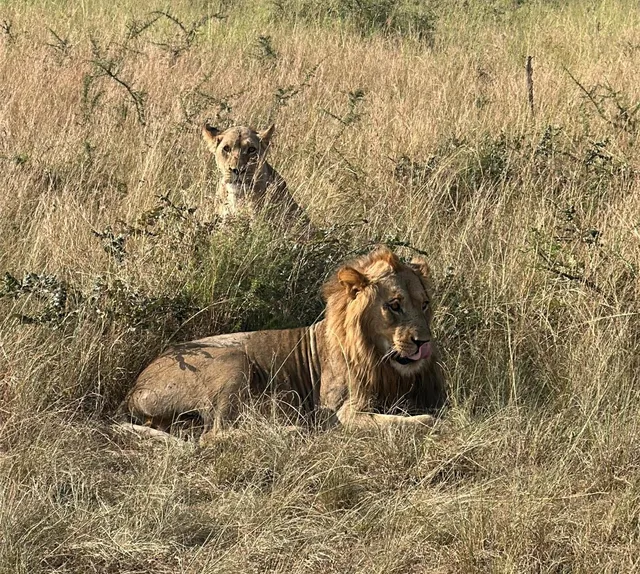
Buffaloes often appear in herds or near wetland environments. Elephants may travel between woodland, open areas and water sources. Lions can be found resting in grass or shade, particularly after the morning warms. Rhinoceroses require patient searching, while leopards remain the most elusive because of their secretive behaviour.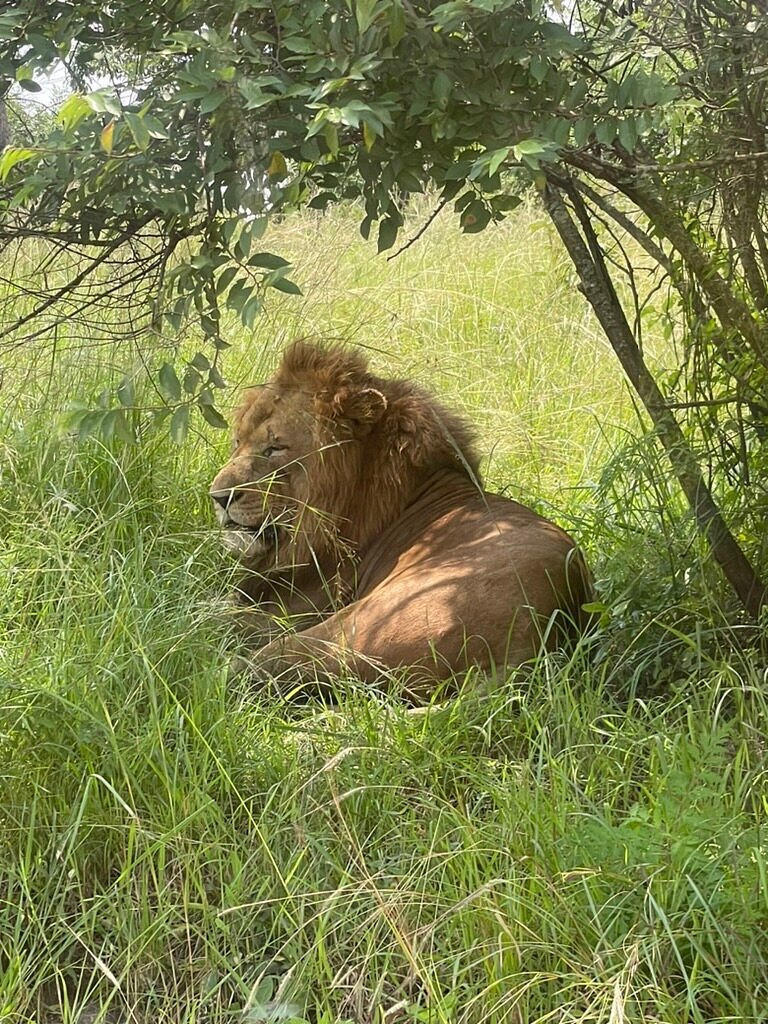
The park’s wildlife extends far beyond the Big Five. Visitors commonly see giraffes, zebras, impalas, topis, waterbucks, warthogs, elands, bushbucks and several primate species. Spotted hyenas also inhabit the park, although they may be easier to encounter during early morning or night activities.
Hippos and Nile crocodiles occupy the lakes and wetland systems. A boat safari provides excellent opportunities to observe these animals from a safe distance.
Wildlife viewing changes with rainfall, temperature, vegetation and water availability. Instead of treating the safari as a checklist, allow time to appreciate animal behaviour, scenery and smaller discoveries.
Birdwatching in Akagera National Park
Akagera ranks among Rwanda’s finest birding destinations because it protects several connected ecosystems. Savanna, woodland, papyrus wetlands, lakes and seasonal pools attract an impressive variety of birds.
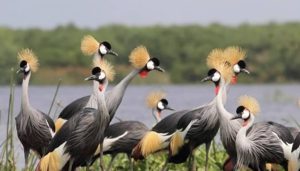
Travelers may see African fish eagles, kingfishers, herons, egrets, cormorants, storks, bee-eaters, rollers and birds of prey. The wetlands support species that are difficult to find in Rwanda’s mountain forests.
Serious birdwatchers should consider spending at least two nights in or near the park. A short day trip provides many sightings, but it cannot cover every habitat. An experienced birding guide can identify calls, locate specialized species and choose the most productive areas.
Bring binoculars, a camera with a suitable lens, a field guide or birding application and a notebook. Early morning generally offers the greatest activity.
Lake Ihema Boat Safari
A boat cruise on Lake Ihema is one of the best additions to an Akagera road trip. It introduces travelers to the park’s aquatic ecosystem and offers a peaceful contrast to a dusty game drive.
Hippos may surface close to the boat, although the crew maintains a safe distance. Crocodiles sometimes rest along the shoreline, while waterbirds feed in the shallows or gather in trees.
Morning cruises offer cooler conditions and active birds. Afternoon trips fit conveniently into a two-day itinerary, while a sunset cruise creates beautiful light across the lake.
Boat spaces can fill during peak travel periods. Reserve the activity in advance rather than assuming seats will remain available after arrival.
Best Time for a Kigali to Akagera Road Trip
Akagera remains open throughout the year, and every season offers advantages. The best time depends on your interests, tolerance for rain and preferred landscape.
June to September
The long dry season is popular for traditional game viewing. Vegetation becomes less dense, and animals often gather around remaining water sources. Roads are generally easier to navigate, although the environment can become dusty.
These months also coincide with an important international travel season. Vehicles, guides, lodges and boat cruises should be booked early.
December to February
The shorter dry period can also provide favorable game-drive conditions. The landscape may remain greener than during the long dry season, depending on recent rainfall.
March to May and October to November
Rain transforms Akagera into a rich green landscape. Migratory and resident birds can be active, scenery becomes photogenic, and some accommodation may have greater availability.
However, rain may make certain tracks muddy or slippery. A 4×4 becomes particularly important, and route decisions may depend on current conditions.
There is no completely bad time to visit. Dry-season travelers may enjoy concentrated wildlife and easier roads, while wet-season visitors experience dramatic skies, green vegetation and rewarding birdlife.
What to Pack for the Road Trip
Pack lightly, but prepare for a long day with changing temperatures. Early mornings can feel cool, while midday conditions may become hot.
Neutral-colored clothing works well for safari travel. Choose comfortable, breathable fabrics and carry a light jacket for the morning. Closed shoes protect your feet at picnic and lodge areas.
Bring sunscreen, sunglasses, a hat, insect repellent and personal medication. A reusable water bottle is useful, although organized tours normally provide drinking water.
Binoculars significantly improve the experience. Many animals remain far from the road, and bird identification is difficult without magnification. Photographers should bring spare batteries, memory cards and a lens-cleaning cloth.
Keep passports or identification documents accessible for registration. International travelers should also carry travel insurance details and emergency contact information.
Avoid bringing unnecessary plastic packaging. Rwanda maintains strong environmental standards, and visitors should never leave rubbish inside the park.
Food, Water and Rest Stops
Travelers on an early departure should request a packed breakfast from their Kigali hotel or arrange food through the safari operator. A full-day game drive can continue for many hours, so do not depend on finding a restaurant along the route.
Kayonza is a practical location for a brief stop before continuing toward Akagera. Nevertheless, every stop reduces game-viewing time. An organized tour normally carries lunch, bottled water and essential refreshments.
Food should only be eaten in authorized areas inside the park. Never feed animals, even if monkeys or birds approach the picnic site. Feeding changes natural behaviour and can create dangerous interactions.
Carry enough drinking water, but manage it carefully during a long drive. Restroom facilities are limited once you leave the reception and lodge areas.
Where to Stay in and Around Akagera
Accommodation ranges from simple campsites and comfortable lodges to high-end tented camps. Your choice should reflect budget, preferred activities and the part of the park you want to explore.
Akagera Game Lodge
Akagera Game Lodge offers a conventional hotel-style stay in the southern part of the park. It can suit families, groups and travelers who prefer established facilities after a long game drive.
Ruzizi Tented Lodge
Ruzizi Tented Lodge provides an intimate experience near Lake Ihema. Its tented rooms and natural setting appeal to travelers seeking comfort and atmosphere close to the water.
Karenge Bush Camp
Karenge Bush Camp offers a seasonal or bush-focused experience in a more remote environment. Its location can benefit guests who want to spend more time in wildlife-rich landscapes.
Magashi
Magashi provides a luxury safari experience in northern Akagera. It suits travelers looking for exclusive accommodation, guided activities and a highly personalized stay.
Rhino Lodge and Other Options
Travelers can also consider Rhino Lodge and selected properties outside or near the park. These may provide useful alternatives for different budgets.
Accommodation names, operations and rates may change. Confirm the property’s location because the distance between the southern and northern regions influences your daily schedule.
Family Road Trips to Akagera
Akagera can be an excellent family safari because it is relatively close to Kigali and does not require strenuous walking. Children can watch wildlife from the vehicle, enjoy a boat trip and learn about conservation.
Parents should prepare children for long periods of quiet observation. Wildlife may not appear immediately, and patience forms part of the safari experience.
Carry snacks, water, sun protection and comfortable clothing. Explain that animals must not be fed, called, chased or disturbed. Children should remain inside the vehicle except at designated locations.
A private safari vehicle offers families flexibility. The guide can adjust stops and manage the pace around the children’s comfort. For younger travelers, a two-day itinerary is often better than a very long same-day return journey.
Confirm current child entrance fees, activity age limits and accommodation policies before booking.
Akagera Road Trip for Solo Travelers
Solo travelers can arrange a private safari or join a scheduled departure when available. A private tour costs more per person but offers complete flexibility. A shared safari reduces transport expenses and can provide a social experience.
Safety, vehicle reliability and clear communication are particularly important for solo visitors. Choose a licensed operator with a confirmed itinerary, professional driver and transparent payment terms.
Inform your accommodation about the departure plan, keep emergency contacts accessible and avoid driving alone inside the park without suitable preparation.
Women traveling alone frequently visit Rwanda, and a professionally guided Akagera safari can offer a comfortable and straightforward wildlife experience.
Photography Tips for Akagera
Use the early-morning and late-afternoon light whenever possible. The softer light creates richer color, reduces harsh shadows and adds atmosphere to wildlife images.
A telephoto lens helps photograph distant animals without approaching or disturbing them. A wider lens captures lakes, plains, acacia woodland and dramatic skies.
Keep your camera ready because wildlife encounters can happen suddenly. However, avoid spending the entire safari looking through a screen. Observe the scene first and take photographs without blocking other passengers.
Turn off distracting sounds and flashes. Flash photography rarely improves distant wildlife images and may disturb animals.
Ask the driver to stop gently and position the vehicle without leaving the road. Experienced safari guides understand light and photography, but patience remains essential.
Road Safety and Park Regulations
Follow Rwanda’s traffic laws throughout the journey. Drive on the right, respect speed limits, wear seat belts and avoid using a handheld phone while driving.
Inside Akagera, wildlife always has priority. Stop when animals cross the road and never pressure them to move. Maintain a respectful distance, particularly around elephants, buffaloes, rhinoceroses and predators.
Remain on recognized tracks. Off-road driving damages vegetation, disturbs wildlife and may result in penalties. Visitors should leave their vehicles only at lodges, camps, reception areas and authorized picnic points.
Do not play loud music, shout at animals or attempt to attract their attention. Quiet visitors frequently enjoy better behaviour and longer sightings.
Never remove plants, stones, feathers or other natural materials. Carry all rubbish out or use designated disposal areas.
Follow the instructions of park staff and guides, even if an online blog gives different advice. Local instructions reflect current conditions and wildlife activity.
Common Kigali to Akagera Road Trip Mistakes
The most frequent mistake is leaving Kigali too late. A late start reduces wildlife-viewing time and may prevent a full crossing of the park.
Another common problem is underestimating the length of the day. Travelers may focus on the two-hour transfer without considering registration, the game drive, lunch stops, the northern exit and the return journey.
Using an unsuitable vehicle can create serious delays during rain. A small car may handle the highway but struggle on muddy or uneven park tracks.
Some visitors also arrive without enough fuel, food or water. Fill the vehicle before approaching the park and carry the supplies required for the planned itinerary.
Depending exclusively on phone navigation can lead to confusion. Download offline maps, carry park information and confirm gate directions in advance.
Finally, travelers sometimes expect guaranteed Big Five sightings. Akagera is a natural ecosystem rather than a zoo. A successful safari includes landscapes, common wildlife, birds and animal behaviour—not only rare predators.
Combining Akagera with Other Rwanda Destinations
Akagera fits naturally into a longer Rwanda itinerary. After returning to Kigali, travelers can continue north to Volcanoes National Park for gorilla trekking and golden monkey tracking.
A broader itinerary may include Nyungwe National Park for chimpanzee trekking, forest walks and canopy experiences. Lake Kivu adds beaches, boat excursions, islands and relaxation.
A classic Rwanda itinerary could include one night in Kigali, two nights in Akagera, two nights near Volcanoes National Park and two or three nights around Lake Kivu or Nyungwe.
Travelers with limited time can combine a Kigali city tour, Akagera day safari and gorilla trek within four or five days. However, adding extra nights creates a more comfortable schedule.
Responsible Tourism in Akagera
Akagera represents an important conservation success. The return of lions and rhinoceroses restored the park’s Big Five status, while improved protection has supported wider wildlife recovery. The official park overview notes the reintroduction of lions in 2015, eastern black rhinoceroses in 2017 and southern white rhinoceroses in 2021. Read the official Akagera overview.
Visitors support conservation through entrance fees, activities, accommodation and responsible behavior. Choosing locally based operators also helps tourism income remain within Rwanda.
Respect surrounding communities during the journey. Ask permission before photographing people, purchase local products fairly and avoid treating villages as roadside attractions.
Reduce waste, use refillable bottles where practical and avoid disturbing wildlife for photographs. Ethical safari travel protects both the visitor experience and the park’s future.
Is a Kigali to Akagera Day Trip Worth It?
Yes. A one-day Akagera safari is worthwhile for travelers who have limited time and can accept a long schedule. The park’s proximity to Kigali makes it possible to experience genuine savannah wildlife without taking an additional flight.
However, a day trip works best with an early departure, reliable 4×4 vehicle and knowledgeable guide. Travelers who want a boat safari, night drive or slower wildlife photography should stay at least one night.
A single day provides an exciting introduction. Two days create a more balanced safari. Three days allow deeper exploration and a better appreciation of the park’s changing habitats.
Why Book with a Local Rwanda Safari Operator?
A local operator understands the route, seasonal road conditions, park procedures and realistic travel times. This knowledge becomes especially valuable when arranging a one-day safari with little room for delays.
Universal Ventures Rwanda can organize private transportation, professional guiding, park reservations, packed meals, bottled water, accommodation and additional Akagera activities. The itinerary can be adjusted for solo travelers, couples, families, business visitors and groups.
Travelers can also combine Akagera with gorilla trekking, golden monkey tracking, Nyungwe chimpanzee trekking, Kigali city tours and Lake Kivu holidays.
A professionally arranged tour allows you to focus on wildlife while the operator handles driving, timing and logistical details.
Frequently Asked Questions About the Kigali to Akagera Road Trip
How long is the drive from Kigali to Akagera National Park?
The journey to the southern entrance normally takes approximately two to two and a half hours. Traffic, hotel location, rain and stops may increase the travel time.
What is the distance from Kigali to Akagera?
The distance is approximately 110 kilometres to the park’s southern entrance. The total driving distance for the day will be much greater after adding the internal game drive and return journey.
Can I visit Akagera from Kigali in one day?
Yes. A one-day trip is possible and popular. Leave Kigali around 4:30 or 5:00 a.m. to maximize your game-viewing time.
Do I need a 4×4 vehicle?
A 4×4 is strongly recommended, particularly during the rainy season. It also provides better comfort, visibility and reliability on park tracks.
Can I self-drive in Akagera National Park?
Yes, Akagera allows self-drive safaris, subject to current park regulations. Visitors should enter through the designated southern entrance, use an appropriate vehicle and follow park instructions.
Is the road from Kigali to Akagera paved?
The main route is generally paved. However, the roads inside the national park are predominantly unpaved safari tracks.
Can I see the Big Five in Akagera?
Akagera is home to lions, leopards, elephants, rhinoceroses and buffaloes. Seeing all five on one game drive is possible but never guaranteed.
What time should I leave Kigali?
For a day trip, depart between 4:30 and 5:00 a.m. This schedule supports an early game-drive start and gives you more time inside the park.
Should I hire a safari guide?
A guide is highly recommended for first-time visitors. Guides understand animal behaviour, routes, habitats and park procedures and can improve the quality of the experience.
Can I take a boat safari during a one-day trip?
It may be possible, but combining a complete game drive and boat cruise in one day creates a tight schedule. Spending one night in or near Akagera is more comfortable.
Is Akagera suitable for children?
Yes. The safari involves wildlife viewing from a vehicle and can suit families. Parents should confirm activity age restrictions, prepare children for a long drive and follow all safety instructions.
What should I wear?
Wear comfortable, breathable clothing in neutral colors. Bring a hat, sunglasses, sunscreen, closed shoes and a light jacket for the early morning.
Are wildlife sightings guaranteed?
No. Akagera is a natural protected area where animals move freely. A skilled guide can improve your chances, but no responsible operator should guarantee specific sightings.
Can I return to Kigali on the same evening?
Yes. Most day safaris return between approximately 7:00 and 8:00 p.m., although the exact time depends on the route, traffic and exit point.
Final Thoughts
The Kigali to Akagera Road Trip Guide reveals why this journey deserves a place in almost every Rwanda itinerary. It combines a scenic drive through Eastern Province with Big Five wildlife, beautiful lakes, open savannah and one of Africa’s most encouraging conservation stories.
For travelers with limited time, a carefully planned day trip delivers an authentic wildlife safari from Kigali. Those who stay one or two nights can add a Lake Ihema boat cruise, night drive, relaxed game viewing and memorable sunrise or sunset scenery.
Start early, choose a suitable safari vehicle, confirm current park fees and activities, and allow enough time for the complete journey. Most importantly, travel patiently. Akagera rewards visitors who slow down, observe carefully and appreciate the entire ecosystem.
Whether you choose a private guided safari or a well-prepared self-drive adventure, the road from Kigali to Akagera opens the door to a completely different side of Rwanda.
Book Your Kigali to Akagera Safari
Universal Ventures Rwanda
Telephone/WhatsApp: +250 781 441 853
Email: info@universalventuresrwanda.com
Address: KN 15 Road, opposite IPRC Entrance, 1st Floor, SANGWA Plaza, Kigali, Rwanda
Website: www.universalventuresrwanda.com