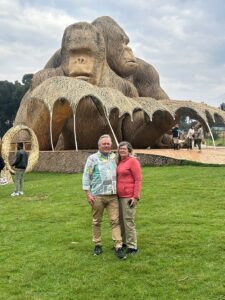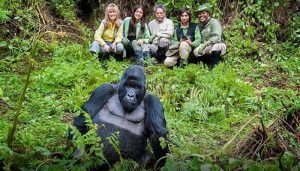

Rwanda cultural tourism experiences allow visitors to participate rather than simply observe. You can learn traditional dance movements, prepare a Rwandan meal, weave a basket, paint an Imigongo design or follow coffee from the farm to the final cup.
Rwanda’s mountain gorillas may attract international visitors, but the country’s people, traditions and history give every safari its deeper meaning. Travelers who spend time beyond the national parks discover a society shaped by royal heritage, cattle culture, oral storytelling, music, dance, craftsmanship and strong community values.
In Nyanza, the King’s Palace introduces Rwanda’s monarchical history and the symbolic Inyambo cattle. In Huye, the Ethnographic Museum presents traditional architecture, agriculture, clothing and social organization. Northern communities share experiences connected to farming, conservation and life beside Volcanoes National Park.
Kigali reveals another side of Rwandan culture. Contemporary artists, fashion designers, musicians, chefs and coffee professionals are creating new interpretations of national identity. The capital shows that culture does not exist only in museums or historical displays. It continues to grow through modern creativity.
The best cultural tours treat local people as partners rather than attractions. They respect privacy, provide fair economic benefits and allow communities to explain their culture in their own voices.
This comprehensive guide explores the most rewarding Rwanda cultural tourism experiences and shows how to combine them with gorilla trekking, wildlife safaris and scenic journeys through the Land of a Thousand Hills.
Why Choose Rwanda Cultural Tourism Experiences?
Cultural tourism helps visitors understand Rwanda beyond the landscapes shown in safari photographs.
A gorilla trek creates an extraordinary wildlife encounter, but it does not automatically explain how neighboring communities live, how conservation affects them or how Rwanda’s history shaped the country seen today.
Cultural experiences add that context. They reveal the connection between cattle and social identity, between dance and storytelling, and between agriculture and daily life.
Community-based tourism can also distribute income beyond hotels and national parks. Guides, dancers, cooks, farmers, artisans and cooperative members receive direct benefits when tours operate responsibly.
For travelers, the result is a more personal journey. A conversation with a coffee farmer or basket weaver may become as memorable as seeing a famous landmark.
Understanding Rwandan Culture
Rwandan society values dignity, hospitality, community and respect. Family relationships, social responsibility and cooperation remain central to daily life.
Kinyarwanda is the shared national language and an important expression of cultural identity. English, French and Kiswahili are also widely used in different contexts.
Traditional Rwandan society developed around agriculture and cattle keeping. Cattle represented food, wealth, status and social connection. The importance of cattle remains visible in ceremonies, dance movements, poetry and the royal Inyambo herd.
Oral history preserved stories, genealogies, proverbs and political traditions across generations. Music and dance communicated courage, celebration, identity and social values.
Modern Rwanda combines this heritage with urban development, technology, contemporary art, fashion and international influences. Cultural tourism becomes most meaningful when it acknowledges both tradition and change.
1. King’s Palace Museum in Nyanza
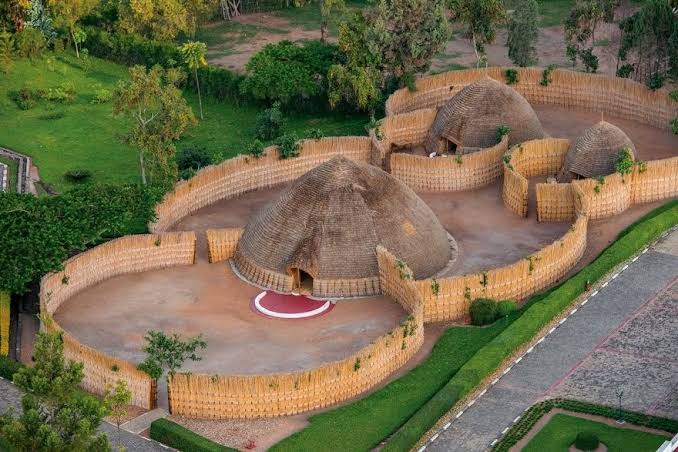
The King’s Palace Museum is one of Rwanda’s most important heritage attractions. Nyanza served as the country’s royal capital before Rwanda became a republic.
The museum includes a reconstructed traditional royal residence with an impressive thatched roof. Its carefully organized rooms and enclosures introduce visitors to court life, royal authority and traditional architecture.
A guide explains how the king lived, received visitors and governed. The design of the palace reveals how space reflected status, privacy and ceremony.
Rwanda’s official tourism platform describes the palace as a beautifully constructed residence shaped like a beehive. Visit Rwanda
The Royal Inyambo Cattle
Behind the traditional palace, visitors can meet the long-horned Inyambo cattle associated with Rwanda’s monarchy.
Their enormous horns create an elegant silhouette, while their caretakers preserve traditions of grooming, singing and reciting poetry to the animals.
Inyambo cattle were more than livestock. They represented royal prestige, beauty and wealth. Their movements even influenced elements of Rwandan dance.
The animals at Nyanza remain cultural ambassadors, helping visitors understand the historical relationship between Rwandans and cattle. Associated Press
Allow at least one or two hours for a guided palace visit. Nyanza combines naturally with Huye, Nyungwe National Park or Kibeho.
2. Ethnographic Museum in Huye
The Ethnographic Museum contains one of the region’s most significant collections relating to traditional Rwandan life.
Seven galleries display objects and information connected to agriculture, cattle keeping, hunting, architecture, clothing, weaving, pottery, music and spiritual traditions.
The museum gives visitors a structured introduction to Rwanda’s social and cultural history. This context improves later community experiences because travelers recognize the meaning behind household objects, building styles and artistic patterns.
Traditional dance performances may be available according to the museum’s program. These performances should be viewed as storytelling and cultural preservation rather than simple entertainment.
Huye itself deserves time. The city has universities, markets, restaurants and a calmer atmosphere than Kigali. Spend a night if you plan to combine the museum with local cultural or agricultural activities.
3. Gorilla Guardians Village
Gorilla Guardians Village, formerly widely known as Iby’Iwacu Cultural Village, lies near Volcanoes National Park.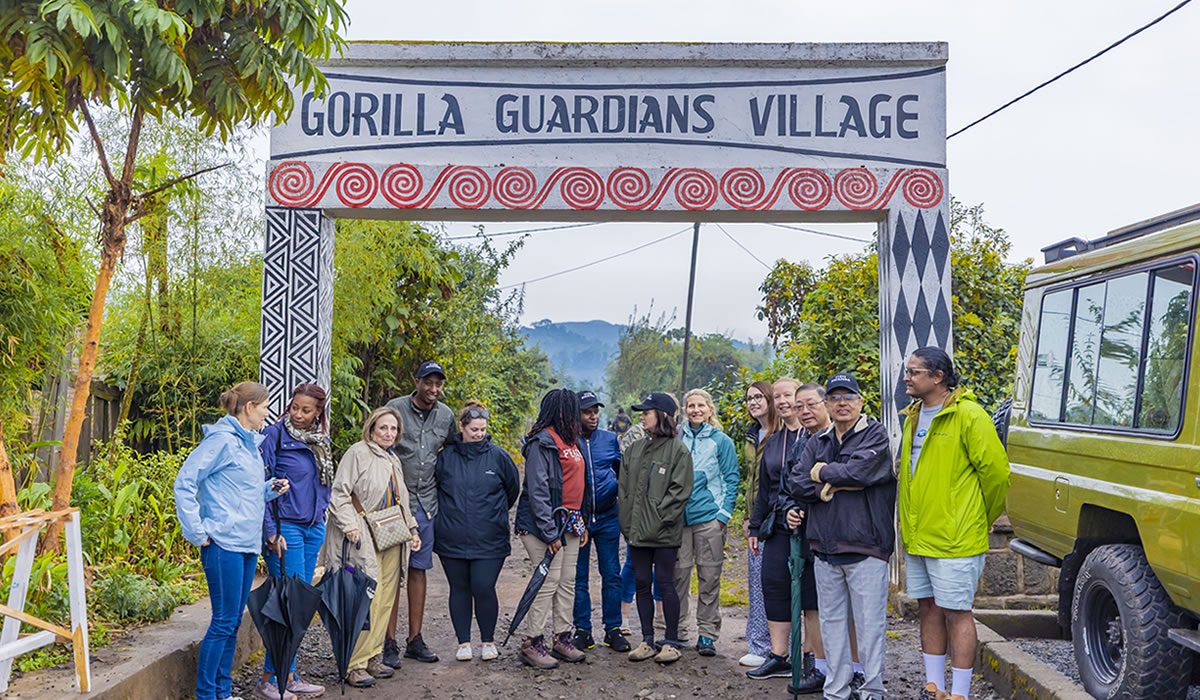
The project developed as a way for communities to benefit from conservation and tourism. Some participants previously depended on activities that placed pressure on the forest and wildlife. Tourism created alternative income through guiding, performance and cultural education.
A typical visit may include traditional dance, drumming, archery demonstrations, medicinal-plant knowledge and explanations of earlier royal or community life.
Visitors may enter a reconstruction of a traditional residence and learn about customs connected to leadership, marriage and healing.
Live performances are among the best-known Rwanda cultural tourism experiences in the Volcanoes region. Official tourism guidance notes that traditional dance can be experienced at cultural villages, museums and selected lodges. Visit Rwanda
Combining Culture with Gorilla Trekking
The village lies conveniently near Volcanoes National Park and can be visited on the afternoon before a trek or after returning from the forest.
Avoid placing the activity into a schedule that is too tight. Gorilla trekking has an unpredictable duration, and tired travelers may not fully appreciate the cultural experience.
A separate afternoon provides time for conversation and participation.
4. Red Rocks Intercultural Exchange Centre
Red Rocks, near Musanze, offers community and cultural activities focused on exchange, education and local livelihoods.
Programs may include traditional music, dance, basket weaving, banana-beer preparation, farming, storytelling, painting and cooking.
Visitors can choose a short activity or a longer immersion program. Staying nearby creates more time to understand the organization’s work and meet community participants.
The strongest experiences involve small groups and genuine interaction. Instead of watching a demonstration from a distance, travelers may learn a skill directly from the person who practices it.
Red Rocks also connects naturally with gorilla trekking, golden monkey tracking, the Twin Lakes and Musanze Caves.
5. Traditional Intore Dance
Intore dance is one of Rwanda’s most recognized cultural traditions. The word “Intore” is often associated with selected or outstanding warriors.
Performances combine powerful male movements, graceful female dancing, drumming, singing and elaborate costumes.
Male dancers may wear long sisal headdresses that move dramatically as they jump and turn. Female dancers use controlled arm movements inspired partly by the elegance and horns of cattle.
Drums establish the rhythm and emotional character of the performance. Different compositions may express courage, celebration, unity or welcome.
Intore dance should not be understood only as an attractive show for tourists. It carries historical meaning and remains part of national ceremonies, celebrations and cultural education.
Travelers may see performances at museums, cultural villages, festivals and selected lodges.
6. Rwanda’s Traditional Drumming Experiences
Drums have long played an important role in communication, ceremony and royal authority.
Traditional ensembles use drums of different sizes and tones. Musicians create complex rhythms while singers and dancers respond to changes in pace.
Historically, royal drums held symbolic and political importance. Their presence communicated the authority and continuity of the kingdom.
Modern workshops allow visitors to learn basic rhythms and understand how drummers coordinate as a group.
A short lesson reveals the physical skill required to maintain rhythm while responding to dancers and other musicians.
When booking, choose a program led by experienced cultural practitioners. Fair compensation supports the musicians and helps preserve the tradition.
7. Nyamirambo Women’s Centre
Nyamirambo is one of Kigali’s most vibrant and culturally diverse neighborhoods.
A community-led walking experience may explore local streets, markets, businesses, homes and religious landmarks. Guides explain neighborhood history and introduce visitors to daily life beyond the capital’s formal monuments.
Some programs include cooking, sewing, basket making or a traditional meal.
The Nyamirambo Women’s Centre has used tourism and skills training to create employment and income opportunities. The experience demonstrates how cultural tourism can support community development when local people control the narrative.
Wear comfortable shoes and ask permission before photographing residents or private spaces.
8. Kigali Cultural Village
Kigali Cultural Village provides a space where artisans and food vendors can exhibit their products. It may also host music, festivals, workshops and cultural events.
The venue gives travelers a chance to explore crafts, design and food in one location. However, programming changes, so confirm whether an event or market is taking place before visiting.
Rwanda’s official tourism website describes the site as a traditional market space for artisans and food vendors that also hosts workshops, festivals and music. Visit Rwanda
A visit fits easily into a Kigali city tour alongside art studios, coffee experiences and local markets.
9. Imigongo Art in Eastern Rwanda
Imigongo is one of Rwanda’s most distinctive visual art traditions.
Artists create raised geometric designs using a mixture that traditionally includes cow dung and natural materials. After drying, the patterns are painted in carefully selected colors.
Black, white, red and earthy tones appear frequently, although modern artists also introduce new color combinations.
The geometric designs can symbolize movement, protection, community or elements of daily life. Contemporary artists now apply Imigongo patterns to wall art, furniture, fashion accessories and interior design.
Kakira Imigongo Cooperative
The best-known Imigongo experiences take place in eastern Rwanda, particularly around Nyakarambi.
A cooperative visit may include an explanation of the tradition, a demonstration and an opportunity to create a small personal design.
Buying directly from cooperative artists supports their work more effectively than purchasing mass-produced copies elsewhere.
Imigongo workshops combine naturally with Akagera National Park. They provide a valuable cultural stop before or after a wildlife safari.
10. Community Cultural Tours Near Akagera
Communities around Akagera National Park offer activities that complement game drives and boat safaris.
Depending on the selected program, visitors may learn about cattle keeping, milk traditions, beekeeping, food preparation, farming or Imigongo painting.
Some experiences include sampling honey, milking a cow or participating in traditional dance. Inside Akagera
These tours help connect conservation with livelihoods. The benefits of protected areas become more meaningful when neighboring families receive tourism income.
Allow at least half a day rather than adding a rushed activity after a full game drive.
11. Azizi Life Experiences
Azizi Life works with artisan groups and rural communities, particularly around Muhanga.
Experiences may include basket weaving, traditional cooking, farming, pottery and spending part of the day with a host family.
A rural day experience can begin with meeting community members before participating in daily activities. Visitors may collect ingredients, prepare food, work in a garden or learn a traditional craft.
The purpose is not to imitate poverty or turn domestic life into a spectacle. Responsible programs create a respectful exchange in which hosts choose what they share and receive fair compensation.
Muhanga lies between Kigali and southern or western Rwanda, making it a convenient cultural stop.
12. Basket Weaving
Basket weaving carries both practical and symbolic importance in Rwanda.
Traditional baskets store food, transport goods and decorate homes. The agaseke, a tall lidded basket, has become an internationally recognized Rwandan design.
After the 1994 Genocide against the Tutsi, baskets also became symbols of peace, rebuilding and cooperation. Women from different backgrounds worked together in weaving groups and cooperatives.
A workshop teaches visitors how artisans prepare fibers, select colors and construct precise patterns.
Producing even a small section requires patience and skill. The experience gives travelers greater appreciation for the time invested in each finished basket.
Purchase directly from recognized cooperatives when possible.
13. Pottery Experiences
Pottery traditions remain part of Rwanda’s cultural heritage.
Community workshops may show visitors how artisans prepare clay, shape vessels and fire finished pieces. Products range from cooking pots and water containers to decorative objects.
A hands-on activity allows travelers to attempt a simple bowl or small object.
Pottery experiences can also create opportunities to learn about communities whose traditional livelihoods have not always received equal recognition.
Choose an operator that presents cultural history respectfully and allows artisans to describe their work in their own words.
14. Traditional Rwandan Cooking Classes
Food provides one of the most accessible ways to understand culture.
Rwandan cooking uses ingredients such as beans, bananas, cassava, sweet potatoes, maize, vegetables, groundnuts and meat. The specific meal depends on region, season and family preference.
A cooking experience may begin at a local market or garden. Participants select ingredients, prepare them with community cooks and share the final meal.
Common dishes may include isombe, made from cassava leaves; ibihaza, prepared from pumpkin; beans; grilled meat brochettes; and different banana-based dishes.
Cooking classes encourage natural conversation. While preparing food, hosts can explain family customs, agriculture and changing eating habits.
15. Rwanda’s Milk-Bar Culture
Cattle and milk hold an important place in Rwandan culture.
Milk bars developed as social spaces where people could drink fresh or fermented milk. Ikivuguto, a fermented milk product, remains a distinctive part of Rwandan food culture.
Independent milk bars have become less common as Kigali modernizes. Visiting one with a local guide offers insight into everyday traditions that formal cultural centers may not present.
Ask the guide what to order and how the milk is prepared. Simple snacks may accompany the drink.
Travelers with dairy allergies or intolerances should inform the guide in advance.
16. Banana Beer and Local Brewing Traditions
Bananas are central to agriculture in many parts of Rwanda. Communities use different varieties for food, cooking and traditional drinks.
Cultural programs may demonstrate how ripe bananas are processed to make banana juice or fermented beverages.
Visitors learn how the ingredients are prepared and how drinks feature in social gatherings or ceremonies.
These demonstrations should take place through organized, hygienic programs. Travelers should drink responsibly and avoid consuming alcohol before driving.
The experience often combines well with cooking, dancing or village walks.
17. Coffee Tourism in Rwanda
Rwanda produces high-quality Arabica coffee, much of it grown by smallholder farmers on the country’s hills.
A complete coffee experience follows the process from planting and harvesting to washing, drying, roasting and tasting.
During the harvest season, visitors may pick ripe red cherries. At a washing station, guides explain how producers sort and process the crop.
A roasting session reveals how heat transforms green beans and develops aroma. The experience ends with brewing and tasting.
Lake Kivu Coffee Experiences
The hills around Lake Kivu contain several coffee farms and washing stations.
Coffee tours combine naturally with the Congo Nile Trail, boat trips and stays in Rubavu, Kinunu or Karongi.
These experiences connect travelers with farmers and demonstrate how geography influences flavor.
Kigali Coffee Experiences
Kigali’s specialty coffee scene introduces modern preparation methods and professional tasting.
Visitors can learn about espresso, pour-over brewing, roasting and the differences between coffee-growing regions.
The city’s coffee culture shows how an agricultural product can become part of contemporary urban identity. Kigali has gained recognition as an increasingly important coffee destination. Food & Wine
18. Tea Plantation Experiences
Tea covers hillsides around Nyungwe and other highland regions.
A guided plantation tour explains how workers select the youngest leaves and place them into harvesting baskets. Visitors may try tea picking before learning about processing and tasting.
Tea production depends on altitude, rainfall, soil and careful timing. Seeing the process creates a stronger appreciation for the final drink.
Gisakura Tea Experiences
Gisakura lies near Nyungwe National Park and is one of the easiest areas to combine tea with chimpanzee trekking or forest hiking.
The bright green fields create excellent photographic opportunities, especially in the morning.
Ivomo Tea Cooperative
Ivomo offers tea tourism linked to community employment and development. Experiences can include picking, processing, tasting and interaction with tea workers.
The cooperative’s wider programs may involve birdwatching, hiking, canoeing or local food. TIME
19. Traditional Farming Experiences
Agriculture shapes everyday life across Rwanda.
Community tours may introduce banana cultivation, potato farming, vegetable gardens or livestock care. Visitors learn how families respond to changing seasons, limited land and market conditions.
Northern Rwanda’s volcanic soils support potatoes and pyrethrum, while southern and western regions produce tea and coffee. Eastern Rwanda contains warmer farmland and cattle-keeping traditions.
Farming experiences should not be treated as staged manual labor. Their value lies in learning directly from people who understand the land.
Wear practical shoes and clothing that can become dusty or muddy.
20. Beekeeping and Honey Experiences
Traditional and modern beekeeping projects operate in several rural communities.
A guided experience may explain hive construction, bee behavior, honey collection and the role bees play in pollination.
Protective clothing should be provided when visitors approach active hives. People with severe bee allergies should avoid the activity or remain at a safe observation point.
Honey tasting often follows the demonstration. Some cooperatives also produce candles, soap or skincare products from beeswax and honey.
Beekeeping tours work well around the Twin Lakes and in communities near national parks.
21. Kigali’s Contemporary Art Scene
Rwandan culture continues to evolve through contemporary painting, sculpture, photography, ceramics and multimedia art.
Kigali contains established galleries, artist collectives and independent studios. Visitors can meet artists, view works in progress and learn how creators address identity, memory, nature and urban change.
The strongest art tour includes more than one gallery. A guide can explain the differences between commercial spaces, community projects and working studios.
Ask before photographing artwork or artists. If purchasing a piece, request information about the creator, materials and transport requirements.
Kigali’s creative energy has received international attention for combining cultural heritage with sustainability and modern design. Condé Nast Traveler
22. Rwandan Fashion and Textile Experiences
Kigali’s fashion designers combine local patterns, global influences and contemporary African aesthetics.
A fashion tour may include designer studios, tailoring workshops, fabric markets and ethical clothing brands.
Visitors can learn how designers choose materials, develop patterns and build businesses within Rwanda’s creative economy.
Kitenge fabrics appear throughout East and Central Africa rather than belonging exclusively to Rwanda. A knowledgeable guide can explain the distinction between regional textiles and specifically Rwandan design traditions.
Custom garments require enough production time. Discuss collection or delivery arrangements before placing an order.
23. Kimironko Market
Kimironko Market offers an energetic introduction to Kigali’s everyday commercial life.
Vendors sell fruit, vegetables, spices, grains, household goods, clothing and colorful fabrics.
A guided visit helps travelers understand unfamiliar ingredients and communicate respectfully with vendors.
Tailors around the market may produce clothing from selected fabric, depending on available time.
Keep personal belongings secure and avoid blocking busy pathways. Always request permission before photographing vendors.
24. Nyabugogo and Local Urban Life
Nyabugogo is one of Kigali’s busiest transport and commercial areas.
It is not a conventional tourist attraction, but a carefully guided visit reveals how people and goods move through the city.
Markets, bus stations, repair shops and small businesses create an intense urban environment.
This experience is best suited to returning visitors, photographers and travelers interested in cities. Use a local guide and remain aware of traffic and personal belongings.
25. Umuganda Community Work
Umuganda is a national community-work tradition generally held on the final Saturday morning of each month.
Communities participate in activities such as cleaning, building, repairing infrastructure or environmental improvement.
Umuganda reflects ideas of collective responsibility and participation. However, tourists should not simply appear at a community activity and begin photographing people.
Participation must be arranged respectfully through an operator, host organization or local authority. The selected activity should welcome visitors and explain the context.
The experience can provide meaningful insight into how community values operate in modern Rwanda.
26. Kibeho Religious and Pilgrimage Experience
Kibeho is an important Catholic pilgrimage destination in southern Rwanda.
The Sanctuary of Our Lady of Kibeho receives pilgrims for prayer, Mass and reflection. The site is associated with reported Marian apparitions that began in the early 1980s.
A visit reveals an important part of Rwanda’s contemporary religious culture. Major pilgrimage dates attract large crowds, while ordinary days provide a quieter experience.
Visitors should dress modestly, respect worship and avoid disruptive photography.
Kibeho combines naturally with Nyanza, Huye and Nyungwe National Park.
27. Genocide Memorials and Responsible Historical Tourism
The 1994 Genocide against the Tutsi forms an essential part of Rwanda’s modern history.
Memorials preserve evidence, honor victims and support education. Kigali Genocide Memorial provides a broad introduction, while sites such as Nyamata, Ntarama, Murambi and Bisesero present specific local histories.
These are places of memory and mourning, not ordinary sightseeing stops.
Listen carefully to guides, dress respectfully and follow photography rules. Avoid taking smiling photographs or casual social-media content within memorial spaces.
A responsible visit should allow time for reflection. Do not schedule multiple emotionally demanding memorials in one rushed day.
28. Liberation History and National Museums
Rwanda’s museums present different stages of political, cultural and military history.
The Campaign Against Genocide Museum, located within the Parliamentary complex, explains events connected to the final phase of the genocide and the military campaign that ended it.
The Museum of the Environment in Karongi examines the relationship between people and Rwanda’s natural resources.
The Rwanda Art Museum occupies a former presidential residence and connects political history with contemporary visual art.
Opening times and access procedures can change. Confirm arrangements before travel.
29. Buhanga Eco-Park and Royal Traditions
Buhanga Eco-Park near Musanze combines forest conservation with royal history.
Oral tradition connects the forest with ceremonies performed before the coronation of Rwandan kings.
A guide explains the significance of specific trees, caves and natural features. Without that interpretation, visitors might see only a small forest.
Buhanga is suitable for travelers who want a gentle cultural and nature walk. It combines well with Musanze Caves, Twin Lakes and Volcanoes National Park.
30. Traditional Architecture
Traditional Rwandan buildings used locally available materials such as wood, reeds, grass and earth.
The reconstructed King’s Palace in Nyanza provides the most impressive example of royal architecture. Cultural villages also contain representations of domestic and ceremonial buildings.
The rounded forms, carefully woven walls and layered roofs show advanced knowledge of materials and climate.
A guided explanation reveals how the arrangement of buildings represented family structure, privacy, status and security.
Modern architects and designers continue to draw inspiration from traditional forms while using contemporary materials.
31. Oral Storytelling and Proverbs
Rwanda’s history and social values were transmitted through oral traditions long before widespread written records.
Stories, poems, genealogies and proverbs carried lessons about leadership, family, courage and responsibility.
A community evening or fireside storytelling session can become one of the most personal Rwanda cultural tourism experiences.
Translation matters because a proverb’s literal words may not communicate its cultural meaning. A skilled guide explains both the expression and its context.
Travelers should listen rather than expecting every story to become a performance.
32. Traditional Marriage Customs
Some cultural centers explain customs connected to courtship, family negotiation, bride introduction and marriage ceremonies.
These traditions have changed over time and differ among families. Presenters should avoid suggesting that one demonstration represents every modern Rwandan marriage.
Traditional ceremonies may involve gifts, speeches, family representatives, music and symbolic exchanges.
Tourists should observe actual private ceremonies only when formally invited. Staged educational presentations offer a more appropriate way to learn without intruding.
33. Rwandan Naming Traditions
Rwandan names often carry meaning connected to faith, gratitude, circumstances of birth or family hopes.
A cultural guide may explain how children receive names and how naming practices have changed.
Visitors should avoid making assumptions about ethnicity, family history or personal identity from someone’s name.
This subject illustrates how language preserves values and memory.
34. Traditional Games and Sports
Cultural villages and community programs may demonstrate traditional games, archery or wrestling.
Igisoro is a traditional board game requiring counting, strategy and anticipation. Learning its rules provides a relaxed opportunity to interact with local players.
Archery demonstrations can connect to earlier hunting and warrior traditions.
Activities should use safe equipment and qualified instruction.
35. Lake Kivu Fishing Culture
Fishing communities along Lake Kivu preserve distinctive working traditions.
At night, fishing boats move onto the lake in groups, using lights and coordinated songs. The boats may target small sambaza fish and other local species.
A responsible evening excursion can observe the process from a safe distance. Boat operators should provide life jackets and follow weather advice.
Daytime village visits may explain net preparation, boat maintenance and the role of fishing in household income.
Avoid interfering with active work or treating fishers only as a photographic subject.
36. Cultural Experiences Along the Congo Nile Trail
The Congo Nile Trail connects rural communities, coffee stations, tea-growing areas and lakeside towns.
Travelers can hike or cycle selected sections while staying at community guesthouses or small hotels.
Cultural encounters occur naturally along the route. Farmers work on hillsides, children walk to school and vendors sell fruit and refreshments.
A guide helps translate conversations and ensures that visits respect private property.
The complete trail is physically demanding, but shorter sections provide accessible cultural immersion.
37. Rwanda Cultural Tourism Experiences for Families
Cultural activities can be especially rewarding for children because many include participation.
Cooking, weaving, drumming, painting and farming offer more interaction than a conventional museum visit.
Choose shorter sessions and allow time for breaks. Explain respectful behavior before entering homes, memorials or religious sites.
Families should select activities according to children’s ages. A basket-weaving workshop may suit younger participants, while older teenagers may gain more from historical discussions.
Private tours allow families to adjust the pace.
38. Cultural Experiences for Honeymooners
Couples can combine cultural tourism with private wildlife and lakeside experiences.
A honeymoon itinerary may include coffee tasting in Kigali, a private cooking class, artisan workshops, Nyanza’s royal heritage and a Lake Kivu community boat trip.
Small-group or private activities create more personal interaction.
Purchasing a handcrafted basket, artwork or ceramic object can provide a meaningful reminder of the journey.
39. Cultural Experiences for Solo Travelers
Community tourism provides solo visitors with opportunities to meet guides, artisans and other travelers.
Guided walking tours and workshops can feel more comfortable than exploring unfamiliar neighborhoods alone.
A private driver-guide also simplifies transport between rural destinations.
Solo travelers should choose established programs, share their itinerary with a trusted contact and avoid entering private communities without arrangements.
Best Time for Rwanda Cultural Tourism Experiences
Rwanda cultural tourism experiences operate throughout the year.
The drier seasons, generally from June to September and from around mid-December through February, support easier walking and road travel.
Rainier months bring green countryside and fewer tourists. Cultural workshops, museums, cooking classes and art tours remain enjoyable during wet weather.
Festivals and public events follow specific dates. Travelers interested in music, fashion, Kwita Izina, Liberation Day or Umuganura should confirm the current annual calendar.
Coffee and tea experiences also change with agricultural seasons. A farm can still provide an educational tour outside harvest time, but active picking depends on the crop cycle.
What to Wear on a Cultural Tour
Wear clean, comfortable and relatively modest clothing.
Long trousers, skirts or dresses and shirts covering the shoulders work well for rural communities, churches and memorials.
Comfortable walking shoes are important for markets, villages and farms.
Bring a rain jacket because weather can change quickly.
Ask before wearing ceremonial clothing or handling cultural objects. Follow the host’s instructions rather than treating sacred or symbolic items as costumes.
Cultural Photography Etiquette
Always ask before photographing people.
A guide’s permission does not automatically replace the consent of the person in the picture.
Avoid photographing children without approval from a parent or responsible adult.
Some museums, memorials and sacred sites restrict photography. Follow posted rules and staff guidance.
If an artisan allows photographs, consider purchasing a product or paying the agreed workshop fee. Do not promise to send pictures unless you genuinely plan to do so.
How to Choose an Ethical Cultural Tour
Choose experiences designed and led by local people.
Ask how the tour fee benefits guides, hosts, performers or cooperatives. A responsible operator should answer clearly.
Avoid experiences that present communities as unchanged relics of the past. Culture evolves, and people should be free to discuss modern life alongside tradition.
Small groups usually create better interaction and place less pressure on households.
Do not support programs that encourage invasive photography, unplanned school visits or distribution of gifts directly to children.
Buy crafts directly from producers when possible and pay the stated price respectfully.
Suggested Five-Day Rwanda Cultural Itinerary
Day 1: Kigali History, Art and Coffee
Begin with an introduction to Rwanda’s modern history at an appropriate museum or memorial.
Continue to an independent gallery or artist studio. After lunch, join a specialty coffee experience and visit a local craft market.
Day 2: Nyamirambo and Kigali Community Life
Take a community-led walking tour through Nyamirambo.
Participate in a cooking activity or share a traditional meal. Later, explore Kigali Cultural Village or another current creative venue.
Day 3: Nyanza Royal Heritage
Travel south to Nyanza and visit the King’s Palace Museum.
Learn about royal architecture, monarchy and the Inyambo cattle. Continue to Huye for an overnight stay.
Day 4: Huye and Rural Cultural Experience
Explore the Ethnographic Museum with a guide.
Afterward, participate in a local craft, agricultural or culinary experience. Spend a second night in Huye or continue toward Nyungwe.
Day 5: Return to Kigali
Return to Kigali with a stop at an artisan cooperative or community project near Muhanga.
Finish with optional gift shopping before hotel or airport drop-off.
Suggested Eight-Day Culture and Wildlife Itinerary
Day one begins with Kigali’s history, coffee and contemporary art.
Day two travels to Akagera National Park with an Imigongo or community experience along the way.
Days three and four include game drives, a Lake Ihema boat safari and a community tour near the park.
Day five transfers to Volcanoes National Park.
Day six features gorilla trekking followed by relaxation.
Day seven includes Gorilla Guardians Village, Red Rocks or a Twin Lakes community experience.
Day eight returns to Kigali with optional shopping and airport drop-off.
Combining Cultural Tourism with Gorilla Trekking
Gorilla trekking and cultural tourism complement each other naturally.
Volcanoes National Park protects wildlife that shares the broader landscape with farming communities. Cultural visits explain how conservation, land pressure and tourism affect local livelihoods.
Plan the cultural activity on the afternoon before trekking or as a separate experience on the following day.
Avoid assuming that a short performance represents the entire culture of northern Rwanda. Add conversations, craft workshops or village walks for greater depth.
Combining Culture with Akagera National Park
Eastern Rwanda is ideal for combining wildlife with cattle traditions, Imigongo art, farming and beekeeping.
Spend at least two nights in Akagera for a relaxed safari. Add the cultural experience during arrival, departure or a separate half-day.
This combination helps travelers understand the communities living around the park rather than seeing the destination only through wildlife.
Combining Culture with Nyungwe National Park
Southern Rwanda contains royal heritage, major museums, tea estates and forest communities.
A strong itinerary connects Nyanza, Huye and Nyungwe. Travelers can visit the King’s Palace, explore the Ethnographic Museum, tour a tea plantation and track chimpanzees.
Add Lake Kivu or the Congo Nile Trail for coffee and fishing experiences.
Frequently Asked Questions
What are the best Rwanda cultural tourism experiences?
The King’s Palace Museum, Ethnographic Museum, Gorilla Guardians Village, Red Rocks, Nyamirambo community tours, Imigongo workshops, coffee tours, tea experiences and traditional cooking classes are among the best.
How many days do I need for a Rwanda cultural tour?
Three days provide an introduction to Kigali, Nyanza and Huye. Five to eight days allow a deeper combination of community, heritage and wildlife experiences.
Can cultural tours be combined with gorilla trekking?
Yes. Community activities near Musanze combine easily with gorilla and golden monkey trekking in Volcanoes National Park.
Are Rwanda cultural tours suitable for children?
Yes. Cooking, drumming, weaving, painting and farming activities are particularly engaging for families.
Can I take photographs?
Photography is usually possible with permission. Memorials, museums, religious sites and private homes may apply restrictions.
Should I give gifts to community members?
Avoid distributing money or sweets directly to children. Support communities through tour fees, cooperatives or purchases from local artisans.
What language is used?
Kinyarwanda is the national language. Many guides also speak English, French or Kiswahili.
How much do cultural experiences cost?
Prices vary according to activity, duration, group size and transportation. Request a quotation that clearly explains what the fee includes.
Is cultural tourism available year-round?
Yes. Indoor and community activities operate throughout the year, although weather and agricultural seasons affect some experiences.
Do I need a guide?
A guide significantly improves cultural understanding, translation and respectful access. Some museums and cultural sites also provide their own guides.
Final Thoughts on Rwanda Cultural Tourism Experiences
Rwanda cultural tourism experiences reveal a country whose identity reaches far beyond wildlife and dramatic landscapes.
Royal architecture in Nyanza connects visitors with the history of the kingdom. Inyambo cattle preserve traditions of beauty, poetry and prestige. Huye’s museum explains everyday life through agriculture, craftsmanship and social organization.
Community programs bring culture into the present. Travelers can cook with families, learn from basket weavers, meet coffee farmers and participate in music workshops.
Kigali’s artists, chefs, fashion designers and coffee professionals demonstrate that Rwandan culture continues to change and create new forms.
Responsible tourism must protect dignity and ensure that local people control how their lives and traditions are presented. Visitors should ask permission, listen carefully and support locally led programs.
When cultural experiences form part of a gorilla safari, wildlife tour or Lake Kivu journey, travelers leave Rwanda with more than photographs. They gain a deeper understanding of the people who shape the Land of a Thousand Hills.
Plan Rwanda Cultural Tourism Experiences with Universal Ventures Rwanda
Universal Ventures Rwanda organizes private and customized cultural tours, community experiences, wildlife safaris and gorilla trekking adventures.
Our team can combine Rwanda cultural tourism experiences with Volcanoes National Park, Akagera National Park, Nyungwe Forest, Lake Kivu, Nyanza, Huye and Kibeho.
Email: info@universalventuresrwanda.com
Call or WhatsApp: +250 781 441 853
Address: KK 15 Road, Kigali, Rwanda
Website: Universal Ventures Rwanda