Cross-Border Rwanda Uganda Gorilla Safari
A Cross-Border Rwanda Uganda Gorilla Safari combines two of East Africa’s most rewarding destinations in one journey. Travelers can arrive in Kigali, explore Rwanda and then continue by road into Uganda for gorilla trekking in Bwindi Impenetrable National Park or Mgahinga Gorilla National Park. The safari can return to Kigali or continue through Uganda toward Queen Elizabeth National Park, Kibale National Park and Entebbe.
Rwanda and Uganda share a land border, making overland travel practical when the itinerary is arranged carefully. Kigali is particularly convenient for accessing southwestern Uganda because it is closer to Mgahinga and several Bwindi trekking sectors than Entebbe.
The success of a cross-border safari depends on more than driving between two countries. Travelers must obtain the correct visas, confirm border procedures, secure separate wildlife permits and match their accommodation with the designated trekking area. Road conditions, border processing and the location of each national park must also be considered.
This guide explains how to plan a safe, realistic and rewarding Rwanda–Uganda gorilla safari, including routes, permits, costs, accommodation and recommended itineraries.
Why Choose a Cross-Border Rwanda Uganda Gorilla Safari?
A combined safari allows travelers to experience Rwanda’s organized tourism infrastructure and Uganda’s extensive forest and wildlife circuit. It can also create a more efficient route for visitors who want to enter Uganda through Kigali rather than completing a full-day road journey from Entebbe.
Rwanda’s principal gorilla destination is Volcanoes National Park. Uganda offers mountain gorilla trekking in Bwindi Impenetrable National Park and Mgahinga Gorilla National Park. Each park has its own environment, permit system and surrounding attractions.
A traveler may trek gorillas in one country and enjoy other activities in the second. Alternatively, visitors can purchase separate permits and complete two gorilla treks, allowing them to compare different forests and gorilla families.
Shorter Access to Southwestern Uganda
Kigali International Airport provides convenient access to Uganda’s southwestern region. Under normal conditions, a private road transfer can reach Kisoro, Mgahinga or southern Bwindi within one travel day.
This route is generally shorter than driving from Entebbe to Bwindi. It is therefore suitable for visitors who have limited time but want to experience gorilla trekking in Uganda.
The exact driving time depends on the border crossing, trekking sector, lodge location, weather and road conditions. An itinerary should use local route estimates rather than straight-line distances shown on a map.
Two Countries in One Journey
A cross-border safari provides contrasting landscapes and experiences. Rwanda offers Kigali, Volcanoes National Park, Lake Kivu, Akagera National Park and Nyungwe National Park. Uganda adds Bwindi, Mgahinga, Lake Bunyonyi, Queen Elizabeth National Park and Kibale.
A well-designed itinerary may include city history, volcanic scenery, mountain gorillas, golden monkeys, savannah wildlife, chimpanzees and lakes.
However, travelers should avoid adding every destination to a short tour. Border procedures and road transfers require time. A slower itinerary generally produces a better experience.
Greater Choice of Gorilla Permits
Combining Rwanda and Uganda can provide more options when permits in one country are unavailable for the preferred date.
Rwanda and Uganda maintain separate permit systems. Availability in Volcanoes National Park does not indicate availability in Bwindi or Mgahinga.
Travelers with flexible dates can ask the operator to compare both countries before confirming flights and accommodation.
Different Gorilla Trekking Environments
Volcanoes National Park protects Rwanda’s section of the Virunga Mountains. Its bamboo forest, volcanic slopes and highland scenery create a distinctive trekking environment.
Bwindi is an ancient rainforest with dense vegetation, steep valleys and exceptional biodiversity. Mgahinga protects Uganda’s section of the Virunga landscape and combines volcanic scenery with bamboo forest.
No park can guarantee an easier trek. Difficulty depends on the gorillas’ location, weather, trail conditions and visitor fitness.
Main Routes Between Rwanda and Uganda
The most appropriate border route depends on the parks, Bwindi sector and accommodation included in the safari.
The two commonly used crossings for tourism itineraries are Cyanika and Katuna/Gatuna. Travelers should confirm current operating conditions before departure.
Kigali to Uganda Through Cyanika
The Cyanika border connects Rwanda’s northern region with Uganda’s Kisoro District. It is commonly used for Mgahinga Gorilla National Park, Lake Mutanda, Rushaga and Nkuringo.
A traveler may leave Kigali and drive through Rwanda’s northern highlands toward Musanze before continuing to the border. After completing immigration formalities, the safari enters Uganda and proceeds toward Kisoro or southern Bwindi.
This route is particularly useful when combining Volcanoes National Park with Mgahinga or Bwindi. The traveler can stay near Volcanoes, complete a Rwanda activity and enter Uganda the following day.
Kigali to Uganda Through Katuna/Gatuna
The Katuna/Gatuna border connects Rwanda with the Kabale area of Uganda. It is called Gatuna on the Rwandan side and Katuna on the Ugandan side.
This route is commonly used for Kabale, Lake Bunyonyi, Ruhija and selected routes toward Buhoma or Queen Elizabeth National Park.
Travelers returning from central Uganda to Kigali may also use this crossing. The operator should select the route according to the final accommodation and road conditions.
Can the Same Vehicle Cross the Border?
Some operators use one licensed vehicle throughout Rwanda and Uganda. Others arrange a vehicle handover at the border.
A through-vehicle arrangement reduces luggage movement, but the vehicle must have the appropriate authorization and insurance. A border handover can also work efficiently when both drivers coordinate properly.
Before booking, travelers should ask whether they will change vehicles, who assists with immigration and which company provides support in each country.
Visa Requirements for Rwanda and Uganda
Entry requirements depend on the traveler’s nationality and route. Immigration policies can change, so current information should be obtained from official government sources.
Visitors who require a Ugandan visa should apply through Uganda’s official immigration system unless they are using an eligible East Africa Tourist Visa.
East Africa Tourist Visa
The East Africa Tourist Visa covers tourism travel within Rwanda, Uganda and Kenya. Official immigration information describes it as a multiple-entry visa valid for 90 days within the participating countries.
The country issuing the visa should generally be the first point of entry. A traveler landing first at Kigali International Airport should therefore normally apply through Rwanda. Someone entering first through Entebbe should generally apply through Uganda.
The visa does not cover Tanzania, Zanzibar, Burundi, the Democratic Republic of Congo or South Sudan. Travelers continuing outside the participating area should confirm how their departure affects the visa.
Uganda Single-Entry Tourist Visa
A Uganda tourist visa may be more appropriate when the traveler needs only one entry into Uganda and does not require an East Africa Tourist Visa.
For example, a visitor may enter Rwanda under a visa-free arrangement, cross into Uganda and finish the safari in Entebbe. In that case, a single-entry Uganda visa may satisfy the route.
Visa-prone travelers should generally obtain approval online before arriving at the land border. They should not assume that authorization will be issued automatically on arrival.
Passport and Supporting Documents
A passport should normally remain valid for at least six months. The traveler should also keep visa approval, accommodation information and the safari itinerary accessible during the border crossing.
Names used for visas, wildlife permits and flights should match the passport exactly. Any inconsistency should be corrected before travel.
Gorilla Trekking in Rwanda
Volcanoes National Park is Rwanda’s mountain gorilla destination. It lies in the country’s northwestern region near Musanze.
The park’s accessibility is one of its greatest advantages. Travelers can drive from Kigali to the Volcanoes region in approximately two and a half to three hours under normal conditions.
Rwanda Gorilla Permit
Rwanda’s standard international gorilla permit costs USD 1,500 per person. It provides access to one regulated trek on a confirmed date.
The permit does not generally include private transportation, accommodation, porter services, visas or additional activities.
Permits are limited and should be secured before fixed flights and hotels are confirmed. Peak dates can sell out months in advance.
Volcanoes National Park Trekking Day
The trekking day begins with an early transfer to the official briefing area. Park staff organize visitors into small groups and assign each group to a habituated gorilla family.
The trek may involve bamboo forest, mountain vegetation and steep ground. After the family is located, the standard viewing period is normally limited to one hour.
The return time cannot be predicted. Travelers should leave the afternoon flexible.
Other Activities Near Volcanoes National Park
A Rwanda stay can include golden monkey trekking, the Ellen DeGeneres Campus of the Dian Fossey Gorilla Fund, Twin Lakes, community-led cultural experiences and selected guided hikes.
These activities can provide conservation and cultural context before the safari continues to Uganda.
Gorilla Trekking in Uganda
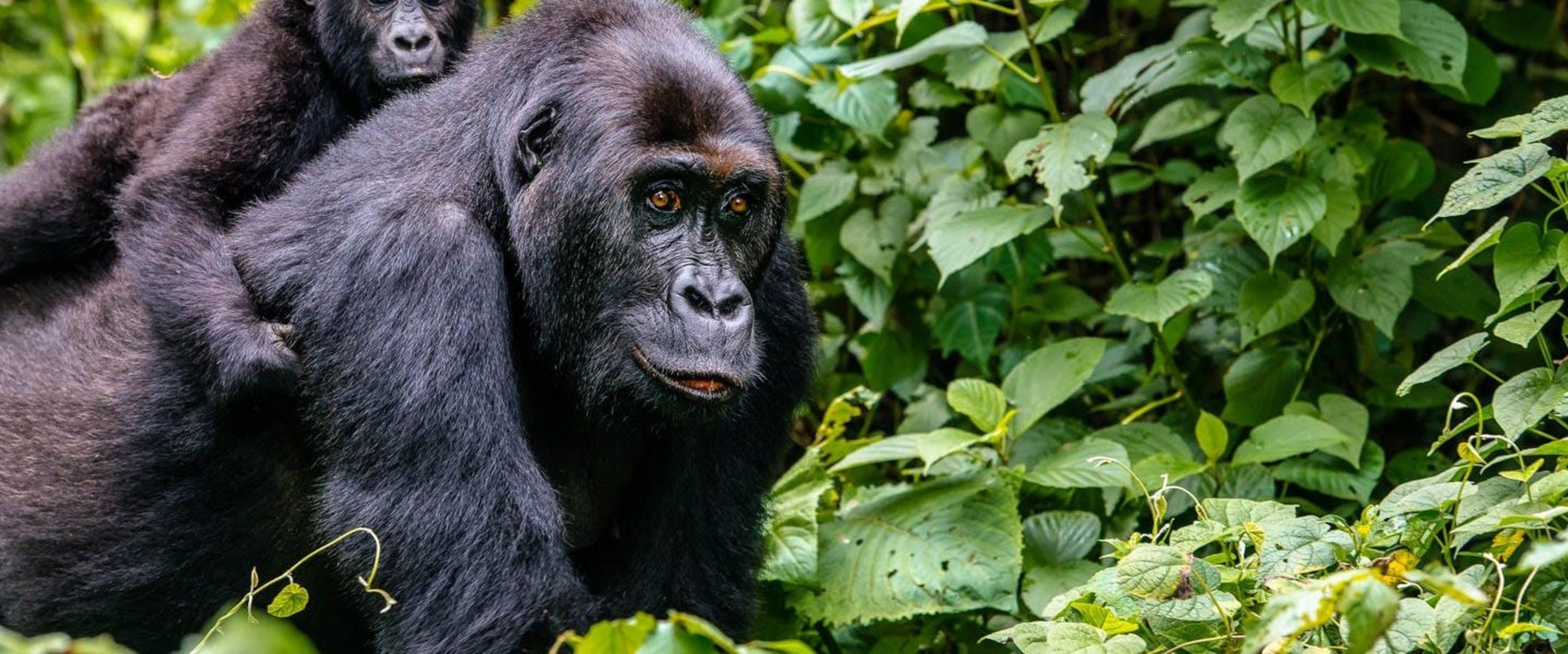
Uganda’s mountain gorillas are protected in Bwindi Impenetrable National Park and Mgahinga Gorilla National Park.
Uganda has historically offered a lower standard international gorilla permit price than Rwanda. However, Uganda Wildlife Authority publishes tariffs for specific periods, and travelers must verify the current rate for their actual trekking date.
Bwindi Impenetrable National Park
Bwindi is divided into separate trekking sectors. The main sectors are Buhoma, Ruhija, Rushaga and Nkuringo.
A permit assigned to one sector should be matched with accommodation serving that location. Driving between sectors can take several hours, making it essential to confirm the permit before booking the lodge.
Rushaga
Rushaga is one of the most convenient sectors for travelers entering Uganda through Cyanika. It is commonly included in short gorilla safaris from Kigali.
The sector offers standard gorilla trekking and may also serve Uganda’s separate Gorilla Habituation Experience, subject to current availability.
Nkuringo
Nkuringo is accessible from the Kisoro side and is known for highland views and steep landscapes.
The area combines well with Lake Mutanda, Rushaga and selected Lake Bunyonyi routes.
Ruhija
Ruhija lies on the eastern side of Bwindi and can be accessed through the Kabale area.
It can fit itineraries using the Katuna/Gatuna border and routes continuing toward Queen Elizabeth National Park.
Buhoma
Buhoma is one of Bwindi’s longest-established tourism areas. It contains accommodation across several categories and connects naturally with the Ishasha sector of Queen Elizabeth National Park.
The transfer from Kigali to Buhoma is longer than the journey to Mgahinga, Rushaga or Nkuringo.
Mgahinga Gorilla National Park
Mgahinga lies near Kisoro and the Cyanika border. It protects Uganda’s part of the Virunga Mountains and offers a scenic alternative to Bwindi.
Gorilla trekking places are more limited, so availability should be checked early. The park also offers golden monkey tracking and selected mountain activities.
Rwanda Versus Uganda Gorilla Permits
The permit price is one of the main differences between the two countries. Rwanda’s standard international rate is USD 1,500. Uganda’s applicable rate must be confirmed under the current Uganda Wildlife Authority tariff.
A lower permit price does not always mean a lower total safari price. Travelers must compare transport, accommodation, visas, border procedures and the number of nights required.
Rwanda can be more convenient for a short safari because of its proximity to Kigali. Uganda may provide better overall value for a longer journey that includes several parks.
Travelers completing two gorilla treks need two separate permits. A Rwanda permit cannot be used in Uganda, and a Ugandan permit cannot be used in Rwanda.
What Happens on a Gorilla Trek?
Gorilla trekking follows similar conservation principles in both countries.
Visitors report to the official briefing point early in the morning. Rangers explain the rules, assess the day’s arrangements and divide participants into small groups.
Trackers monitor the gorillas and help the ranger team determine the route. The walk can be short or last several hours.
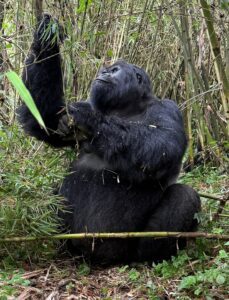
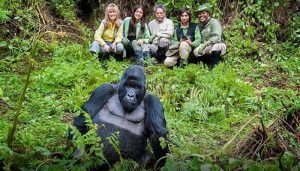
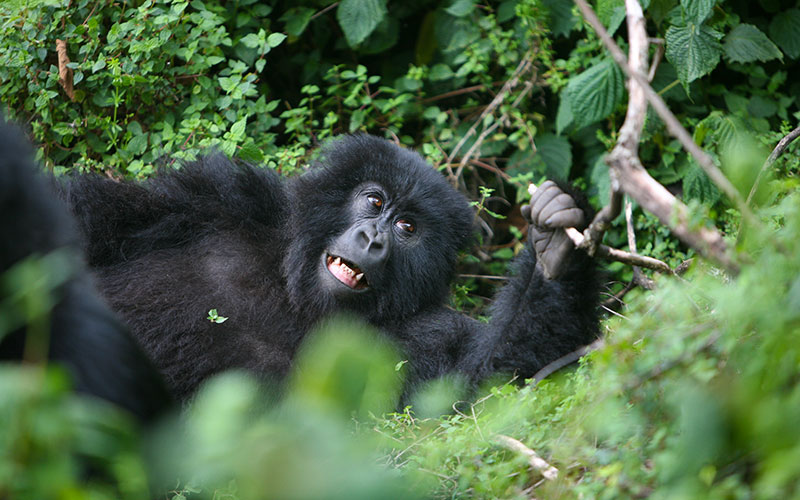
After the family is located, visitors normally spend up to one hour observing it. Gorillas may be feeding, resting, grooming, climbing or moving through vegetation.
Participants must maintain the required distance, keep voices low and avoid flash photography. Eating, drinking and smoking near the gorillas are prohibited.
Anyone with a contagious respiratory illness must report it honestly. Mountain gorillas are vulnerable to human infections, and a sick traveler may be prevented from trekking.
How Difficult Is a Cross-Border Gorilla Safari?
The border crossing itself is not physically difficult, but the itinerary may involve long road transfers and demanding forest walks.
Trekking difficulty depends on weather, altitude, mud, vegetation and the gorillas’ location. A traveler may reach the family relatively quickly or spend several hours in the forest.
Regular walking, hill training and suitable footwear improve comfort. Visitors do not need advanced climbing skills, but they should prepare for natural terrain.
A porter is strongly recommended. The porter carries the daypack and assists on steep or slippery sections. Hiring a porter also supports local employment near the park.
Best Time for a Cross-Border Rwanda Uganda Gorilla Safari
Gorilla trekking operates throughout the year in Rwanda and Uganda.
June through September and December through February are popular because conditions may be relatively drier. These periods also attract stronger permit and lodge demand.
March through May and October through November can receive more rain. Trails may become muddier, but forest scenery is lush and some lodges may offer seasonal value.
Rain can occur during any month. Travelers should carry waterproof clothing regardless of the season.
The best date also depends on the wider itinerary. Someone combining gorillas with Queen Elizabeth National Park may consider savannah wildlife conditions, while a traveler focused on primates may prioritize permit availability.
How Many Days Are Needed?
A short Cross-Border Rwanda Uganda Gorilla Safari can be completed in three or four days when it focuses on one Ugandan gorilla trek.
A journey including gorilla trekking in both Rwanda and Uganda generally requires at least five or six days. Additional time creates space for golden monkeys, conservation attractions or Lake Bunyonyi.
A seven- to ten-day itinerary can include Queen Elizabeth National Park, Kibale and an Entebbe finish.
Travelers should avoid trekking immediately after an international arrival. Sleeping near the park before the permit date protects the activity from flight delays, baggage problems and border timing.
Sample Cross-Border Rwanda Uganda Gorilla Safari Itineraries
Three-Day Uganda Gorilla Safari From Kigali
Day One: Kigali to Bwindi
The driver-guide collects the traveler from Kigali and proceeds toward the appropriate border. After immigration formalities, the safari continues to the lodge serving the confirmed Bwindi sector.
The evening is used for dinner, equipment preparation and rest.
Day Two: Gorilla Trekking
After an early breakfast, the traveler reports to the park briefing point. The ranger-led trek continues until the gorilla family is found.
The visitor spends the permitted viewing period with the gorillas and returns to the lodge afterward.
Day Three: Bwindi to Kigali
The safari crosses back into Rwanda and ends at a Kigali hotel or Kigali International Airport.
An international departure should be scheduled with a generous road and border buffer.
Four-Day Rwanda and Uganda Gorilla Safari
Day One: Kigali to Volcanoes National Park
The safari begins with a Kigali pickup and transfer to the Volcanoes region. A selected Kigali or conservation attraction can be added if timing permits.
Day Two: Rwanda Gorilla Trekking
The traveler completes gorilla trekking in Volcanoes National Park and rests at the lodge afterward.
Day Three: Rwanda to Uganda
The safari crosses through Cyanika and continues toward Mgahinga, Rushaga or Nkuringo.
Day Four: Uganda Gorilla Trekking
The visitor completes a second gorilla trek. Another night should be added if the itinerary needs to return to Kigali safely.
For comfortable travel, five days are preferable to four.
Five-Day Two-Country Gorilla Safari
Day One: Kigali to Volcanoes National Park
Meet the guide in Kigali and transfer to the Volcanoes region.
Day Two: Rwanda Gorilla Trekking
Complete the Rwanda gorilla trek and spend the afternoon at leisure.
Day Three: Volcanoes Region to Bwindi
Cross through Cyanika and continue to the confirmed Uganda lodge.
Day Four: Uganda Gorilla Trekking
Complete the Bwindi or Mgahinga gorilla trek and return to the lodge.
Day Five: Return to Kigali
Cross into Rwanda and finish the safari in Kigali.
Seven-Day Rwanda, Uganda Gorillas and Wildlife Safari
Days One and Two: Kigali and Volcanoes National Park
Arrive in Kigali, continue to Volcanoes National Park and complete a Rwanda gorilla or golden monkey trek.
Days Three and Four: Uganda Gorilla Trekking
Cross into Uganda, reach Bwindi and complete a Uganda gorilla trek.
Days Five and Six: Queen Elizabeth National Park
Continue through Ishasha and explore Queen Elizabeth National Park with a game drive and Kazinga Channel boat safari.
Day Seven: Kigali or Entebbe
Return to Kigali or continue toward Entebbe. The final choice should match the international flight.
Ten-Day Rwanda and Uganda Primate Safari
A longer itinerary can combine Kigali, Volcanoes National Park, Bwindi, Queen Elizabeth National Park and Kibale.
The safari may begin with Rwanda’s gorillas or golden monkeys, cross into Uganda for Bwindi gorilla trekking and then continue north toward savannah wildlife and chimpanzees.
Finishing in Entebbe is normally more efficient than driving back to Kigali after Kibale.
Cross-Border Safari Transport
A private four-wheel-drive vehicle is the most practical transport option.
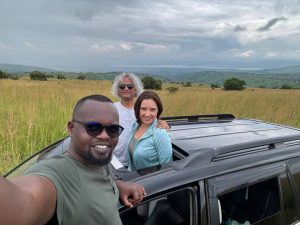
The vehicle should be suitable for mountain roads, unpaved park tracks and remote lodge access. A customized safari Land Cruiser may also provide a pop-up roof for wildlife viewing.
The quotation should explain whether the vehicle is private, whether fuel is included and whether the same vehicle operates in both countries.
Driving times should be treated as estimates. Rain, roadworks, border queues and wildlife can affect the schedule.
Accommodation Planning
Accommodation should be selected according to the park and permit location.
Near Volcanoes National Park, travelers can stay in Musanze or closer to the park boundary. Rwanda offers budget, midrange and high-end gorilla lodges.
In Uganda, the Bwindi sector must determine the lodge. Rushaga accommodation should serve Rushaga, while a Buhoma permit needs a practical Buhoma-area property.
The lodge should provide early breakfast and packed lunch on trekking day. Dietary needs should be communicated before arrival.
Travelers should also ask about boot cleaning, laundry, charging facilities, electricity, hot water and morning transfer times.
Cross-Border Rwanda Uganda Gorilla Safari Cost

The total safari price depends on permits, accommodation, transport, trip length and group size.
A complete quotation may include airport pickup, private transportation, driver-guide services, fuel, border assistance, accommodation, meals, drinking water and wildlife permits.
Visas, international flights, travel insurance, porter services, tips and personal expenses are commonly excluded.
Solo travelers generally pay more per person because vehicle costs are not shared. Couples and small groups can achieve better value.
A quotation should clearly identify whether each gorilla permit is included. It should also state the room type, meal plan, vehicle arrangement, deposit and cancellation conditions.
What to Pack
Waterproof hiking boots with strong grip are essential. They should be broken in before travel.
Travelers should wear long trousers, a long-sleeved shirt and long socks during the trek. Gardening or trekking gloves protect the hands when holding vegetation.
A waterproof jacket should remain inside the daypack even during a clear morning. Other useful items include insect repellent, sunscreen, drinking water, personal medication and protection for camera equipment.
Important documents should be carried in a waterproof pouch. These include the passport, visa approval, insurance information and permit confirmation.
Responsible Cross-Border Gorilla Tourism
A responsible safari follows the regulations of both countries.
Visitors must respect distance requirements, avoid touching gorillas and keep noise low. Flash photography is prohibited.
Travelers should hire porters through the recognized system and support community-led tourism activities where possible.
Photographs of community members should be taken only with permission. Visitors should not distribute money or sweets directly to children.
All rubbish must be carried out of the forest, and travelers should avoid unnecessary single-use plastic.
Common Booking Mistakes
The first major mistake is purchasing international flights before checking gorilla permits. Permit availability should guide the itinerary.
Another mistake is booking a Bwindi lodge without confirming the trekking sector. A sector mismatch can threaten the entire activity.
Travelers also sometimes obtain the wrong visa. The first country of entry is especially important when applying for an East Africa Tourist Visa.
A rushed schedule is another frequent problem. Trek completion, border procedures and road travel cannot be predicted precisely.
Finally, travelers should not compare quotations only by total price. They should examine permits, accommodation, transport, meals and exclusions.
Book With Universal Ventures Rwanda
Universal Ventures Rwanda organizes private and tailor-made Rwanda–Uganda gorilla safaris. Services can include gorilla permit reservations, private four-wheel-drive transportation, border assistance, accommodation and personalized itineraries.
The company can arrange short Uganda gorilla tours from Kigali, two-country gorilla trekking journeys and longer safaris combining Bwindi, Queen Elizabeth National Park, Kibale and Entebbe.
Contact Universal Ventures Rwanda
Universal Ventures Rwanda can be contacted by email at info@universalventuresrwanda.com or by telephone and WhatsApp at +250 781 441 853.
The office is located at KN 15 Road, opposite IPRC Main Entrance, 1st Floor, Sangwa Plaza, Kigali, Rwanda.
Travelers can also visit www.universalventuresrwanda.com to request a customized safari proposal.
Conclusion
A Cross-Border Rwanda Uganda Gorilla Safari provides an efficient way to experience two countries and several mountain gorilla habitats in one journey.
Kigali offers convenient access to Volcanoes National Park and southwestern Uganda. Travelers can cross through Cyanika for Mgahinga, Rushaga and Nkuringo or use Katuna/Gatuna for Kabale, Lake Bunyonyi, Ruhija and other routes.
The itinerary should begin with permit availability. Once the permit dates and sectors are confirmed, the operator can select accommodation, border crossings and transport.
A short trip can focus on one Uganda gorilla trek, while a longer safari can include separate treks in Rwanda and Uganda. Queen Elizabeth National Park, Lake Bunyonyi and Kibale can be added when sufficient time is available.
With the correct permits, visas, lodge locations and road schedule, a Cross-Border Rwanda Uganda Gorilla Safari can combine volcanic scenery, ancient rainforest, mountain gorillas, savannah wildlife and local communities in one carefully planned East African experience.